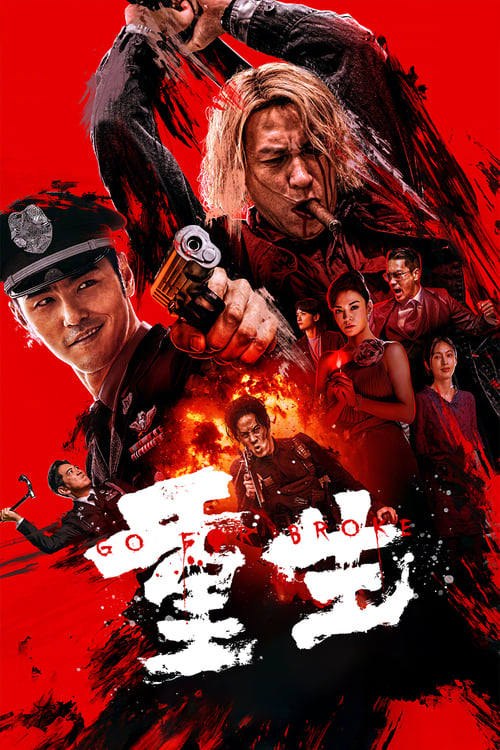
Go For Broke
Zhang Yao, whose family was destroyed by drug dealers, secretly cooperates with Anti-drug team leader An Du. The two join forces to ruthlessly eliminate the evil and vow to wipe out Mukun and Anpei, the top two figures of the criminal group.
The film earned $65.4M at the global box office.





Plot Structure
Story beats plotted across runtime


Narrative Arc
Emotional journey through the story's key moments
Story Circle
Blueprint 15-beat structure
Arcplot Score Breakdown
Weighted: Precision (70%) + Arc (15%) + Theme (15%)
Go For Broke (2024) reveals carefully calibrated narrative design, characteristic of Marc Ma's storytelling approach. This structural analysis examines how the film's 15-point plot structure maps to proven narrative frameworks across 1 hour and 55 minutes. With an Arcplot score of 7.4, the film balances conventional beats with creative variation.
Structural Analysis
The Status Quo at 1 minutes (1% through the runtime) establishes Opening image establishes protagonist's ordinary world and current circumstances before the journey begins.. The analysis reveals that this early placement immediately immerses viewers in the story world.
The inciting incident occurs at 14 minutes when Inciting incident disrupts the status quo, presenting an opportunity or crisis that demands a response.. At 12% through the film, this Disruption aligns precisely with traditional story structure. This beat shifts the emotional landscape, launching the protagonist into the central conflict.
The First Threshold at 29 minutes marks the transition into Act II, occurring at 25% of the runtime. This illustrates the protagonist's commitment to Protagonist makes the active choice to go for broke, committing to the journey despite the risks., moving from reaction to action.
At 58 minutes, the Midpoint arrives at 50% of the runtime—precisely centered, creating perfect narrative symmetry. Notably, this crucial beat False victory or major revelation that raises stakes; what seemed achievable now reveals hidden complications., fundamentally raising what's at risk. The emotional intensity shifts, dividing the narrative into clear before-and-after phases.
The Collapse moment at 86 minutes (75% through) represents the emotional nadir. Here, All is lost; the gamble appears to have failed completely, bringing protagonist to their lowest point., demonstrates the protagonist at their lowest point. This beat's placement in the final quarter sets up the climactic reversal.
The Second Threshold at 92 minutes initiates the final act resolution at 80% of the runtime. Synthesis moment; protagonist gains new understanding that combines lessons learned with original strengths., demonstrating the transformation achieved throughout the journey.
Emotional Journey
Go For Broke's emotional architecture traces a deliberate progression across 15 carefully calibrated beats.
Narrative Framework
This structural analysis employs systematic plot point analysis that identifies crucial turning points. By mapping Go For Broke against these established plot points, we can identify how Marc Ma utilizes or subverts traditional narrative conventions. The plot point approach reveals not only adherence to structural principles but also creative choices that distinguish Go For Broke within the action genre.
Comparative Analysis
Additional action films include The Ministry of Ungentlemanly Warfare, The Bad Guys and Lake Placid.
Plot Points by Act
Act I
SetupStatus Quo
Opening image establishes protagonist's ordinary world and current circumstances before the journey begins.
Theme
Thematic statement about risk, reward, and what it means to truly go all-in on your dreams.
Worldbuilding
Introduction to protagonist's world, relationships, daily struggles, and what's at stake in their current life.
Disruption
Inciting incident disrupts the status quo, presenting an opportunity or crisis that demands a response.
Resistance
Period of hesitation and preparation; protagonist debates whether to take the risk and seeks guidance.
Act II
ConfrontationFirst Threshold
Protagonist makes the active choice to go for broke, committing to the journey despite the risks.
Mirror World
Introduction of key relationship or subplot that will teach protagonist what they truly need to learn.
Premise
Protagonist explores the new world of their choice, experiencing the promise of the premise with initial successes and challenges.
Midpoint
False victory or major revelation that raises stakes; what seemed achievable now reveals hidden complications.
Opposition
Pressure intensifies as obstacles mount, opposition strengthens, and protagonist's flaws become liabilities.
Collapse
All is lost; the gamble appears to have failed completely, bringing protagonist to their lowest point.
Crisis
Dark night of the soul where protagonist processes the loss and searches for meaning in the failure.
Act III
ResolutionSecond Threshold
Synthesis moment; protagonist gains new understanding that combines lessons learned with original strengths.
Synthesis
Final confrontation where protagonist applies their transformation, executing a new approach to resolve the central conflict.
Transformation
Closing image mirrors the opening but demonstrates how protagonist has transformed through their journey.