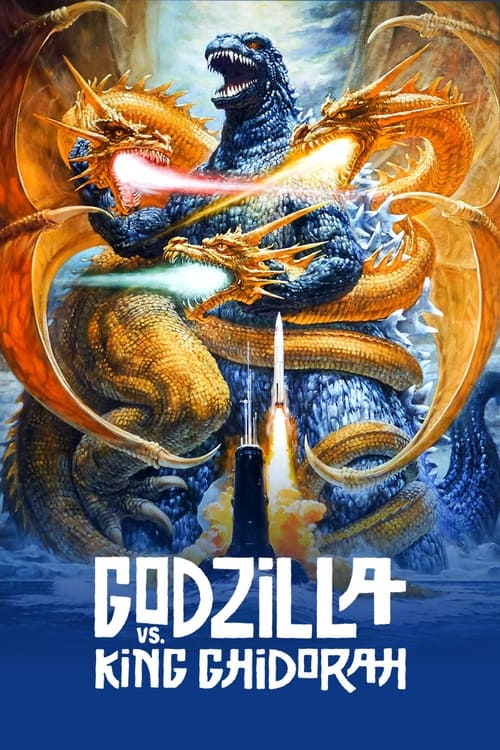
Godzilla vs. King Ghidorah
The Futurians, time-travelers from the 23rd century, arrive in Japan to warn them of the nation's destruction under Godzilla. They offer to help erase Godzilla from history by preventing his creation. With Godzilla seemingly gone, a new monster emerges as the Futurians' true intentions are revealed.
The film disappointed at the box office against its tight budget of $12.0M, earning $11.0M globally (-8% loss).


Plot Structure
Story beats plotted across runtime


Narrative Arc
Emotional journey through the story's key moments
Story Circle
Blueprint 15-beat structure
Arcplot Score Breakdown
Weighted: Precision (70%) + Arc (15%) + Theme (15%)
Godzilla vs. King Ghidorah (1991) exemplifies meticulously timed story structure, characteristic of Kazuki Ōmori's storytelling approach. This structural analysis examines how the film's 15-point plot structure maps to proven narrative frameworks across 1 hour and 43 minutes. With an Arcplot score of 7.0, the film balances conventional beats with creative variation.
Characters
Cast & narrative archetypes

Kenichiro Terasawa
Emmy Kano
Miki Saegusa
Wilson
Yasuaki Shindo
Grenchiko
Professor Mazaki
Godzilla
King Ghidorah
Main Cast & Characters
Kenichiro Terasawa
Played by Kosuke Toyohara
A science fiction writer investigating Japan's wartime past and Godzilla's origins who becomes central to the time travel mission.
Emmy Kano
Played by Anna Nakagawa
A mysterious woman from the 23rd century who arrives with the Futurians claiming to help prevent Godzilla's creation.
Miki Saegusa
Played by Megumi Odaka
A psychic with telepathic abilities who can sense and communicate with Godzilla, working with the government.
Wilson
Played by Chuck Wilson
The leader of the Futurians from 2204 who orchestrates the time travel plot with hidden ulterior motives.
Yasuaki Shindo
Played by Yoshio Tsuchiya
A wealthy businessman and war veteran who encountered the Godzillasaurus during WWII and harbors complex feelings about the creature.
Grenchiko
Played by Robert Scott Field
A member of the Futurian team who assists with the time travel operation and gradually questions Wilson's true intentions.
Professor Mazaki
Played by Katsuhiko Sasaki
A paleontologist and scientist who provides expertise on the Godzillasaurus and assists with the time travel research.
Godzilla
Played by Kenpachiro Satsuma
The mutated prehistoric dinosaur and King of the Monsters, whose existence and origins become the focus of time travel manipulation.
King Ghidorah
Played by Hurricane Ryu
The three-headed golden dragon created by the Futurians from the Dorats, unleashed as a weapon against Japan.
Structural Analysis
The Status Quo at 1 minutes (1% through the runtime) establishes A UFO is spotted over Tokyo, establishing a world where Japan has rebuilt from Godzilla's attacks but faces an uncertain future with the monster dormant in the sea.. Of particular interest, this early placement immediately immerses viewers in the story world.
The inciting incident occurs at 12 minutes when The Futurians reveal their mission: they propose traveling back to 1944 to remove the dinosaur that becomes Godzilla from Bikini Atoll before it can be mutated by nuclear testing, fundamentally disrupting Japan's timeline.. At 12% through the film, this Disruption aligns precisely with traditional story structure. This beat shifts the emotional landscape, launching the protagonist into the central conflict.
The First Threshold at 26 minutes marks the transition into Act II, occurring at 25% of the runtime. This shows the protagonist's commitment to The team travels back to 1944 and witnesses the Godzillasaurus protecting Japanese soldiers from American forces on Lagos Island. They relocate the dinosaur to the Bering Sea, believing they have prevented Godzilla's creation., moving from reaction to action.
At 52 minutes, the Midpoint arrives at 50% of the runtime—precisely centered, creating perfect narrative symmetry. Structural examination shows that this crucial beat King Ghidorah attacks Japan under Futurian control, devastating cities. The false victory of erasing Godzilla is revealed as a false defeat - Japan is now defenseless against an even greater threat orchestrated by the time travelers., fundamentally raising what's at risk. The emotional intensity shifts, dividing the narrative into clear before-and-after phases.
The Collapse moment at 77 minutes (75% through) represents the emotional nadir. Here, Godzilla defeats King Ghidorah but then turns on Japan, destroying the Futurians' ship and beginning his own rampage. Shindo faces Godzilla in a tragic reunion - the creature he once knew recognizes him before destroying him. Japan's savior becomes its destroyer., shows the protagonist at their lowest point. This beat's placement in the final quarter sets up the climactic reversal.
The Second Threshold at 82 minutes initiates the final act resolution at 80% of the runtime. Emmy travels to the 23rd century and returns with Mecha-King Ghidorah - the original King Ghidorah revived as a cyborg. She pilots the mech herself, choosing to help Japan despite being from the future that wanted to destroy it., demonstrating the transformation achieved throughout the journey.
Emotional Journey
Godzilla vs. King Ghidorah's emotional architecture traces a deliberate progression across 15 carefully calibrated beats.
Narrative Framework
This structural analysis employs proven narrative structure principles that track dramatic progression. By mapping Godzilla vs. King Ghidorah against these established plot points, we can identify how Kazuki Ōmori utilizes or subverts traditional narrative conventions. The plot point approach reveals not only adherence to structural principles but also creative choices that distinguish Godzilla vs. King Ghidorah within the action genre.
Comparative Analysis
Additional action films include The Bad Guys, Puss in Boots and Venom: The Last Dance.
Plot Points by Act
Act I
SetupStatus Quo
A UFO is spotted over Tokyo, establishing a world where Japan has rebuilt from Godzilla's attacks but faces an uncertain future with the monster dormant in the sea.
Theme
Writer Kenichiro Terasawa discusses with colleagues how Japan's post-war prosperity and identity are intertwined with Godzilla's existence, suggesting that confronting the past is essential to controlling the future.
Worldbuilding
We meet writer Terasawa investigating Godzilla's origins, psychic Miki Saegusa, and Japanese officials. The Futurians from 2204 arrive in their time machine, claiming they've come to save Japan from Godzilla's future destruction.
Disruption
The Futurians reveal their mission: they propose traveling back to 1944 to remove the dinosaur that becomes Godzilla from Bikini Atoll before it can be mutated by nuclear testing, fundamentally disrupting Japan's timeline.
Resistance
Terasawa, Miki, and Professor Mazaki debate whether to trust the Futurians and erase Godzilla from history. They investigate the Futurians' claims and ultimately agree to participate in the time travel mission to 1944 Lagos Island.
Act II
ConfrontationFirst Threshold
The team travels back to 1944 and witnesses the Godzillasaurus protecting Japanese soldiers from American forces on Lagos Island. They relocate the dinosaur to the Bering Sea, believing they have prevented Godzilla's creation.
Mirror World
In 1944, we see Shindo's emotional connection to the Godzillasaurus who saved his garrison. This parallel storyline represents the theme of Japan's complicated relationship with its past and the creatures born from it.
Premise
The time travel adventure unfolds as the team returns to find Japan transformed - Godzilla never existed. But the Futurians' true plan emerges: they left three Dorats on Lagos Island which merged into King Ghidorah, now terrorizing Japan under their control.
Midpoint
King Ghidorah attacks Japan under Futurian control, devastating cities. The false victory of erasing Godzilla is revealed as a false defeat - Japan is now defenseless against an even greater threat orchestrated by the time travelers.
Opposition
Japan scrambles to respond to King Ghidorah's rampage. Shindo uses his company's nuclear submarine to irradiate the relocated Godzillasaurus, recreating Godzilla as Japan's only hope. The newly empowered Godzilla emerges, larger and more powerful than before.
Collapse
Godzilla defeats King Ghidorah but then turns on Japan, destroying the Futurians' ship and beginning his own rampage. Shindo faces Godzilla in a tragic reunion - the creature he once knew recognizes him before destroying him. Japan's savior becomes its destroyer.
Crisis
With Godzilla rampaging and the Futurians defeated, Japan faces total destruction. Emmy, the sympathetic Futurian, reveals she can help but it requires traveling to the future to retrieve the only weapon capable of stopping Godzilla.
Act III
ResolutionSecond Threshold
Emmy travels to the 23rd century and returns with Mecha-King Ghidorah - the original King Ghidorah revived as a cyborg. She pilots the mech herself, choosing to help Japan despite being from the future that wanted to destroy it.
Synthesis
Mecha-King Ghidorah battles Godzilla in Tokyo. Emmy's mech grapples Godzilla and carries him out to sea, crashing into the ocean. Both monsters sink into the depths, saving Japan. Emmy departs for the future, leaving the technology behind.
Transformation
Godzilla survives at the bottom of the sea, his eye opening in the darkness - he will return. Japan is saved but forever changed, possessing future technology and knowing Godzilla remains. The cycle continues, but humanity has evolved.