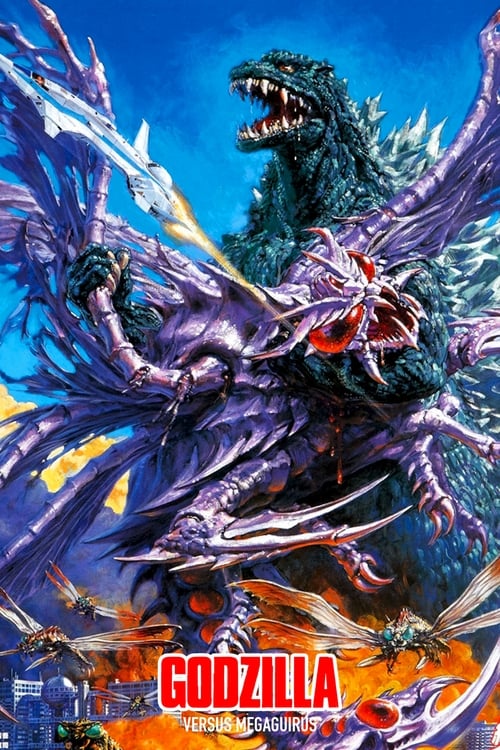
Godzilla vs. Megaguirus
In an alternate timeline the original Godzilla is never defeated and repeatedly reemerges to feed on Japan's energy sources. A new inter-dimensional weapon called the Dimension Tide is created with the intent of eliminating Godzilla. However, the new weapon might also serve as a gateway to something far more sinister.
Working with a tight budget of $8.3M, the film achieved a respectable showing with $11.1M in global revenue (+33% profit margin).


Plot Structure
Story beats plotted across runtime


Narrative Arc
Emotional journey through the story's key moments
Story Circle
Blueprint 15-beat structure
Arcplot Score Breakdown
Weighted: Precision (70%) + Arc (15%) + Theme (15%)
Godzilla vs. Megaguirus (2000) exemplifies precise narrative architecture, characteristic of Masaaki Tezuka's storytelling approach. This structural analysis examines how the film's 15-point plot structure maps to proven narrative frameworks across 1 hour and 45 minutes. With an Arcplot score of 7.2, the film balances conventional beats with creative variation.
Characters
Cast & narrative archetypes

Kiriko Tsujimori
Hajime Kudo
Jun Hayasaka
Motohiko Sugiura
Yoshino Yoshizawa
Godzilla
Main Cast & Characters
Kiriko Tsujimori
Played by Misato Tanaka
Major in G-Graspers anti-Godzilla unit, determined to eliminate Godzilla after her commander died in a previous attack.
Hajime Kudo
Played by Shosuke Tanihara
Inventor and scientist who created the Dimension Tide satellite weapon, joins forces with Kiriko.
Jun Hayasaka
Played by Masato Ibu
Mechanical engineer and member of G-Graspers who assists in operating the Dimension Tide.
Motohiko Sugiura
Played by Yuriko Hoshi
Government official and chief of G-Graspers operations, balances political pressure with tactical decisions.
Yoshino Yoshizawa
Played by Koichi Ueda
Young boy who becomes involved when he discovers a Meganula egg, representing civilian perspective.
Godzilla
Played by Tsutomu Kitagawa
Ancient kaiju destroying cities with atomic breath, the primary threat to Japan.
Structural Analysis
The Status Quo at 1 minutes (1% through the runtime) establishes 1966 flashback: Young Kiriko watches Godzilla destroy Osaka, killing her commanding officer. Establishes her trauma and vendetta against Godzilla that will drive the story.. Significantly, this early placement immediately immerses viewers in the story world.
The inciting incident occurs at 13 minutes when Godzilla appears at a plasma energy facility, drawn by the power source despite Japan's Clean Energy policy. The status quo is shattered - Godzilla is back and their prevention strategy has failed.. At 12% through the film, this Disruption aligns precisely with traditional story structure. This beat shifts the emotional landscape, launching the protagonist into the central conflict.
The First Threshold at 26 minutes marks the transition into Act II, occurring at 25% of the runtime. This demonstrates the protagonist's commitment to Kiriko and G-Graspers get authorization to deploy the Dimension Tide weapon against Godzilla. She commits to her plan for revenge, accepting whatever risks come with the experimental technology., moving from reaction to action.
At 53 minutes, the Midpoint arrives at 50% of the runtime—precisely centered, creating perfect narrative symmetry. Significantly, this crucial beat First Dimension Tide attack on Godzilla. The weapon appears successful initially, but the dimensional rift created the prehistoric insects. False victory: they've hit Godzilla, but the swarm of Meganula attacks the city, draining energy to create something worse., fundamentally raising what's at risk. The emotional intensity shifts, dividing the narrative into clear before-and-after phases.
The Collapse moment at 79 minutes (75% through) represents the emotional nadir. Here, Megaguirus attacks and severely wounds Godzilla, draining his energy. The G-Graspers' base is destroyed. Team members are killed. Kiriko realizes her vendetta has cost innocent lives and created a monster possibly worse than Godzilla. Her failure is complete., demonstrates the protagonist at their lowest point. This beat's placement in the final quarter sets up the climactic reversal.
The Second Threshold at 84 minutes initiates the final act resolution at 80% of the runtime. Kiriko realizes Godzilla and Megaguirus will fight each other - she doesn't need to destroy Godzilla herself, just enable the confrontation and use the Dimension Tide strategically at the right moment. She lets go of personal revenge for tactical wisdom., demonstrating the transformation achieved throughout the journey.
Emotional Journey
Godzilla vs. Megaguirus's emotional architecture traces a deliberate progression across 15 carefully calibrated beats.
Narrative Framework
This structural analysis employs a 15-point narrative structure framework that maps key story moments. By mapping Godzilla vs. Megaguirus against these established plot points, we can identify how Masaaki Tezuka utilizes or subverts traditional narrative conventions. The plot point approach reveals not only adherence to structural principles but also creative choices that distinguish Godzilla vs. Megaguirus within the action genre.
Comparative Analysis
Additional action films include The Bad Guys, Puss in Boots and Venom: The Last Dance.
Plot Points by Act
Act I
SetupStatus Quo
1966 flashback: Young Kiriko watches Godzilla destroy Osaka, killing her commanding officer. Establishes her trauma and vendetta against Godzilla that will drive the story.
Theme
Scientist warns that using untested technology (Dimension Tide weapon) against Godzilla could have unforeseen consequences - "We don't know what we might unleash." Establishes the thematic tension between vengeance and caution.
Worldbuilding
Present day Japan has Clean Energy policy to avoid attracting Godzilla. Introduction of G-Graspers unit led by Kiriko, the Dimension Tide satellite weapon project, and the core team of scientists and soldiers preparing to fight Godzilla.
Disruption
Godzilla appears at a plasma energy facility, drawn by the power source despite Japan's Clean Energy policy. The status quo is shattered - Godzilla is back and their prevention strategy has failed.
Resistance
Debate over using the experimental Dimension Tide weapon. Scientists express concerns about unknown risks. Kiriko must convince superiors and overcome team doubts. A mysterious prehistoric dragonfly appears after Godzilla's attack - the first hint of unintended consequences.
Act II
ConfrontationFirst Threshold
Kiriko and G-Graspers get authorization to deploy the Dimension Tide weapon against Godzilla. She commits to her plan for revenge, accepting whatever risks come with the experimental technology.
Mirror World
Hajime Kudo, young inventor and Godzilla enthusiast, joins the team. Unlike Kiriko's hatred, he represents scientific curiosity about Godzilla. His different perspective begins to challenge her single-minded vengeance.
Premise
The promise of the premise: humanity's high-tech battle against Godzilla. G-Graspers track Godzilla, deploy weapons, and prepare the Dimension Tide. Meanwhile, prehistoric Meganula insects multiply in the city sewers - the consequences of dimensional tampering manifest.
Midpoint
First Dimension Tide attack on Godzilla. The weapon appears successful initially, but the dimensional rift created the prehistoric insects. False victory: they've hit Godzilla, but the swarm of Meganula attacks the city, draining energy to create something worse.
Opposition
Megaguirus, a giant dragonfly queen, emerges from the swarm - a direct result of the Dimension Tide's interference. Two monsters now threaten Japan. Kiriko's weapon created a worse problem. The team struggles as both creatures wreak havoc and their options dwindle.
Collapse
Megaguirus attacks and severely wounds Godzilla, draining his energy. The G-Graspers' base is destroyed. Team members are killed. Kiriko realizes her vendetta has cost innocent lives and created a monster possibly worse than Godzilla. Her failure is complete.
Crisis
Kiriko confronts her guilt and trauma. Kudo challenges her to think beyond revenge. She must decide: continue the vendetta or find another way. Dark night of accepting that her hatred has made things worse.
Act III
ResolutionSecond Threshold
Kiriko realizes Godzilla and Megaguirus will fight each other - she doesn't need to destroy Godzilla herself, just enable the confrontation and use the Dimension Tide strategically at the right moment. She lets go of personal revenge for tactical wisdom.
Synthesis
Final battle: Godzilla vs. Megaguirus. G-Graspers coordinate the fight, evacuate civilians, and position the Dimension Tide. Kiriko works with her team (not alone). Godzilla defeats Megaguirus. At the crucial moment, Kiriko fires the Dimension Tide at the weakened Godzilla, seemingly sending him into a black hole.
Transformation
Godzilla survives and returns to the sea. Kiriko watches him go, but doesn't pursue. Unlike the opening where she lost everything to Godzilla, she's now learned that some fights can't be won through vengeance - and that humanity's weapons may be more dangerous than the monsters.