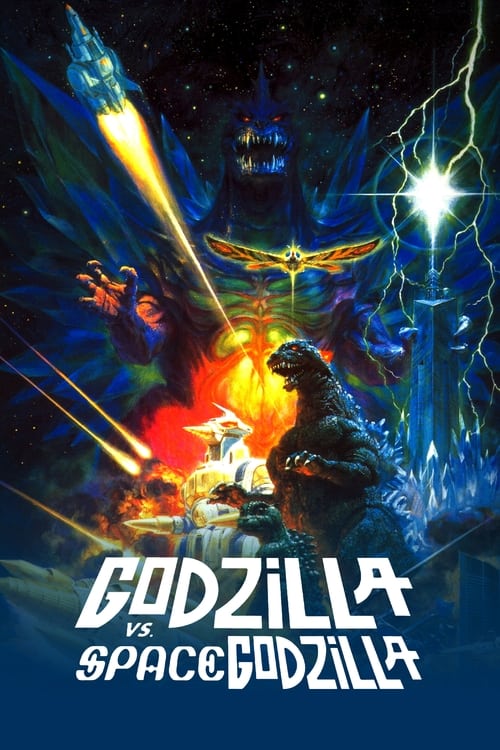
Godzilla vs. SpaceGodzilla
A mysterious extraterrestrial being resembling Godzilla rapidly approaches Earth. The monster, dubbed SpaceGodzilla, lands to challenge the King of the Monsters.
Working with a tight budget of $10.3M, the film achieved a respectable showing with $20.0M in global revenue (+94% profit margin).


Plot Structure
Story beats plotted across runtime


Narrative Arc
Emotional journey through the story's key moments
Story Circle
Blueprint 15-beat structure
Arcplot Score Breakdown
Weighted: Precision (70%) + Arc (15%) + Theme (15%)
Godzilla vs. SpaceGodzilla (1994) demonstrates carefully calibrated story structure, characteristic of Kensho Yamashita's storytelling approach. This structural analysis examines how the film's 15-point plot structure maps to proven narrative frameworks across 1 hour and 48 minutes. With an Arcplot score of 7.2, the film balances conventional beats with creative variation.
Characters
Cast & narrative archetypes

Godzilla
Kenkichi Yamane
Koji Shinjo
Lt. Gondo Kiyoshi
Chinatsu Gondo
SpaceGodzilla
Baby Godzilla / Little Godzilla
Main Cast & Characters
Godzilla
Played by Kenpachiro Satsuma
The King of the Monsters, Earth's defender against extraterrestrial threats and kaiju invaders.
Kenkichi Yamane
Played by Megumi Odaka
G-Force scientist and psychic specialist developing Project T to telepathically communicate with Godzilla.
Koji Shinjo
Played by Jun Hashizume
G-Force pilot and member of the MOGUERA crew, determined to protect Earth from kaiju threats.
Lt. Gondo Kiyoshi
Played by Zenkichi Yoneyama
G-Force lieutenant and MOGUERA pilot who is skeptical of psychic communication with Godzilla.
Chinatsu Gondo
Played by Yosuke Saito
Schoolteacher and sister of Lt. Gondo, represents civilian perspective on kaiju battles.
SpaceGodzilla
Played by Ryo Hariya
Extraterrestrial clone of Godzilla with crystalline powers, seeks to conquer Earth and destroy Godzilla.
Baby Godzilla / Little Godzilla
Played by Little Frankie
Young Godzilla offspring living on Birth Island, targeted by SpaceGodzilla to lure Godzilla.
Structural Analysis
The Status Quo at 1 minutes (1% through the runtime) establishes Godzilla swims peacefully in the ocean while Project T prepares to control him telepathically. The world has adapted to Godzilla's existence, with humanity attempting to harness rather than destroy him.. Structural examination shows that this early placement immediately immerses viewers in the story world.
The inciting incident occurs at 13 minutes when SpaceGodzilla detected approaching Earth from outer space. Mysterious cosmic monster with unknown origins and intentions threatens both Godzilla and humanity. The status quo of managed coexistence is shattered.. At 12% through the film, this Disruption aligns precisely with traditional story structure. This beat shifts the emotional landscape, launching the protagonist into the central conflict.
The First Threshold at 26 minutes marks the transition into Act II, occurring at 24% of the runtime. This demonstrates the protagonist's commitment to SpaceGodzilla lands on Birth Island and attacks Baby Godzilla, trapping him in a crystal prison. G-Force and Miki commit to confronting SpaceGodzilla. The conflict becomes unavoidable and personal., moving from reaction to action.
At 53 minutes, the Midpoint arrives at 50% of the runtime—precisely centered, creating perfect narrative symmetry. Of particular interest, this crucial beat SpaceGodzilla arrives in Fukuoka and creates a massive crystal fortress, amplifying his power. False defeat: the monster is more powerful than anticipated. MOGUERA's first attack fails. Stakes escalate as SpaceGodzilla threatens to terraform Earth with crystals., fundamentally raising what's at risk. The emotional intensity shifts, dividing the narrative into clear before-and-after phases.
The Collapse moment at 81 minutes (75% through) represents the emotional nadir. Here, Godzilla is beaten down and nearly killed by SpaceGodzilla's corona beam. MOGUERA lies in ruins. Miki is helpless. The mission appears lost and humanity faces extinction. Whiff of death: Godzilla collapses, seemingly defeated., demonstrates the protagonist at their lowest point. This beat's placement in the final quarter sets up the climactic reversal.
The Second Threshold at 86 minutes initiates the final act resolution at 80% of the runtime. Breakthrough: destroy the crystal towers to weaken SpaceGodzilla. MOGUERA repairs and joins forces with Godzilla. Miki chooses to help voluntarily, not through coercion. The synthesis of human technology and natural force creates hope. Cooperation replaces control., demonstrating the transformation achieved throughout the journey.
Emotional Journey
Godzilla vs. SpaceGodzilla's emotional architecture traces a deliberate progression across 15 carefully calibrated beats.
Narrative Framework
This structural analysis employs proven narrative structure principles that track dramatic progression. By mapping Godzilla vs. SpaceGodzilla against these established plot points, we can identify how Kensho Yamashita utilizes or subverts traditional narrative conventions. The plot point approach reveals not only adherence to structural principles but also creative choices that distinguish Godzilla vs. SpaceGodzilla within the action genre.
Comparative Analysis
Additional action films include The Bad Guys, Puss in Boots and Venom: The Last Dance.
Plot Points by Act
Act I
SetupStatus Quo
Godzilla swims peacefully in the ocean while Project T prepares to control him telepathically. The world has adapted to Godzilla's existence, with humanity attempting to harness rather than destroy him.
Theme
Scientist discusses whether humans should try to control nature or coexist with it. "Perhaps we should accept that some forces are beyond our control." This foreshadows the debate about using telepathy and technology against Godzilla.
Worldbuilding
Introduction of key players: Miki Saegusa (psychic), G-Force military unit, Project T (telepathic control), and MOGUERA robot project. Baby Godzilla on Birth Island represents hope for peace. Yakuza subplot introduced with industrial espionage angle.
Disruption
SpaceGodzilla detected approaching Earth from outer space. Mysterious cosmic monster with unknown origins and intentions threatens both Godzilla and humanity. The status quo of managed coexistence is shattered.
Resistance
Debate over how to respond: use Project T to control Godzilla against SpaceGodzilla, deploy MOGUERA, or abandon Birth Island. Miki debates the ethics of mind control. Military prepares while scientists theorize SpaceGodzilla's origin (Mothra carried Godzilla cells through black hole).
Act II
ConfrontationFirst Threshold
SpaceGodzilla lands on Birth Island and attacks Baby Godzilla, trapping him in a crystal prison. G-Force and Miki commit to confronting SpaceGodzilla. The conflict becomes unavoidable and personal.
Mirror World
Miki's relationship with Shinjo (soldier) deepens as he protects her. Their bond represents cooperation versus control - he respects her autonomy while the military wants to weaponize her powers. This mirrors the film's central question about Godzilla.
Premise
The promise of giant monster battles delivered: SpaceGodzilla demonstrates devastating cosmic powers, Godzilla searches for his offspring, MOGUERA engages in combat. Spectacular destruction in multiple locations. Yakuza subplot provides human-scale tension while monsters clash.
Midpoint
SpaceGodzilla arrives in Fukuoka and creates a massive crystal fortress, amplifying his power. False defeat: the monster is more powerful than anticipated. MOGUERA's first attack fails. Stakes escalate as SpaceGodzilla threatens to terraform Earth with crystals.
Opposition
SpaceGodzilla dominates Fukuoka. Multiple attempts to stop him fail. Godzilla arrives but is outmatched. MOGUERA sustains heavy damage. Miki is captured and nearly subjected to forced mind control. The villains (both monster and human) close in from all sides.
Collapse
Godzilla is beaten down and nearly killed by SpaceGodzilla's corona beam. MOGUERA lies in ruins. Miki is helpless. The mission appears lost and humanity faces extinction. Whiff of death: Godzilla collapses, seemingly defeated.
Crisis
Dark night of the soul as the team regroups. Miki refuses to be used as a weapon, asserting her humanity. Scientists realize SpaceGodzilla's power source: the crystal towers. Godzilla slowly rises, driven by instinct to protect Baby Godzilla.
Act III
ResolutionSecond Threshold
Breakthrough: destroy the crystal towers to weaken SpaceGodzilla. MOGUERA repairs and joins forces with Godzilla. Miki chooses to help voluntarily, not through coercion. The synthesis of human technology and natural force creates hope. Cooperation replaces control.
Synthesis
Epic final battle: MOGUERA destroys the crystal towers while Godzilla fights SpaceGodzilla in close combat. Teamwork between man and monster. Yakuza subplot resolved. SpaceGodzilla weakened and ultimately destroyed by combined Godzilla-MOGUERA assault. Baby Godzilla freed from crystal prison.
Transformation
Godzilla reunites with Baby Godzilla on Birth Island, roaring victoriously. Miki watches peacefully, having learned that respecting nature is better than controlling it. Mirror of opening: Godzilla in the ocean, but now with renewed purpose and accepted cooperation between species.