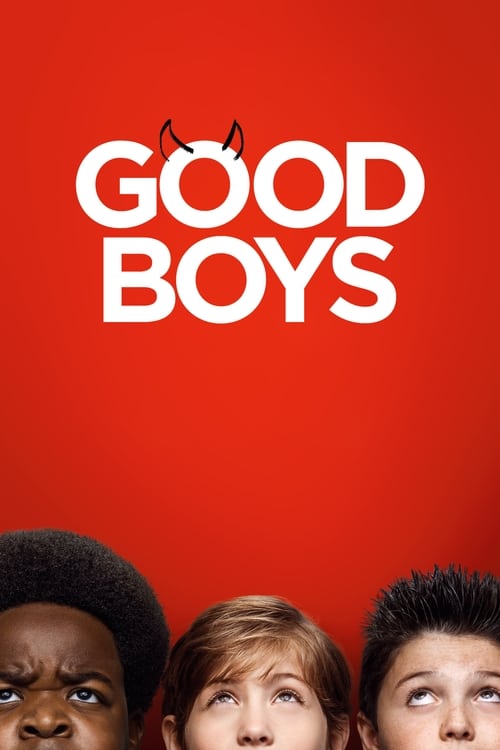
Good Boys
A group of young boys on the cusp of becoming teenagers embark on an epic quest to fix their broken drone before their parents get home.
Despite a respectable budget of $20.0M, Good Boys became a commercial success, earning $111.0M worldwide—a 455% return.
2 wins & 7 nominations


Plot Structure
Story beats plotted across runtime


Narrative Arc
Emotional journey through the story's key moments
Story Circle
Blueprint 15-beat structure
Arcplot Score Breakdown
Weighted: Precision (70%) + Arc (15%) + Theme (15%)
Good Boys (2019) exhibits meticulously timed story structure, characteristic of Gene Stupnitsky's storytelling approach. This structural analysis examines how the film's 15-point plot structure maps to proven narrative frameworks across 1 hour and 30 minutes. With an Arcplot score of 7.4, the film balances conventional beats with creative variation.
Characters
Cast & narrative archetypes

Max
Thor
Lucas
Hannah
Lily
Main Cast & Characters
Max
Played by Jacob Tremblay
A sweet, rule-following sixth-grader who wants to be popular and impress his crush, Brixlee. The de facto leader of the trio.
Thor
Played by Brady Noon
Max's loyal and innocent best friend who struggles with his parents' impending divorce. Sweet-natured and emotional.
Lucas
Played by Keith L. Williams
The anxious, neurotic member of the trio who follows rules obsessively. Struggles with separation anxiety and has anger issues.
Hannah
Played by Molly Gordon
Max's rebellious teenage neighbor whose drone the boys accidentally break. Initially antagonistic but ultimately helps them.
Lily
Played by Midori Francis
Thor's cool teenage sister who becomes an unexpected ally. She understands the boys better than they expect.
Structural Analysis
The Status Quo at 1 minutes (1% through the runtime) establishes The Bean Bag Boys (Max, Thor, and Lucas) play together in perfect childhood friendship, navigating their sixth-grade world with innocent joy and unbreakable camaraderie.. Notably, this early placement immediately immerses viewers in the story world.
The inciting incident occurs at 10 minutes when Max gets invited to Soren's kissing party where his crush Brixlee will be. This invitation disrupts their innocent world and forces them to confront growing up - specifically, the terrifying prospect of kissing.. At 11% through the film, this Disruption aligns precisely with traditional story structure. This beat shifts the emotional landscape, launching the protagonist into the central conflict.
The First Threshold at 22 minutes marks the transition into Act II, occurring at 24% of the runtime. This shows the protagonist's commitment to The boys make the active choice to skip school and embark on a dangerous mission to get the drone back before Max's dad discovers it's missing. They cross into the adult world, leaving childhood safety behind., moving from reaction to action.
At 44 minutes, the Midpoint arrives at 49% of the runtime—precisely centered, creating perfect narrative symmetry. Structural examination shows that this crucial beat False victory: The boys successfully negotiate with Hannah and Lily and get closer to retrieving the drone. They feel like they're winning at being grown-up, but the stakes are raised when Lucas's secret comes out., fundamentally raising what's at risk. The emotional intensity shifts, dividing the narrative into clear before-and-after phases.
The Collapse moment at 67 minutes (75% through) represents the emotional nadir. Here, All is lost: The boys have a devastating fight and the Bean Bag Boys officially break up. The death of their childhood friendship group. Max loses both the drone situation and his best friends., shows the protagonist at their lowest point. This beat's placement in the final quarter sets up the climactic reversal.
The Second Threshold at 70 minutes initiates the final act resolution at 78% of the runtime. Realization: Max understands that real friendship means accepting change and supporting each other's growth, not forcing everyone to stay the same. He synthesizes childhood loyalty with mature acceptance., demonstrating the transformation achieved throughout the journey.
Emotional Journey
Good Boys's emotional architecture traces a deliberate progression across 15 carefully calibrated beats.
Narrative Framework
This structural analysis employs a 15-point narrative structure framework that maps key story moments. By mapping Good Boys against these established plot points, we can identify how Gene Stupnitsky utilizes or subverts traditional narrative conventions. The plot point approach reveals not only adherence to structural principles but also creative choices that distinguish Good Boys within the comedy genre.
Gene Stupnitsky's Structural Approach
Among the 2 Gene Stupnitsky films analyzed on Arcplot, the average structural score is 7.1, reflecting strong command of classical structure. Good Boys represents one of the director's most structurally precise works. For comparative analysis, explore the complete Gene Stupnitsky filmography.
Comparative Analysis
Additional comedy films include The Bad Guys, Ella Enchanted and The Evening Star. For more Gene Stupnitsky analyses, see No Hard Feelings.
Plot Points by Act
Act I
SetupStatus Quo
The Bean Bag Boys (Max, Thor, and Lucas) play together in perfect childhood friendship, navigating their sixth-grade world with innocent joy and unbreakable camaraderie.
Theme
Max's dad tells him "You're getting older now" while giving him the drone, hinting that growing up means things change - a theme the boys will resist and eventually accept.
Worldbuilding
Establishment of the boys' innocent world: their friendship dynamics, their gaming obsession, their social awkwardness at school, and the rigid rules of their "Bean Bag Boys" club. Max has a crush on Brixlee.
Disruption
Max gets invited to Soren's kissing party where his crush Brixlee will be. This invitation disrupts their innocent world and forces them to confront growing up - specifically, the terrifying prospect of kissing.
Resistance
The boys debate how to learn kissing, attempting various research methods. They discover Max's dad's drone and decide to spy on teenage neighbor Hannah to learn about kissing, leading to the drone being confiscated by the teens.
Act II
ConfrontationFirst Threshold
The boys make the active choice to skip school and embark on a dangerous mission to get the drone back before Max's dad discovers it's missing. They cross into the adult world, leaving childhood safety behind.
Mirror World
The boys encounter Hannah and Lily, teenage girls who represent the world they're trying to enter. These older girls will inadvertently teach them about growing up, maturity, and the reality of adolescence versus their fantasies.
Premise
The "fun and games" of sixth graders loose in the city: trying to buy drugs they think are needed, getting into absurd situations, encountering frat boys, accidentally destroying property, navigating adult scenarios with child logic.
Midpoint
False victory: The boys successfully negotiate with Hannah and Lily and get closer to retrieving the drone. They feel like they're winning at being grown-up, but the stakes are raised when Lucas's secret comes out.
Opposition
Pressure intensifies: Lucas reveals he wants to quit the Bean Bag Boys to join the cool kids. The friendship fractures. Their innocent bond is breaking. Max's desperation to maintain the status quo creates conflict.
Collapse
All is lost: The boys have a devastating fight and the Bean Bag Boys officially break up. The death of their childhood friendship group. Max loses both the drone situation and his best friends.
Crisis
Dark night: Max sits alone, processing the loss of his friendships. Each boy separately reflects on what they've lost and what really matters. The emotional low point before clarity emerges.
Act III
ResolutionSecond Threshold
Realization: Max understands that real friendship means accepting change and supporting each other's growth, not forcing everyone to stay the same. He synthesizes childhood loyalty with mature acceptance.
Synthesis
The finale: The boys reunite and work together one last time to resolve the drone situation and get to the party. They attend the party, Max attempts to kiss Brixlee, and they face the adult world together but changed.
Transformation
Closing image mirrors the opening but transformed: The boys are still friends, but they've accepted they're growing up and growing apart. They've learned that change doesn't mean the end - it means evolution.