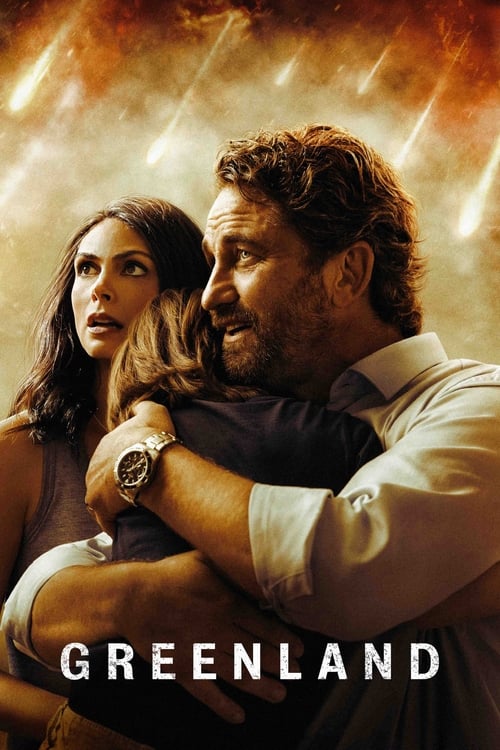
Greenland
John Garrity, his estranged wife and their young son embark on a perilous journey to find sanctuary as a planet-killing comet hurtles toward Earth. Amid terrifying accounts of cities getting levelled, the Garritys experience the best and worst in humanity. As the countdown to the global apocalypse approaches zero, their incredible trek culminates in a desperate and last-minute flight to a possible safe haven.
Working with a respectable budget of $34.0M, the film achieved a modest success with $52.3M in global revenue (+54% profit margin).
1 win & 2 nominations


Plot Structure
Story beats plotted across runtime


Narrative Arc
Emotional journey through the story's key moments
Story Circle
Blueprint 15-beat structure
Arcplot Score Breakdown
Weighted: Precision (70%) + Arc (15%) + Theme (15%)
Greenland (2020) showcases deliberately positioned story structure, characteristic of Ric Roman Waugh's storytelling approach. This structural analysis examines how the film's 15-point plot structure maps to proven narrative frameworks across 2 hours. With an Arcplot score of 7.5, the film showcases strong structural fundamentals.
Structural Analysis
The Status Quo at 1 minutes (1% through the runtime) establishes John Garrity prepares for his son Nathan's birthday party in their suburban Atlanta home. The family appears happy and ordinary, though hints of marital tension exist between John and his wife Allison.. Notably, this early placement immediately immerses viewers in the story world.
The inciting incident occurs at 14 minutes when John receives an unexpected presidential alert on his phone: his family has been selected for emergency shelter. Simultaneously, comet fragments begin striking Tampa, Florida, with devastating force, revealing the true threat.. At 12% through the film, this Disruption aligns precisely with traditional story structure. This beat shifts the emotional landscape, launching the protagonist into the central conflict.
The First Threshold at 29 minutes marks the transition into Act II, occurring at 24% of the runtime. This reveals the protagonist's commitment to John makes the active choice to leave the party and drive his family to the military base, abandoning their neighbors and friends to an uncertain fate. This irreversible decision launches them into the survival nightmare., moving from reaction to action.
At 61 minutes, the Midpoint arrives at 51% of the runtime—precisely centered, creating perfect narrative symmetry. Significantly, this crucial beat A massive comet fragment strikes Lexington, Kentucky, creating catastrophic destruction visible for miles. John witnesses the scale of the apocalypse firsthand, understanding that nowhere is truly safe. The stakes raise exponentially—this is extinction-level., fundamentally raising what's at risk. The emotional intensity shifts, dividing the narrative into clear before-and-after phases.
The Collapse moment at 90 minutes (75% through) represents the emotional nadir. Here, John is severely beaten and left for dead by refugees who steal his truck. He lies broken and helpless in the snow, seemingly unable to reach his family before the final fragment hits. The dream of reunion appears dead., shows the protagonist at their lowest point. This beat's placement in the final quarter sets up the climactic reversal.
The Second Threshold at 96 minutes initiates the final act resolution at 80% of the runtime. A kind stranger helps John, restoring his faith in humanity. John learns Allison and Nathan made it to the Canadian shelter. He finds renewed strength to make the final push to the bunker entrance before the last impact., demonstrating the transformation achieved throughout the journey.
Emotional Journey
Greenland's emotional architecture traces a deliberate progression across 15 carefully calibrated beats.
Narrative Framework
This structural analysis employs proven narrative structure principles that track dramatic progression. By mapping Greenland against these established plot points, we can identify how Ric Roman Waugh utilizes or subverts traditional narrative conventions. The plot point approach reveals not only adherence to structural principles but also creative choices that distinguish Greenland within the action genre.
Ric Roman Waugh's Structural Approach
Among the 3 Ric Roman Waugh films analyzed on Arcplot, the average structural score is 7.3, reflecting strong command of classical structure. Greenland represents one of the director's most structurally precise works. For comparative analysis, explore the complete Ric Roman Waugh filmography.
Comparative Analysis
Additional action films include The Bad Guys, Puss in Boots and Venom: The Last Dance. For more Ric Roman Waugh analyses, see Angel Has Fallen, Snitch.
Plot Points by Act
Act I
SetupStatus Quo
John Garrity prepares for his son Nathan's birthday party in their suburban Atlanta home. The family appears happy and ordinary, though hints of marital tension exist between John and his wife Allison.
Theme
A neighbor comments: "You never know what's going to happen, do you?" as they watch news about the approaching comet Clarke. The theme of unpredictability and family bonds in crisis is established.
Worldbuilding
The birthday party begins as guests arrive. News reports show comet Clarke approaching Earth, but authorities assure the public fragments will harmlessly burn up in the atmosphere. The world feels safe and normal despite the cosmic event.
Disruption
John receives an unexpected presidential alert on his phone: his family has been selected for emergency shelter. Simultaneously, comet fragments begin striking Tampa, Florida, with devastating force, revealing the true threat.
Resistance
The Garrity family debates what to do as chaos erupts. They pack hastily and prepare to drive to Robins Air Force Base for evacuation. Neighbors become desperate when they learn they weren't selected, revealing the moral complexity of survival selection.
Act II
ConfrontationFirst Threshold
John makes the active choice to leave the party and drive his family to the military base, abandoning their neighbors and friends to an uncertain fate. This irreversible decision launches them into the survival nightmare.
Mirror World
At the base, officials reject Nathan because of his diabetes, deeming him unfit for shelter. The thematic subplot emerges: survival isn't just about being selected—it's about family refusing to accept separation.
Premise
The family is separated when Allison and Nathan are taken by strangers who steal their evacuation bracelets. John fights through increasingly chaotic highways and cities to reunite with them, experiencing the collapse of civilization firsthand.
Midpoint
A massive comet fragment strikes Lexington, Kentucky, creating catastrophic destruction visible for miles. John witnesses the scale of the apocalypse firsthand, understanding that nowhere is truly safe. The stakes raise exponentially—this is extinction-level.
Opposition
Separated, John and Allison both struggle toward Canada independently. Allison faces increasingly desperate refugees at shelters. John encounters violence and betrayal as society fully breaks down. Time runs out as the final impact approaches.
Collapse
John is severely beaten and left for dead by refugees who steal his truck. He lies broken and helpless in the snow, seemingly unable to reach his family before the final fragment hits. The dream of reunion appears dead.
Crisis
John struggles through pain and despair, crawling through snow. Allison and Nathan reach a military checkpoint but are turned away because John isn't with them. Both face their darkest moment of despair and separation.
Act III
ResolutionSecond Threshold
A kind stranger helps John, restoring his faith in humanity. John learns Allison and Nathan made it to the Canadian shelter. He finds renewed strength to make the final push to the bunker entrance before the last impact.
Synthesis
John races to reach the bunker as the final nine-mile-wide fragment approaches. He arrives just as blast doors begin closing. The family reunites inside moments before impact. The fragment strikes, causing global devastation above.
Transformation
Nine months later, the Garrity family emerges from the bunker together with other survivors to see Earth's devastated but recovering surface. They survived as a unit—transformed from a fractured family into one forged unbreakable by crisis.