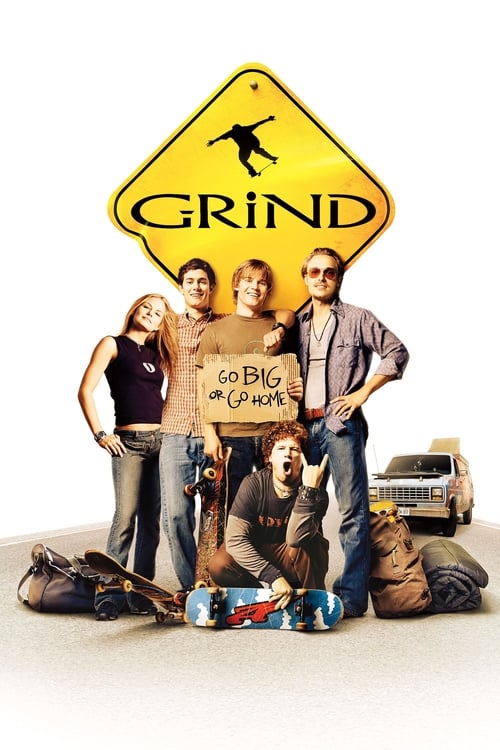
Grind
Four skaters follow their idol on his summer tour in an attempt to get noticed, get sponsored, and become stars themselves.
The film struggled financially against its modest budget of $6.0M, earning $5.1M globally (-14% loss).


Plot Structure
Story beats plotted across runtime


Narrative Arc
Emotional journey through the story's key moments
Story Circle
Blueprint 15-beat structure
Arcplot Score Breakdown
Weighted: Precision (70%) + Arc (15%) + Theme (15%)
Grind (2003) demonstrates strategically placed narrative design, characteristic of Casey La Scala's storytelling approach. This structural analysis examines how the film's 15-point plot structure maps to proven narrative frameworks across 1 hour and 44 minutes. With an Arcplot score of 7.3, the film balances conventional beats with creative variation.
Characters
Cast & narrative archetypes

Eric Rivers
Dustin Knight
Matt Jensen
Sweet Lou Singer
Jimmy Wilson
Colonel Jimmy's Dad
Main Cast & Characters
Eric Rivers
Played by Mike Vogel
Ambitious skateboarder determined to turn pro by getting sponsored, drives the road trip to meet his hero.
Dustin Knight
Played by Vince Vieluf
Sweet-hearted skater who films the crew's adventures and struggles with confidence in his abilities.
Matt Jensen
Played by Adam Brody
Laid-back, womanizing skater who provides comic relief while dealing with romantic complications.
Sweet Lou Singer
Played by Joey Kern
Confident, talented skater who already has sponsor interest and serves as the crew's best rider.
Jimmy Wilson
Played by Jason London
Professional skateboarding legend who Eric idolizes and seeks sponsorship from during the road trip.
Colonel Jimmy's Dad
Played by Randy Quaid
Jimmy Wilson's strict, disapproving father who represents traditional values and dismisses skateboarding.
Structural Analysis
The Status Quo at 1 minutes (1% through the runtime) establishes Four high school friends skateboard in their small Chicago suburb, stuck in dead-end summer jobs and local skate competitions with no future prospects.. Structural examination shows that this early placement immediately immerses viewers in the story world.
The inciting incident occurs at 12 minutes when The crew discovers that pro skater sponsor Eric Ledune and his tour will be passing through their area, presenting an opportunity to showcase their skills.. At 12% through the film, this Disruption aligns precisely with traditional story structure. This beat shifts the emotional landscape, launching the protagonist into the central conflict.
The First Threshold at 25 minutes marks the transition into Act II, occurring at 24% of the runtime. This reveals the protagonist's commitment to Eric makes the active choice to lead the group on the road trip, stealing his parents' van and hitting the highway to chase their skateboarding dreams., moving from reaction to action.
At 51 minutes, the Midpoint arrives at 49% of the runtime—precisely centered, creating perfect narrative symmetry. Of particular interest, this crucial beat False victory: The guys finally get face time with Eric Ledune at a major demo and he seems impressed with their skating, raising stakes and making sponsorship feel within reach., fundamentally raising what's at risk. The emotional intensity shifts, dividing the narrative into clear before-and-after phases.
The Collapse moment at 76 minutes (74% through) represents the emotional nadir. Here, Devastating low point: The crew discovers Ledune is a fraud who doesn't actually sponsor anyone, their van is totaled, they're stranded and broke, and the dream appears dead., reveals the protagonist at their lowest point. This beat's placement in the final quarter sets up the climactic reversal.
The Second Threshold at 83 minutes initiates the final act resolution at 80% of the runtime. Synthesis: Jamie and the realization that the real victory was the friendship, growth, and skating itself - not corporate sponsorship. They decide to skate in the final demo for themselves., demonstrating the transformation achieved throughout the journey.
Emotional Journey
Grind's emotional architecture traces a deliberate progression across 15 carefully calibrated beats.
Narrative Framework
This structural analysis employs systematic plot point analysis that identifies crucial turning points. By mapping Grind against these established plot points, we can identify how Casey La Scala utilizes or subverts traditional narrative conventions. The plot point approach reveals not only adherence to structural principles but also creative choices that distinguish Grind within the action genre.
Comparative Analysis
Additional action films include The Bad Guys, Puss in Boots and Venom: The Last Dance.
Plot Points by Act
Act I
SetupStatus Quo
Four high school friends skateboard in their small Chicago suburb, stuck in dead-end summer jobs and local skate competitions with no future prospects.
Theme
Sweet Lou tells the guys "You gotta take risks to make it happen" - establishing the theme about pursuing dreams versus playing it safe.
Worldbuilding
Introduction to Eric, Matt, Dustin, and Sweet Lou as they navigate boring jobs, local competitions, and their dream of becoming pro skaters while watching their hero Jimmy Wilson on TV.
Disruption
The crew discovers that pro skater sponsor Eric Ledune and his tour will be passing through their area, presenting an opportunity to showcase their skills.
Resistance
The guys debate whether to follow the tour across country. They face resistance from parents, worry about money and logistics, but ultimately start planning their road trip.
Act II
ConfrontationFirst Threshold
Eric makes the active choice to lead the group on the road trip, stealing his parents' van and hitting the highway to chase their skateboarding dreams.
Mirror World
The crew meets Jamie, a female skater who challenges their assumptions and represents authenticity versus selling out. She becomes a thematic mirror about staying true to yourself.
Premise
The fun road trip montage: skating demos, wild parties, pranks, mishaps with the van, close calls with Ledune, and bonding as they chase the tour from city to city.
Midpoint
False victory: The guys finally get face time with Eric Ledune at a major demo and he seems impressed with their skating, raising stakes and making sponsorship feel within reach.
Opposition
Things get harder: money runs out, the van breaks down, conflicts emerge within the group about priorities, Ledune's sleazy manager creates obstacles, and they face rival skaters.
Collapse
Devastating low point: The crew discovers Ledune is a fraud who doesn't actually sponsor anyone, their van is totaled, they're stranded and broke, and the dream appears dead.
Crisis
Dark night as the friends fight and blame each other, contemplating giving up and going home as failures. Eric questions whether the journey was worth it.
Act III
ResolutionSecond Threshold
Synthesis: Jamie and the realization that the real victory was the friendship, growth, and skating itself - not corporate sponsorship. They decide to skate in the final demo for themselves.
Synthesis
The finale: The crew crashes the final tour event and puts on an amazing authentic skating demonstration that wins over the crowd and catches the attention of real sponsor Jimmy Wilson.
Transformation
Final image mirrors opening: The friends skate together in their hometown, but now with confidence, legitimate sponsorship interest from Jimmy Wilson, and knowledge that they took the risk and grew.