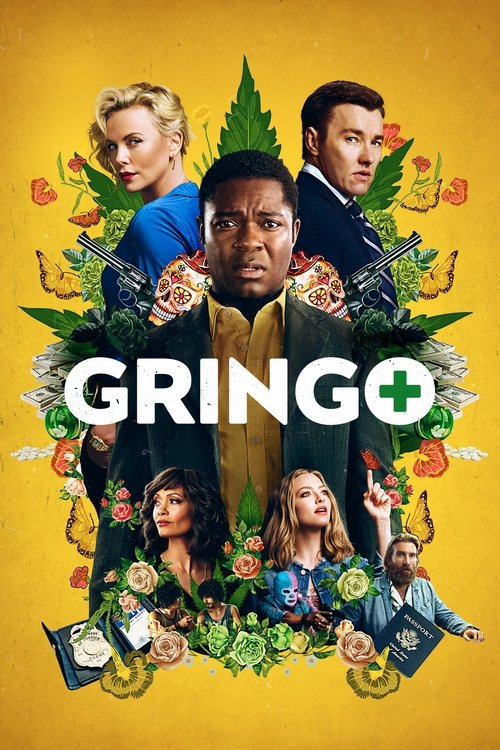
Gringo
An American businessman with a stake in a pharmaceutical company that's about to go public finds his life is thrown into turmoil by an incident in Mexico.
Working with a modest budget of $10.0M, the film achieved a modest success with $11.0M in global revenue (+10% profit margin).


Plot Structure
Story beats plotted across runtime


Narrative Arc
Emotional journey through the story's key moments
Story Circle
Blueprint 15-beat structure
Arcplot Score Breakdown
Weighted: Precision (70%) + Arc (15%) + Theme (15%)
Gringo (2018) demonstrates deliberately positioned story structure, characteristic of Nash Edgerton's storytelling approach. This structural analysis examines how the film's 15-point plot structure maps to proven narrative frameworks across 1 hour and 51 minutes. With an Arcplot score of 7.4, the film balances conventional beats with creative variation.
Characters
Cast & narrative archetypes

Harold Soyinka
Richard Rusk
Elaine Markinson
Mitch Rusk
Bonnie Soyinka
Villegas
Main Cast & Characters
Harold Soyinka
Played by David Oyelowo
A mild-mannered businessman caught in a dangerous web of corporate greed and cartel violence in Mexico. His desperation to save his marriage and career leads him to fake his own kidnapping.
Richard Rusk
Played by Joel Edgerton
Harold's ruthless business partner and friend who prioritizes profits over loyalty. He manipulates Harold while secretly planning to sell their pharmaceutical company.
Elaine Markinson
Played by Charlize Theron
Co-president of the pharmaceutical company and Richard's secret lover. She's ambitious, calculating, and complicit in the corporate scheming that endangers Harold.
Mitch Rusk
Played by Sharlto Copley
Richard's mercenary brother sent to Mexico to extract Harold. A former special forces operative who becomes entangled in Harold's fake kidnapping scheme.
Bonnie Soyinka
Played by Thandiwe Newton
Harold's estranged wife who is having an affair and seeking a divorce. She represents Harold's crumbling personal life and motivation for desperate action.
Villegas
Played by Carlos Corona
The ruthless leader of the Mexican cartel that the pharmaceutical company is doing business with. He becomes a genuine threat when Harold's fake kidnapping spirals out of control.
Structural Analysis
The Status Quo at 1 minutes (1% through the runtime) establishes Harold Soyinka is introduced as a mild-mannered executive at Promethium Pharmaceuticals, married and seemingly settled in his Chicago life, though there are hints of underlying stress and exploitation by his business partners Richard and Elaine.. Significantly, this early placement immediately immerses viewers in the story world.
The inciting incident occurs at 14 minutes when Harold is sent to Mexico to deal with the Celaya plant, unaware that the facility is connected to a dangerous cartel. He discovers his wife has been having an affair and his life savings have been drained, while simultaneously learning the company is being sold and he'll lose his job.. At 12% through the film, this Disruption aligns precisely with traditional story structure. This beat shifts the emotional landscape, launching the protagonist into the central conflict.
The First Threshold at 27 minutes marks the transition into Act II, occurring at 24% of the runtime. This demonstrates the protagonist's commitment to Harold makes the active choice to fake his own kidnapping, calling Richard to demand ransom money. This desperate decision launches him from victim to active participant in a dangerous con, crossing into a criminal world he's never inhabited before., moving from reaction to action.
At 56 minutes, the Midpoint arrives at 50% of the runtime—precisely centered, creating perfect narrative symmetry. Of particular interest, this crucial beat Harold is genuinely captured by the Villegas cartel and faces the reality that no one is coming to save him. His fake kidnapping has become real, the stakes are now life and death, and he realizes Richard has completely abandoned him. False defeat: what seemed like a clever plan is now a death sentence., fundamentally raising what's at risk. The emotional intensity shifts, dividing the narrative into clear before-and-after phases.
The Collapse moment at 84 minutes (76% through) represents the emotional nadir. Here, Harold is beaten and faces execution by the cartel. He believes he will die, abandoned by everyone he trusted. The "whiff of death" is literal—he's moments from being killed, and his former life of naive trust has completely died. He hits absolute rock bottom., illustrates the protagonist at their lowest point. This beat's placement in the final quarter sets up the climactic reversal.
The Second Threshold at 89 minutes initiates the final act resolution at 81% of the runtime. Harold discovers the leverage he needs: information about the pill formula and the cartel's operations. He synthesizes his corporate knowledge with newfound ruthlessness, realizing he can outmaneuver both his former bosses and his captors. He chooses to fight back strategically rather than remain a victim., demonstrating the transformation achieved throughout the journey.
Emotional Journey
Gringo's emotional architecture traces a deliberate progression across 15 carefully calibrated beats.
Narrative Framework
This structural analysis employs a 15-point narrative structure framework that maps key story moments. By mapping Gringo against these established plot points, we can identify how Nash Edgerton utilizes or subverts traditional narrative conventions. The plot point approach reveals not only adherence to structural principles but also creative choices that distinguish Gringo within the comedy genre.
Comparative Analysis
Additional comedy films include The Bad Guys, Ella Enchanted and The Evening Star.
Plot Points by Act
Act I
SetupStatus Quo
Harold Soyinka is introduced as a mild-mannered executive at Promethium Pharmaceuticals, married and seemingly settled in his Chicago life, though there are hints of underlying stress and exploitation by his business partners Richard and Elaine.
Theme
Richard casually tells Harold that "nice guys finish last" during office banter, establishing the film's exploration of whether integrity can survive in a corrupt world, and whether Harold must compromise his morals to protect himself.
Worldbuilding
The setup establishes Harold's life being manipulated: his bosses Richard and Elaine are having an affair behind his and Richard's wife's backs, the company is preparing to merge with a cartel-connected operation in Mexico, and Harold is kept oblivious to the danger he'll face.
Disruption
Harold is sent to Mexico to deal with the Celaya plant, unaware that the facility is connected to a dangerous cartel. He discovers his wife has been having an affair and his life savings have been drained, while simultaneously learning the company is being sold and he'll lose his job.
Resistance
Harold debates how to respond to his collapsing life while in Mexico. He learns about the cartel connection, considers his options, and realizes his bosses have been using him. His paranoia grows as he understands the danger he's in and the betrayals surrounding him.
Act II
ConfrontationFirst Threshold
Harold makes the active choice to fake his own kidnapping, calling Richard to demand ransom money. This desperate decision launches him from victim to active participant in a dangerous con, crossing into a criminal world he's never inhabited before.
Mirror World
Harold encounters Mitch, a mercenary hired to extract him, and begins developing a connection with others caught in the chaos (including Miles and Sunny, the drug mule couple). These relationships show Harold different ways of navigating a corrupt world beyond his naive compliance.
Premise
The promise of the premise: Harold's fake kidnapping spirals into real danger as the actual cartel kidnaps him, Richard refuses to pay, and multiple parties (DEA, cartel, mercenaries, drug mules) collide in increasingly chaotic and darkly comedic situations across Mexico.
Midpoint
Harold is genuinely captured by the Villegas cartel and faces the reality that no one is coming to save him. His fake kidnapping has become real, the stakes are now life and death, and he realizes Richard has completely abandoned him. False defeat: what seemed like a clever plan is now a death sentence.
Opposition
Pressure intensifies from all sides: the cartel threatens Harold, Richard and Elaine actively work against paying ransom to protect the merger, Mitch is torn between money and conscience, and the situation becomes increasingly violent. Harold's passivity and honesty are proving fatal in this world.
Collapse
Harold is beaten and faces execution by the cartel. He believes he will die, abandoned by everyone he trusted. The "whiff of death" is literal—he's moments from being killed, and his former life of naive trust has completely died. He hits absolute rock bottom.
Crisis
In the darkness following his near-death, Harold processes the complete betrayal by Richard and Elaine, the loss of his marriage, and his former identity. He realizes his "niceness" was actually cowardice and complicity. He must decide who he will become.
Act III
ResolutionSecond Threshold
Harold discovers the leverage he needs: information about the pill formula and the cartel's operations. He synthesizes his corporate knowledge with newfound ruthlessness, realizing he can outmaneuver both his former bosses and his captors. He chooses to fight back strategically rather than remain a victim.
Synthesis
Harold executes his plan, turning the tables on Richard and Elaine by leveraging cartel connections and exposing their corruption. He orchestrates events so that his betrayers face consequences while he secures his freedom and financial future. The formerly passive victim becomes the mastermind.
Transformation
Harold is shown in his new life, free from his toxic marriage and exploitative bosses, having retained his humanity while learning to protect himself. He's no longer the naive "nice guy" but hasn't become corrupt—he's found balance between integrity and self-preservation.