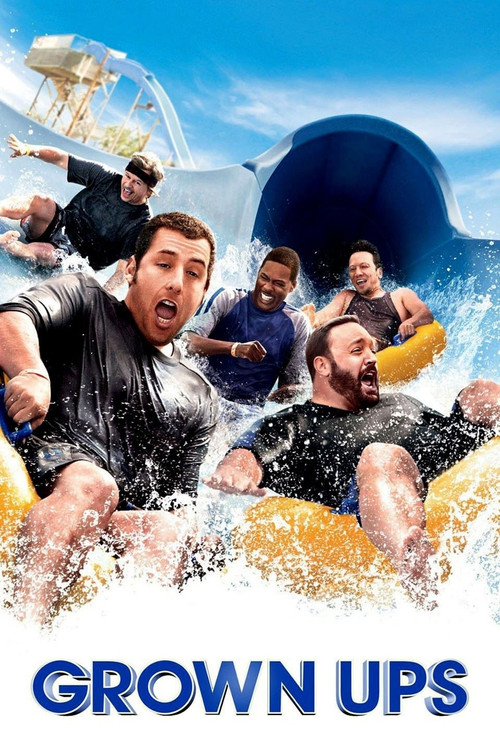
Grown Ups
After their high school basketball coach passes away, five good friends and former teammates reunite for a Fourth of July holiday weekend.
Despite a considerable budget of $80.0M, Grown Ups became a commercial success, earning $271.4M worldwide—a 239% return.
3 wins & 4 nominations


Plot Structure
Story beats plotted across runtime


Narrative Arc
Emotional journey through the story's key moments
Story Circle
Blueprint 15-beat structure
Arcplot Score Breakdown
Weighted: Precision (70%) + Arc (15%) + Theme (15%)
Grown Ups (2010) showcases precise dramatic framework, characteristic of Dennis Dugan's storytelling approach. This structural analysis examines how the film's 15-point plot structure maps to proven narrative frameworks across 1 hour and 42 minutes. With an Arcplot score of 7.1, the film balances conventional beats with creative variation.
Characters
Cast & narrative archetypes

Lenny Feder
Eric Lamonsoff
Kurt McKenzie
Marcus Higgins
Rob Hilliard
Roxanne Chase-Feder
Sally Lamonsoff
Deanne McKenzie
Main Cast & Characters
Lenny Feder
Played by Adam Sandler
A successful Hollywood talent agent who reunites with his childhood friends and learns to balance career ambition with family values.
Eric Lamonsoff
Played by Kevin James
A co-owner of a lawn furniture company, henpecked husband struggling to assert himself while dealing with his still-breastfeeding son.
Kurt McKenzie
Played by Chris Rock
A stay-at-home dad married to a successful career woman, secure in his unconventional role despite others' judgment.
Marcus Higgins
Played by David Spade
A slacker party animal living off past glories, avoiding responsibility while chasing women and good times.
Rob Hilliard
Played by Rob Schneider
A spiritual New Age believer with three daughters, married to a much older woman, constantly tested by his friends.
Roxanne Chase-Feder
Played by Salma Hayek
Lenny's intelligent, successful fashion designer wife who challenges his materialistic lifestyle and advocates for authentic family experiences.
Sally Lamonsoff
Played by Maria Bello
Eric's domineering wife who controls the household and continues breastfeeding their four-year-old son despite social pressure.
Deanne McKenzie
Played by Maya Rudolph
Kurt's high-powered businesswoman wife who earns the family income while Kurt stays home with the kids.
Structural Analysis
The Status Quo at 1 minutes (1% through the runtime) establishes Flashback to 1978: Five young boys win a junior basketball championship under beloved Coach Buzzer, celebrating their youth and friendship. Establishes the nostalgic "before" state of pure childhood connection.. Of particular interest, this early placement immediately immerses viewers in the story world.
The inciting incident occurs at 11 minutes when The friends receive news that their beloved Coach Buzzer has died. This disrupts their separate, comfortable lives and creates the opportunity for reunion.. At 11% through the film, this Disruption aligns precisely with traditional story structure. This beat shifts the emotional landscape, launching the protagonist into the central conflict.
The First Threshold at 25 minutes marks the transition into Act II, occurring at 24% of the runtime. This reveals the protagonist's commitment to Lenny makes the active choice to rent the lake house where they celebrated their championship, committing to spend the entire 4th of July weekend together with all their families. This is the point of no return into reconnection., moving from reaction to action.
At 51 minutes, the Midpoint arrives at 50% of the runtime—precisely centered, creating perfect narrative symmetry. The analysis reveals that this crucial beat False victory: The big 4th of July party at the lake house is in full swing. Everyone seems happy, connected, and having genuine fun. The rope swing sequence peaks with multiple characters successfully jumping. It appears the weekend has succeeded in bringing everyone together., fundamentally raising what's at risk. The emotional intensity shifts, dividing the narrative into clear before-and-after phases.
The Collapse moment at 76 minutes (74% through) represents the emotional nadir. Here, Roxanne confronts Lenny about lying and his inability to be authentic. She takes the kids and leaves for Milan without him. The metaphorical "death" is the death of Lenny's false life - his attempt to have it both ways collapses. The weekend appears to have failed., reveals the protagonist at their lowest point. This beat's placement in the final quarter sets up the climactic reversal.
The Second Threshold at 81 minutes initiates the final act resolution at 80% of the runtime. Lenny realizes he doesn't need to choose between his old life and new life - he needs to bring the authenticity of childhood (the Mirror World lesson) into his modern existence. He decides to pursue his family and be honest. The friends commit to staying connected authentically., demonstrating the transformation achieved throughout the journey.
Emotional Journey
Grown Ups's emotional architecture traces a deliberate progression across 15 carefully calibrated beats.
Narrative Framework
This structural analysis employs proven narrative structure principles that track dramatic progression. By mapping Grown Ups against these established plot points, we can identify how Dennis Dugan utilizes or subverts traditional narrative conventions. The plot point approach reveals not only adherence to structural principles but also creative choices that distinguish Grown Ups within the comedy genre.
Dennis Dugan's Structural Approach
Among the 13 Dennis Dugan films analyzed on Arcplot, the average structural score is 7.3, reflecting strong command of classical structure. Grown Ups takes a more unconventional approach compared to the director's typical style. For comparative analysis, explore the complete Dennis Dugan filmography.
Comparative Analysis
Additional comedy films include The Bad Guys, Ella Enchanted and The Evening Star. For more Dennis Dugan analyses, see Jack and Jill, Grown Ups 2 and Just Go with It.
Plot Points by Act
Act I
SetupStatus Quo
Flashback to 1978: Five young boys win a junior basketball championship under beloved Coach Buzzer, celebrating their youth and friendship. Establishes the nostalgic "before" state of pure childhood connection.
Theme
Present day: Characters are introduced in their current lives - disconnected, over-scheduled, and missing genuine connection. The unspoken theme: "What happened to the simplicity and joy of childhood?" is visually established through the contrast.
Worldbuilding
Introduction of the five friends in their modern lives: Lenny (Adam Sandler) is a Hollywood agent with a privileged family, Eric (Kevin James) struggles with his overbearing wife, Kurt (Chris Rock) is henpecked and dealing with his mother dating, Marcus (David Spade) is an aging playboy, and Rob (Rob Schneider) is new-age with a much older wife. All are disconnected from authenticity.
Disruption
The friends receive news that their beloved Coach Buzzer has died. This disrupts their separate, comfortable lives and creates the opportunity for reunion.
Resistance
The friends debate and prepare to attend the funeral. Lenny cancels his 4th of July vacation in Milan to attend. Each character wrestles with returning to their past, coordinating families, and confronting how much they've changed.
Act II
ConfrontationFirst Threshold
Lenny makes the active choice to rent the lake house where they celebrated their championship, committing to spend the entire 4th of July weekend together with all their families. This is the point of no return into reconnection.
Mirror World
The families arrive at the idyllic lake house. The setting itself becomes the B-story - representing simpler times, authentic connection, and the childhood they've lost. The natural environment contrasts with their technological, overscheduled modern lives.
Premise
The promise of the premise: friends reconnecting through silly activities, childhood games, and lakeside fun. Arrow roulette, rope swinging into the lake, making fun of each other, late-night card games. The kids experience outdoor play without technology. Pure comedic nostalgia and male bonding.
Midpoint
False victory: The big 4th of July party at the lake house is in full swing. Everyone seems happy, connected, and having genuine fun. The rope swing sequence peaks with multiple characters successfully jumping. It appears the weekend has succeeded in bringing everyone together.
Opposition
Tensions emerge: Lenny's wife Roxanne discovers he lied about Milan, the privileged kids' entitled behavior causes conflict, generational and parenting style differences create friction, Marcus's irresponsibility surfaces, and the men realize they can't simply recapture the past. Modern problems invade the nostalgic escape.
Collapse
Roxanne confronts Lenny about lying and his inability to be authentic. She takes the kids and leaves for Milan without him. The metaphorical "death" is the death of Lenny's false life - his attempt to have it both ways collapses. The weekend appears to have failed.
Crisis
Lenny sits alone, processing his losses - both Coach Buzzer's death and his wife's departure. The friends comfort each other, reflecting on what they've learned. Dark night contemplation of what really matters: authenticity over appearance, presence over privilege.
Act III
ResolutionSecond Threshold
Lenny realizes he doesn't need to choose between his old life and new life - he needs to bring the authenticity of childhood (the Mirror World lesson) into his modern existence. He decides to pursue his family and be honest. The friends commit to staying connected authentically.
Synthesis
The finale: Lenny goes to Milan and reunites with his family with newfound authenticity. The friends play their rematch basketball game against their old rivals, but this time with their kids - passing on the legacy of genuine connection. They win, but more importantly, they're present and real with each other and their families.
Transformation
Final image mirrors the opening: Another group photo, but this time spanning three generations at the lake house. Lenny has integrated the lessons - his kids play outdoors, authenticity has replaced performance, and the cycle of genuine connection continues. The transformation from disconnected adults to present, authentic fathers.