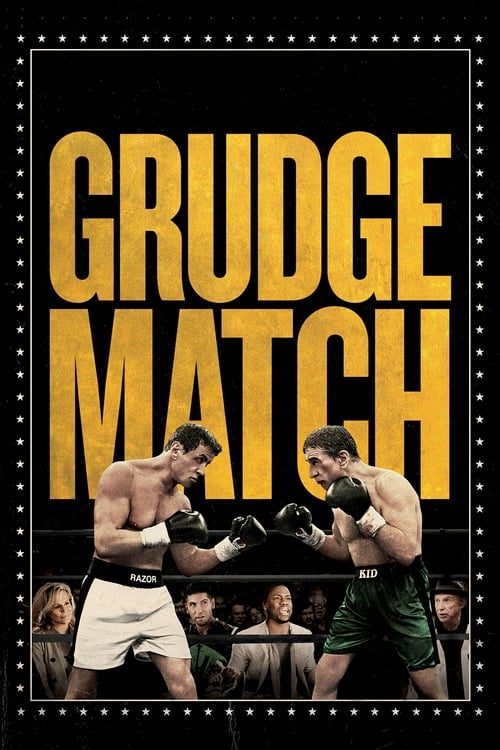
Grudge Match
A pair of aging boxing rivals are coaxed out of retirement to fight one final bout -- 30 years after their last match.
Working with a moderate budget of $40.0M, the film achieved a steady performer with $44.9M in global revenue (+12% profit margin).
1 win & 1 nomination


Plot Structure
Story beats plotted across runtime


Narrative Arc
Emotional journey through the story's key moments
Story Circle
Blueprint 15-beat structure
Arcplot Score Breakdown
Weighted: Precision (70%) + Arc (15%) + Theme (15%)
Grudge Match (2013) reveals strategically placed narrative design, characteristic of Peter Segal's storytelling approach. This structural analysis examines how the film's 15-point plot structure maps to proven narrative frameworks across 1 hour and 53 minutes. With an Arcplot score of 7.3, the film balances conventional beats with creative variation.
Characters
Cast & narrative archetypes

Henry 'Razor' Sharp
Billy 'The Kid' McDonnen
Dante Slate Jr.
Sally Rose
B.J. McDonnen
Louis 'Lightning' Conlon
Main Cast & Characters
Henry 'Razor' Sharp
Played by Sylvester Stallone
A former boxing champion who retired after a rivalry-ending feud, now working a blue-collar job and coaxed back into the ring for one final match.
Billy 'The Kid' McDonnen
Played by Robert De Niro
A brash former boxing champion and Razor's longtime rival, eager to settle their unfinished business in the ring after 30 years.
Dante Slate Jr.
Played by Kevin Hart
An ambitious boxing promoter and son of the boxers' former promoter, who orchestrates the grudge match for profit and spectacle.
Sally Rose
Played by Kim Basinger
Razor's former love interest who left him for Billy decades ago, now seeking reconciliation and closure with both men.
B.J. McDonnen
Played by Jon Bernthal
Billy's estranged adult son who reconnects with his father during the training for the grudge match.
Louis 'Lightning' Conlon
Played by Alan Arkin
Razor's longtime friend and former trainer who helps prepare him for the comeback fight.
Structural Analysis
The Status Quo at 1 minutes (1% through the runtime) establishes Archive footage shows the legendary 1983 final fight between boxers Henry "Razor" Sharp and Billy "The Kid" McDonnen that ended without a winner. Present day: aging Razor works a factory job, living a quiet, solitary life in Pittsburgh, having walked away from boxing thirty years ago.. Significantly, this early placement immediately immerses viewers in the story world.
The inciting incident occurs at 14 minutes when A video of Razor and Billy brawling at a motion-capture gaming session goes viral on the internet. The public demands a rematch after thirty years. Razor loses his factory job due to the publicity, forcing him to consider options he'd long rejected.. At 13% through the film, this Disruption is delayed, allowing extended setup of the story world. This beat shifts the emotional landscape, launching the protagonist into the central conflict.
The First Threshold at 28 minutes marks the transition into Act II, occurring at 25% of the runtime. This reveals the protagonist's commitment to Razor and Billy officially sign contracts for the rematch. They commit to training and enter the world of professional boxing again after thirty years away. The old rivalry is officially reignited, and there's no turning back., moving from reaction to action.
At 56 minutes, the Midpoint arrives at 50% of the runtime—precisely centered, creating perfect narrative symmetry. Significantly, this crucial beat False victory: Both fighters pass their medical examinations and the fight is officially sanctioned. A massive press conference celebrates the rematch. Public excitement peaks. The fighters seem revitalized and ready, but the emotional costs haven't yet surfaced., fundamentally raising what's at risk. The emotional intensity shifts, dividing the narrative into clear before-and-after phases.
The Collapse moment at 83 minutes (73% through) represents the emotional nadir. Here, Razor, emotionally destroyed by the revelation about B.J., withdraws completely. He considers abandoning the fight and his life in Pittsburgh altogether. Lightning suffers a heart attack from the stress, a literal "whiff of death" that makes Razor question if any of this matters., shows the protagonist at their lowest point. This beat's placement in the final quarter sets up the climactic reversal.
The Second Threshold at 90 minutes initiates the final act resolution at 80% of the runtime. Razor realizes the fight isn't about beating Billy—it's about proving to himself and B.J. That he can finish something he started. He accepts his son and commits to the match not for revenge, but for closure and dignity. Billy similarly accepts that the rivalry has cost them both too much., demonstrating the transformation achieved throughout the journey.
Emotional Journey
Grudge Match's emotional architecture traces a deliberate progression across 15 carefully calibrated beats.
Narrative Framework
This structural analysis employs a 15-point narrative structure framework that maps key story moments. By mapping Grudge Match against these established plot points, we can identify how Peter Segal utilizes or subverts traditional narrative conventions. The plot point approach reveals not only adherence to structural principles but also creative choices that distinguish Grudge Match within the comedy genre.
Peter Segal's Structural Approach
Among the 8 Peter Segal films analyzed on Arcplot, the average structural score is 7.2, reflecting strong command of classical structure. Grudge Match represents one of the director's most structurally precise works. For comparative analysis, explore the complete Peter Segal filmography.
Comparative Analysis
Additional comedy films include The Bad Guys, Ella Enchanted and The Evening Star. For more Peter Segal analyses, see 50 First Dates, Second Act and Tommy Boy.
Plot Points by Act
Act I
SetupStatus Quo
Archive footage shows the legendary 1983 final fight between boxers Henry "Razor" Sharp and Billy "The Kid" McDonnen that ended without a winner. Present day: aging Razor works a factory job, living a quiet, solitary life in Pittsburgh, having walked away from boxing thirty years ago.
Theme
Dante Slate Jr., son of their former promoter, tells Razor: "You can't run from your past forever. Sooner or later, you gotta face what you left behind." The theme of confronting unfinished business and unresolved grudges.
Worldbuilding
Establish Razor's lonely existence and Billy's ego-driven auto dealership career. Their mutual hatred stems from their unfinished rivalry and Billy's affair with Razor's former girlfriend Sally. Both men are past their prime, struggling with irrelevance and age.
Disruption
A video of Razor and Billy brawling at a motion-capture gaming session goes viral on the internet. The public demands a rematch after thirty years. Razor loses his factory job due to the publicity, forcing him to consider options he'd long rejected.
Resistance
Dante Jr. pitches the rematch idea. Both fighters initially resist but financial pressures mount. Razor needs money after losing his job; Billy's dealership is failing. Lightning Conlon, a young eager trainer, offers to train Razor. Both men reluctantly agree to the fight despite their age and decades of ring rust.
Act II
ConfrontationFirst Threshold
Razor and Billy officially sign contracts for the rematch. They commit to training and enter the world of professional boxing again after thirty years away. The old rivalry is officially reignited, and there's no turning back.
Mirror World
Razor reconnects with Sally, his old flame who left him for Billy decades ago. A young man named B.J. appears, revealed to be Billy's son. These relationships represent the emotional stakes and unresolved personal history beneath the boxing rivalry.
Premise
Training montages show both men struggling with age but rediscovering their competitive fire. Media coverage intensifies. Razor bonds with Lightning and confronts his feelings about Sally. Billy deals with his estranged son B.J. The premise delivers: two old fighters proving they still have fight left in them.
Midpoint
False victory: Both fighters pass their medical examinations and the fight is officially sanctioned. A massive press conference celebrates the rematch. Public excitement peaks. The fighters seem revitalized and ready, but the emotional costs haven't yet surfaced.
Opposition
Personal tensions escalate. B.J. reveals he's actually Razor's son, not Billy's—Sally was pregnant when she left Razor for Billy. This devastating revelation reopens old wounds. Razor confronts decades of betrayal and lost fatherhood. The boxing match becomes secondary to the emotional warfare between the three adults.
Collapse
Razor, emotionally destroyed by the revelation about B.J., withdraws completely. He considers abandoning the fight and his life in Pittsburgh altogether. Lightning suffers a heart attack from the stress, a literal "whiff of death" that makes Razor question if any of this matters.
Crisis
Razor visits Lightning in the hospital and processes his pain. He must decide what he's really fighting for: revenge, pride, money, or something more meaningful. B.J. reaches out, wanting a relationship with his real father despite the lies.
Act III
ResolutionSecond Threshold
Razor realizes the fight isn't about beating Billy—it's about proving to himself and B.J. that he can finish something he started. He accepts his son and commits to the match not for revenge, but for closure and dignity. Billy similarly accepts that the rivalry has cost them both too much.
Synthesis
The climactic rematch takes place. Both aging fighters give everything they have in an brutal, honest fight. The crowd witnesses two men fighting not with hatred but with respect and the need for closure. The fight goes the distance. Razor wins by decision, but both men embrace afterward, the thirty-year grudge finally resolved.
Transformation
Final image mirrors the opening: instead of solitary Razor working in a factory, we see him training B.J. in a boxing gym, passing on his knowledge. Billy joins them, the three men finally at peace. The grudge is over; the family is whole.