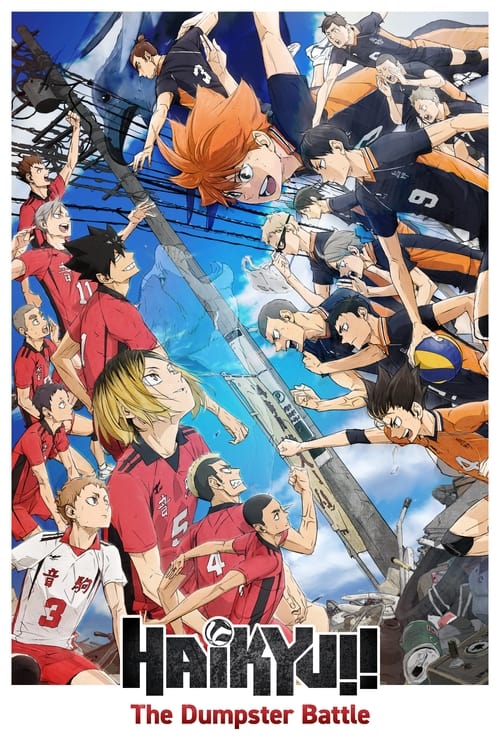
HAIKYU!! The Dumpster Battle
Shoyo Hinata joins Karasuno High's volleyball club to be like his idol, a former Karasuno player known as the 'Little Giant'. But Hinata soon learns that he must team up with his middle school nemesis, Tobio Kageyama. Their clashing styles form a surprising weapon, but can their newfound teamwork defeat their rival Nekoma High in the highly anticipated 'Dumpster Battle', the long awaited ultimate showdown between two opposing underdog teams?
Despite its modest budget of $5.0M, HAIKYU!! The Dumpster Battle became a massive hit, earning $100.3M worldwide—a remarkable 1905% return. The film's bold vision found its audience, showing that strong storytelling can transcend budget limitations.


Plot Structure
Story beats plotted across runtime


Narrative Arc
Emotional journey through the story's key moments
Story Circle
Blueprint 15-beat structure
Arcplot Score Breakdown
Weighted: Precision (70%) + Arc (15%) + Theme (15%)
HAIKYU!! The Dumpster Battle (2024) exemplifies strategically placed narrative design, characteristic of Susumu Mitsunaka's storytelling approach. This structural analysis examines how the film's 15-point plot structure maps to proven narrative frameworks across 1 hour and 25 minutes. With an Arcplot score of 7.1, the film balances conventional beats with creative variation.
Characters
Cast & narrative archetypes

Shoyo Hinata
Tobio Kageyama
Tetsuro Kuroo
Kenma Kozume
Daichi Sawamura
Yu Nishinoya
Asahi Azumane
Kei Tsukishima
Tadashi Yamaguchi
Ryunosuke Tanaka
Main Cast & Characters
Shoyo Hinata
Played by Ayumu Murase
Karasuno's energetic short middle blocker with incredible jumping ability and determination to become the ace.
Tobio Kageyama
Played by Kaito Ishikawa
Karasuno's genius setter known as the King of the Court, learning to trust his teammates.
Tetsuro Kuroo
Played by Yuichi Nakamura
Nekoma's captain and middle blocker, strategic thinker with natural leadership and provocation skills.
Kenma Kozume
Played by Yuki Kaji
Nekoma's introverted setter with exceptional game sense and analytical thinking.
Daichi Sawamura
Played by Satoshi Hino
Karasuno's reliable captain and wing spiker, the team's foundation and moral anchor.
Yu Nishinoya
Played by Nobuhiko Okamoto
Karasuno's libero and defensive specialist, energetic guardian deity with unshakeable confidence.
Asahi Azumane
Played by Yoshimasa Hosoya
Karasuno's ace and wing spiker, gentle giant struggling with confidence despite his power.
Kei Tsukishima
Played by Koki Uchiyama
Karasuno's tall middle blocker with a cynical attitude masking his competitive nature.
Tadashi Yamaguchi
Played by Soma Saito
Karasuno's pinch server and middle blocker, Tsukishima's loyal friend finding his own strength.
Ryunosuke Tanaka
Played by Yu Hayashi
Karasuno's passionate wing spiker, loud and energetic with unwavering team spirit.
Structural Analysis
The Status Quo at 1 minutes (1% through the runtime) establishes Karasuno team arrives at the nationals venue, their previous victories leading them to this moment. The long-awaited match against Nekoma is finally here.. Significantly, this early placement immediately immerses viewers in the story world.
The inciting incident occurs at 10 minutes when The referee's whistle blows and the match officially begins. Both teams take the court, transforming anticipation into action as the first serve is executed.. At 12% through the film, this Disruption aligns precisely with traditional story structure. This beat shifts the emotional landscape, launching the protagonist into the central conflict.
The First Threshold at 20 minutes marks the transition into Act II, occurring at 24% of the runtime. This shows the protagonist's commitment to Karasuno commits fully to their aggressive attacking strategy, with Hinata making the conscious choice to evolve his play style to break through Nekoma's defense rather than rely solely on his freak quick attack., moving from reaction to action.
At 43 minutes, the Midpoint arrives at 50% of the runtime—precisely centered, creating perfect narrative symmetry. Structural examination shows that this crucial beat Karasuno wins the first set, but Nekoma's Kenma reveals he has been analyzing their patterns. False victory - winning the set feels good, but Nekoma now has the data they need to counter Karasuno's attacks., fundamentally raising what's at risk. The emotional intensity shifts, dividing the narrative into clear before-and-after phases.
The Collapse moment at 63 minutes (74% through) represents the emotional nadir. Here, Nekoma takes the second set decisively. In the break, Karasuno players show visible exhaustion and doubt. Tsukishima or another key player shows signs of being completely figured out, questioning if they can overcome Nekoma's perfect defense., demonstrates the protagonist at their lowest point. This beat's placement in the final quarter sets up the climactic reversal.
The Second Threshold at 68 minutes initiates the final act resolution at 80% of the runtime. Hinata realizes that being analyzed isn't a weakness - it's a sign of respect between rivals. The team synthesizes their individual skills with trust in each other. They choose to play with joy rather than fear, embracing the battle itself., demonstrating the transformation achieved throughout the journey.
Emotional Journey
HAIKYU!! The Dumpster Battle's emotional architecture traces a deliberate progression across 15 carefully calibrated beats.
Narrative Framework
This structural analysis employs systematic plot point analysis that identifies crucial turning points. By mapping HAIKYU!! The Dumpster Battle against these established plot points, we can identify how Susumu Mitsunaka utilizes or subverts traditional narrative conventions. The plot point approach reveals not only adherence to structural principles but also creative choices that distinguish HAIKYU!! The Dumpster Battle within the animation genre.
Comparative Analysis
Additional animation films include The Bad Guys, Puss in Boots and Violet Evergarden: Eternity and the Auto Memory Doll.
Plot Points by Act
Act I
SetupStatus Quo
Karasuno team arrives at the nationals venue, their previous victories leading them to this moment. The long-awaited match against Nekoma is finally here.
Theme
Coach Ukai or Nekoma's Coach Nekomata references the "Battle at the Garbage Dump" promise, emphasizing that volleyball is about persistent effort and the connections forged through competition.
Worldbuilding
Establishment of both teams, their histories, the long-standing rivalry between Karasuno and Nekoma, flashbacks to previous encounters, team warm-ups, and the significance of this match to both schools.
Disruption
The referee's whistle blows and the match officially begins. Both teams take the court, transforming anticipation into action as the first serve is executed.
Resistance
First set begins with both teams testing each other's defenses. Karasuno adjusts to Nekoma's renowned defensive style. Hinata and Kageyama work to find openings against Nekoma's "iron wall" blocking.
Act II
ConfrontationFirst Threshold
Karasuno commits fully to their aggressive attacking strategy, with Hinata making the conscious choice to evolve his play style to break through Nekoma's defense rather than rely solely on his freak quick attack.
Mirror World
Kenma and Hinata's relationship is highlighted - their mutual respect and parallel growth as players. Kenma represents the strategic mind that Hinata must learn to embrace alongside his instinctive play.
Premise
The promise of the premise: elite-level volleyball between perfectly matched rivals. Spectacular rallies, strategic plays, defensive saves, powerful spikes. Both teams showcase their unique strengths in extended, breathtaking volleys.
Midpoint
Karasuno wins the first set, but Nekoma's Kenma reveals he has been analyzing their patterns. False victory - winning the set feels good, but Nekoma now has the data they need to counter Karasuno's attacks.
Opposition
Second set sees Nekoma adapt and dominate. Their receives become flawless, blocks perfectly timed. Karasuno's attacks are repeatedly shut down. Kenma orchestrates the court like a chess master, exploiting every weakness.
Collapse
Nekoma takes the second set decisively. In the break, Karasuno players show visible exhaustion and doubt. Tsukishima or another key player shows signs of being completely figured out, questioning if they can overcome Nekoma's perfect defense.
Crisis
The team confronts their fear of losing. Silent moment in the locker room or on the bench. Players process what it means to face an opponent who knows them completely.
Act III
ResolutionSecond Threshold
Hinata realizes that being analyzed isn't a weakness - it's a sign of respect between rivals. The team synthesizes their individual skills with trust in each other. They choose to play with joy rather than fear, embracing the battle itself.
Synthesis
The final set is an all-out war. Point-for-point battle with neither team giving an inch. Every player contributes. The rally becomes legendary, showcasing the absolute peak of both teams' abilities. The match concludes with a winner.
Transformation
After the match, both teams meet at the net with mutual respect. Hinata and Kenma exchange words, transformed by the battle. The teams bow to each other, the "garbage dump" promise fulfilled. Growth achieved through competition.