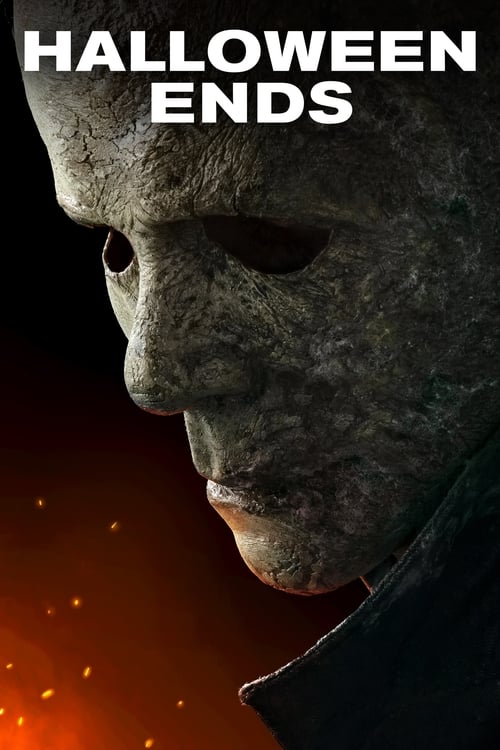
Halloween Ends
Four years after the events of Halloween in 2018, Laurie has decided to liberate herself from fear and rage and embrace life. But when a young man is accused of killing a boy he was babysitting, it ignites a cascade of violence and terror that will force Laurie to finally confront the evil she can’t control, once and for all.
Despite a mid-range budget of $33.0M, Halloween Ends became a commercial success, earning $104.4M worldwide—a 216% return.
3 wins & 21 nominations


Plot Structure
Story beats plotted across runtime


Narrative Arc
Emotional journey through the story's key moments
Story Circle
Blueprint 15-beat structure
Arcplot Score Breakdown
Weighted: Precision (70%) + Arc (15%) + Theme (15%)
Halloween Ends (2022) exhibits meticulously timed story structure, characteristic of David Gordon Green's storytelling approach. This structural analysis examines how the film's 15-point plot structure maps to proven narrative frameworks across 1 hour and 51 minutes. With an Arcplot score of 7.0, the film balances conventional beats with creative variation.
Structural Analysis
The Status Quo at 1 minutes (1% through the runtime) establishes Corey Cunningham arrives as a friendly babysitter on Halloween 2019, appearing as a responsible young man with his whole future ahead of him.. Notably, this early placement immediately immerses viewers in the story world.
The inciting incident occurs at 13 minutes when Corey is viciously attacked and thrown off a bridge by Haddonfield high school bullies who blame him for bringing evil to their town.. At 12% through the film, this Disruption aligns precisely with traditional story structure. This beat shifts the emotional landscape, launching the protagonist into the central conflict.
The First Threshold at 29 minutes marks the transition into Act II, occurring at 26% of the runtime. This reveals the protagonist's commitment to Corey encounters Michael Myers in the sewers after another attack. Rather than being killed, Corey locks eyes with Michael and sees a reflection of his own rage and darkness., moving from reaction to action.
At 56 minutes, the Midpoint arrives at 50% of the runtime—precisely centered, creating perfect narrative symmetry. Structural examination shows that this crucial beat Corey fully embraces his dark transformation, taking Michael's mask and committing to becoming a killer himself, raising the stakes from victim to active perpetrator., fundamentally raising what's at risk. The emotional intensity shifts, dividing the narrative into clear before-and-after phases.
The Collapse moment at 83 minutes (75% through) represents the emotional nadir. Here, Corey kills Michael Myers and takes his mask completely, marking the death of the original boogeyman and the birth of a new evil. The legacy appears to have won., indicates the protagonist at their lowest point. This beat's placement in the final quarter sets up the climactic reversal.
The Second Threshold at 89 minutes initiates the final act resolution at 81% of the runtime. Laurie discovers Corey's deception and realizes she must end this cycle of evil herself. She accepts that she must face Michael one final time to protect her family., demonstrating the transformation achieved throughout the journey.
Emotional Journey
Halloween Ends's emotional architecture traces a deliberate progression across 15 carefully calibrated beats.
Narrative Framework
This structural analysis employs systematic plot point analysis that identifies crucial turning points. By mapping Halloween Ends against these established plot points, we can identify how David Gordon Green utilizes or subverts traditional narrative conventions. The plot point approach reveals not only adherence to structural principles but also creative choices that distinguish Halloween Ends within the horror genre.
David Gordon Green's Structural Approach
Among the 9 David Gordon Green films analyzed on Arcplot, the average structural score is 7.3, reflecting strong command of classical structure. Halloween Ends takes a more unconventional approach compared to the director's typical style. For comparative analysis, explore the complete David Gordon Green filmography.
Comparative Analysis
Additional horror films include Thinner, A Nightmare on Elm Street and Mary Reilly. For more David Gordon Green analyses, see Nutcrackers, Halloween Kills and Halloween.
Plot Points by Act
Act I
SetupStatus Quo
Corey Cunningham arrives as a friendly babysitter on Halloween 2019, appearing as a responsible young man with his whole future ahead of him.
Theme
Haddonfield residents discuss how evil spreads and infects a community, questioning whether the town itself has become cursed by Michael Myers' presence.
Worldbuilding
Establishes Corey's accidental killing of Jeremy in 2019, his resulting pariah status in Haddonfield three years later, and Laurie's attempt to move forward with her memoir while living with granddaughter Allyson.
Disruption
Corey is viciously attacked and thrown off a bridge by Haddonfield high school bullies who blame him for bringing evil to their town.
Resistance
Laurie takes Corey under her wing after the attack, introduces him to Allyson, and encourages him to not let the town define him. Corey and Allyson begin a tentative romance.
Act II
ConfrontationFirst Threshold
Corey encounters Michael Myers in the sewers after another attack. Rather than being killed, Corey locks eyes with Michael and sees a reflection of his own rage and darkness.
Mirror World
Corey's deepening relationship with Allyson represents the possibility of redemption and human connection, mirroring Laurie's own journey toward healing.
Premise
Corey begins his transformation, returning to Michael and learning to kill. He commits murders while maintaining his relationship with Allyson, exploring the film's premise: the creation of a new monster.
Midpoint
Corey fully embraces his dark transformation, taking Michael's mask and committing to becoming a killer himself, raising the stakes from victim to active perpetrator.
Opposition
Laurie begins to suspect Corey's true nature while Corey escalates his killing spree. The worlds of redemption (Allyson/Laurie) and corruption (Corey/Michael) move toward inevitable collision.
Collapse
Corey kills Michael Myers and takes his mask completely, marking the death of the original boogeyman and the birth of a new evil. The legacy appears to have won.
Crisis
Corey attempts to force Allyson to leave with him. When rejected, he stages his own suicide to frame Laurie, representing his complete moral collapse and final rejection of redemption.
Act III
ResolutionSecond Threshold
Laurie discovers Corey's deception and realizes she must end this cycle of evil herself. She accepts that she must face Michael one final time to protect her family.
Synthesis
Laurie's final confrontation with Michael Myers in her home. She uses everything she's learned across four decades to systematically destroy him, with the community helping to end his body completely.
Transformation
Laurie continues writing her memoir at peace, having finally freed herself and Haddonfield from Michael's shadow. The town can begin to heal.