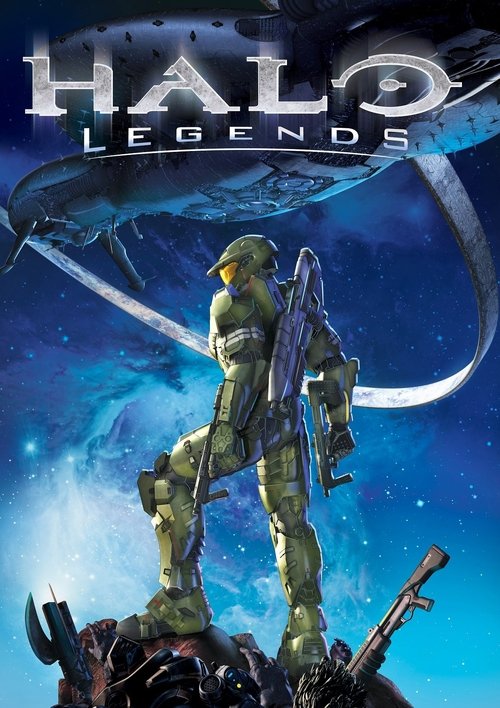
Halo Legends
The universe of the Halo video game series is expanded in seven short animated films from Japan's greatest anime directors and studios.
The film earned $11.0M at the global box office.


Plot Structure
Story beats plotted across runtime


Narrative Arc
Emotional journey through the story's key moments
Story Circle
Blueprint 15-beat structure
Arcplot Score Breakdown
Weighted: Precision (70%) + Arc (15%) + Theme (15%)
Halo Legends (2010) showcases precise narrative design, characteristic of Hiroshi Yamazaki's storytelling approach. This structural analysis examines how the film's 15-point plot structure maps to proven narrative frameworks across 2 hours. With an Arcplot score of 7.5, the film showcases strong structural fundamentals.
Characters
Cast & narrative archetypes

Master Chief John-117
Cortana
Fal 'Chavamee
Daisy-023
Sergeant Ghost
Cal-141
Dr. Catherine Halsey
Main Cast & Characters
Master Chief John-117
Played by Steve Downes
The legendary Spartan-II supersoldier and humanity's greatest warrior who leads missions against the Covenant.
Cortana
Played by Jen Taylor
The AI companion to Master Chief who narrates the history of the Halo universe in Origins segments.
Fal 'Chavamee
Played by Nolan North
A legendary Elite warrior and Arbiter who refuses to accept the Covenant religion, fighting with honor and skill.
Daisy-023
Played by Luci Christian
A female Spartan-II haunted by memories of her childhood and family, struggling with her identity and past.
Sergeant Ghost
Played by David Wald
A scarred Marine sergeant who pilots an experimental armor suit to protect evacuating civilians from Covenant forces.
Cal-141
Played by Luci Christian
A female Spartan-II supersoldier and skilled sniper assigned to lead an ODST team on an assassination mission.
Dr. Catherine Halsey
Played by Jen Taylor
The brilliant creator of the Spartan-II program and CORTANA AI, rescued by Master Chief and his team.
Structural Analysis
The Status Quo at 1 minutes (1% through the runtime) establishes Opening titles establish the Halo universe as a sprawling science fiction setting where humanity faces existential threats from the Covenant, setting the stage for stories of soldiers and sacrifice.. The analysis reveals that this early placement immediately immerses viewers in the story world.
The inciting incident occurs at 14 minutes when Transition to "The Duel" introduces the Covenant's ruthless enforcement of religious orthodoxy as the Arbiter faces execution for heresy, disrupting any notion of honor within the alien hierarchy and establishing the brutal stakes.. At 12% through the film, this Disruption aligns precisely with traditional story structure. This beat shifts the emotional landscape, launching the protagonist into the central conflict.
The First Threshold at 30 minutes marks the transition into Act II, occurring at 25% of the runtime. This shows the protagonist's commitment to "Odd One Out" radically shifts tone with comedic parody, forcing the anthology to commit to exploring the Halo universe through multiple lenses - not just serious warfare but also playful deconstruction of super-soldier mythology., moving from reaction to action.
At 60 minutes, the Midpoint arrives at 50% of the runtime—precisely centered, creating perfect narrative symmetry. Of particular interest, this crucial beat "The Babysitter" climaxes with the ODST sniper achieving his mission but losing his teammate, a false victory that reveals the hollowness of success when measured against human cost., fundamentally raising what's at risk. The emotional intensity shifts, dividing the narrative into clear before-and-after phases.
The Collapse moment at 90 minutes (75% through) represents the emotional nadir. Here, In "Homecoming," Daisy confronts the revelation that she was kidnapped and replaced with a flash clone who died in her place, a devastating loss of innocence that represents the moral cost of the Spartan program., illustrates the protagonist at their lowest point. This beat's placement in the final quarter sets up the climactic reversal.
The Second Threshold at 96 minutes initiates the final act resolution at 80% of the runtime. Daisy sacrifices herself to save civilians, synthesizing the anthology's message: regardless of origin or manipulation, individuals can choose heroism, validating the theme that purpose comes from action, not creation., demonstrating the transformation achieved throughout the journey.
Emotional Journey
Halo Legends's emotional architecture traces a deliberate progression across 15 carefully calibrated beats.
Narrative Framework
This structural analysis employs a 15-point narrative structure framework that maps key story moments. By mapping Halo Legends against these established plot points, we can identify how Hiroshi Yamazaki utilizes or subverts traditional narrative conventions. The plot point approach reveals not only adherence to structural principles but also creative choices that distinguish Halo Legends within the animation genre.
Comparative Analysis
Additional animation films include The Bad Guys, Puss in Boots and Violet Evergarden: Eternity and the Auto Memory Doll.
Plot Points by Act
Act I
SetupStatus Quo
Opening titles establish the Halo universe as a sprawling science fiction setting where humanity faces existential threats from the Covenant, setting the stage for stories of soldiers and sacrifice.
Theme
In "Origins," Cortana reflects on the nature of war and survival, stating that humanity's greatest strength lies in their refusal to surrender even against impossible odds - the central theme of perseverance through sacrifice.
Worldbuilding
The "Origins" segments provide mythological background on the Forerunners, ancient humanity, the Flood, and the creation of the Halo rings, establishing the vast historical context and the cyclical nature of warfare in this universe.
Disruption
Transition to "The Duel" introduces the Covenant's ruthless enforcement of religious orthodoxy as the Arbiter faces execution for heresy, disrupting any notion of honor within the alien hierarchy and establishing the brutal stakes.
Resistance
"The Duel" and "Homecoming" explore the personal costs of war from both Covenant and human perspectives, showing warriors grappling with loyalty, loss, and the price of defiance against their respective systems.
Act II
ConfrontationFirst Threshold
"Odd One Out" radically shifts tone with comedic parody, forcing the anthology to commit to exploring the Halo universe through multiple lenses - not just serious warfare but also playful deconstruction of super-soldier mythology.
Mirror World
In "Prototype," a soldier chooses to use an experimental suit to save civilians rather than preserve military hardware, embodying the thematic counterpoint that individual lives matter more than strategic assets.
Premise
The middle segments ("Odd One Out," "Prototype," "The Babysitter") deliver the promise of diverse Halo stories - mixing tones from comedy to tragedy while exploring Spartans, ODSTs, and ordinary soldiers in combat scenarios.
Midpoint
"The Babysitter" climaxes with the ODST sniper achieving his mission but losing his teammate, a false victory that reveals the hollowness of success when measured against human cost.
Opposition
"The Package" and portions of "The Duel" intensify action and stakes, showing Spartans pushed to their limits protecting Dr. Halsey while opposition forces grow overwhelming, emphasizing that even super-soldiers can be outmatched.
Collapse
In "Homecoming," Daisy confronts the revelation that she was kidnapped and replaced with a flash clone who died in her place, a devastating loss of innocence that represents the moral cost of the Spartan program.
Crisis
Daisy processes the horror of her origins and chooses to fight anyway, wrestling with whether her existence justifies the suffering caused, embodying the dark night of questioning one's purpose in an unjust system.
Act III
ResolutionSecond Threshold
Daisy sacrifices herself to save civilians, synthesizing the anthology's message: regardless of origin or manipulation, individuals can choose heroism, validating the theme that purpose comes from action, not creation.
Synthesis
The final segments resolve the anthology's exploration showing that across all stories - Arbiter, Spartan, ODST, or civilian - the choice to protect others in the face of death defines heroism in the Halo universe.
Transformation
Closing imagery of the Halo ring and stars mirrors the opening cosmos, but now infused with the human stories of sacrifice witnessed, transforming the setting from sterile sci-fi backdrop into hallowed ground built on heroism.