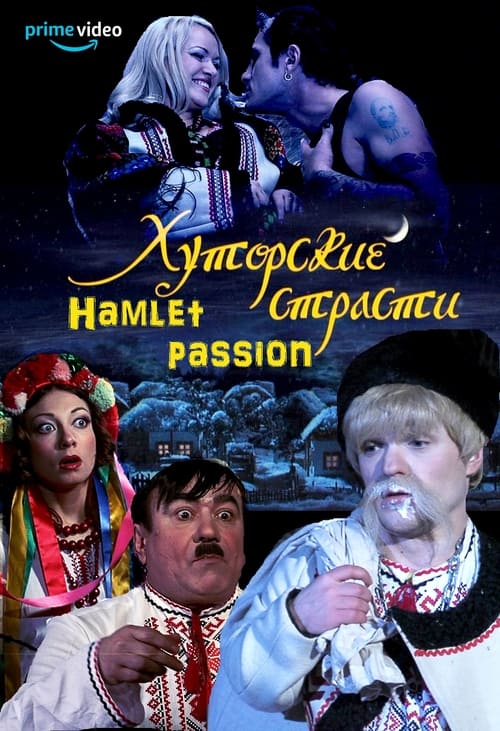
Hamlet Passion
Film based on Nikolai Gogol's story The Night Before Chrisrmas. Melodrama turning into comedy, with eccentricity and elements of eroticism, which does not turn into anything. The film uses folk music and ethnic blues.
Despite its minimal budget of $100K, Hamlet Passion became a commercial juggernaut, earning $25.0M worldwide—a remarkable 24900% return. The film's distinctive approach engaged audiences, demonstrating that strong storytelling can transcend budget limitations.
Plot Structure
Story beats plotted across runtime


Narrative Arc
Emotional journey through the story's key moments
Story Circle
Blueprint 15-beat structure
Arcplot Score Breakdown
Weighted: Precision (70%) + Arc (15%) + Theme (15%)
Hamlet Passion (2008) exhibits precise narrative architecture, characteristic of Aleksandr Parkhomenko's storytelling approach. This structural analysis examines how the film's 11-point plot structure maps to proven narrative frameworks across 1 hour and 16 minutes. With an Arcplot score of 6.7, the film balances conventional beats with creative variation.
Structural Analysis
The Status Quo at 1 minutes (1% through the runtime) establishes Hamlet mourns his father's recent death while his mother has already remarried his uncle Claudius, establishing a world of grief and betrayal.. The analysis reveals that this early placement immediately immerses viewers in the story world.
The inciting incident occurs at 9 minutes when The ghost of Hamlet's father appears and reveals he was murdered by Claudius, demanding revenge and disrupting Hamlet's world entirely.. At 12% through the film, this Disruption aligns precisely with traditional story structure. This beat shifts the emotional landscape, launching the protagonist into the central conflict.
The Collapse moment at 57 minutes (75% through) represents the emotional nadir. Here, Hamlet discovers Ophelia has died (drowned), representing the death of love, innocence, and any possibility of returning to a normal life., shows the protagonist at their lowest point. This beat's placement in the final quarter sets up the climactic reversal.
The Synthesis at 61 minutes initiates the final act resolution at 80% of the runtime. The final duel unfolds: Gertrude drinks poison, Hamlet and Laertes wound each other with the poisoned blade, truth is revealed, Hamlet kills Claudius and dies., demonstrating the transformation achieved throughout the journey.
Emotional Journey
Hamlet Passion's emotional architecture traces a deliberate progression across 11 carefully calibrated beats.
Narrative Framework
This structural analysis employs proven narrative structure principles that track dramatic progression. By mapping Hamlet Passion against these established plot points, we can identify how Aleksandr Parkhomenko utilizes or subverts traditional narrative conventions. The plot point approach reveals not only adherence to structural principles but also creative choices that distinguish Hamlet Passion within the comedy genre.
Comparative Analysis
Additional comedy films include The Ministry of Ungentlemanly Warfare, The Bad Guys and Lake Placid.
Plot Points by Act
Act I
SetupStatus Quo
Hamlet mourns his father's recent death while his mother has already remarried his uncle Claudius, establishing a world of grief and betrayal.
Theme
Polonius advises "To thine own self be true," stating the central theme about authenticity versus deception and the cost of revenge.
Worldbuilding
Introduction to the Danish court, Hamlet's depression, Ophelia and Polonius's family dynamics, and the political situation with Fortinbras.
Disruption
The ghost of Hamlet's father appears and reveals he was murdered by Claudius, demanding revenge and disrupting Hamlet's world entirely.
Resistance
Hamlet debates whether to trust the ghost, questions the morality of revenge, and begins planning how to verify Claudius's guilt.
Act II
ConfrontationPremise
Hamlet adopts his "antic disposition," toys with Polonius and Rosencrantz and Guildenstern, and prepares the play-within-a-play.
Opposition
Hamlet kills Polonius by mistake, is sent to England, Ophelia descends into madness and dies, Laertes returns seeking revenge, Claudius plots against Hamlet.
Collapse
Hamlet discovers Ophelia has died (drowned), representing the death of love, innocence, and any possibility of returning to a normal life.
Crisis
Hamlet confronts Laertes at Ophelia's grave and reflects on mortality and the futility of his hesitation in the graveyard scene.
Act III
ResolutionSynthesis
The final duel unfolds: Gertrude drinks poison, Hamlet and Laertes wound each other with the poisoned blade, truth is revealed, Hamlet kills Claudius and dies.
Transformation
Hamlet dies in Horatio's arms, having achieved revenge but at the cost of everyone he loved and his own life, transforming from paralyzed prince to tragic hero.