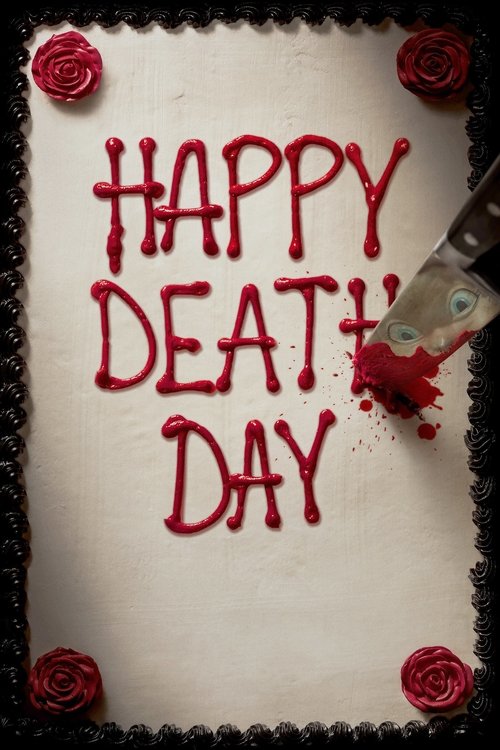
Happy Death Day
Caught in a bizarre and terrifying time warp, college student Tree finds herself repeatedly reliving the day of her murder, ultimately realizing that she must identify the killer and the reason for her death before her chances of survival run out.
Despite its small-scale budget of $4.8M, Happy Death Day became a commercial juggernaut, earning $125.5M worldwide—a remarkable 2514% return. The film's compelling narrative found its audience, demonstrating that strong storytelling can transcend budget limitations.


Plot Structure
Story beats plotted across runtime


Narrative Arc
Emotional journey through the story's key moments
Story Circle
Blueprint 15-beat structure
Arcplot Score Breakdown
Weighted: Precision (70%) + Arc (15%) + Theme (15%)
Happy Death Day (2017) reveals carefully calibrated dramatic framework, characteristic of Christopher Landon's storytelling approach. This structural analysis examines how the film's 15-point plot structure maps to proven narrative frameworks across 1 hour and 37 minutes. With an Arcplot score of 6.8, the film balances conventional beats with creative variation.
Characters
Cast & narrative archetypes

Tree Gelbman
Carter Davis
Lori Spengler
Gregory Butler
Danielle Bouseman
Main Cast & Characters
Tree Gelbman
Played by Jessica Rothe
A self-centered college student trapped in a time loop, reliving the day of her murder until she can identify her killer and break the cycle.
Carter Davis
Played by Israel Broussard
A sweet, kind-hearted college student who helps Tree navigate her time loop nightmare and becomes her emotional anchor.
Lori Spengler
Played by Ruby Modine
Tree's seemingly sweet roommate who harbors dark secrets and jealousy beneath her friendly exterior.
Gregory Butler
Played by Charles Aitken
Tree's married professor with whom she is having an affair, representing her morally questionable choices.
Danielle Bouseman
Played by Rachel Matthews
The mean-spirited president of Tree's sorority who embodies the shallow, cruel social hierarchy Tree is part of.
Structural Analysis
The Status Quo at 1 minutes (1% through the runtime) establishes Tree Gelbman wakes up in Carter's dorm room on her birthday, hungover and dismissive. She's shallow, self-centered, and rude to everyone she encounters as she does the walk of shame back to her sorority.. Of particular interest, this early placement immediately immerses viewers in the story world.
The inciting incident occurs at 13 minutes when Tree is murdered by a masked killer wearing a baby-face mask (the university mascot) on her way to a party. She's lured into a tunnel and stabbed to death.. At 14% through the film, this Disruption is delayed, allowing extended setup of the story world. This beat shifts the emotional landscape, launching the protagonist into the central conflict.
The First Threshold at 26 minutes marks the transition into Act II, occurring at 26% of the runtime. This demonstrates the protagonist's commitment to Tree actively decides to use the time loop to solve her own murder. She confides in Carter, who helps her make a list of suspects. She commits to investigating and changing her fate rather than passively repeating the day., moving from reaction to action.
At 49 minutes, the Midpoint arrives at 51% of the runtime—precisely centered, creating perfect narrative symmetry. The analysis reveals that this crucial beat Tree realizes she's becoming a better person through the loops. She has dinner with her father, reconciles with her roommate, and ends the affair with Dr. Gregory. False victory: she believes she's identified the killer (Lori) and can finally break the loop., fundamentally raising what's at risk. The emotional intensity shifts, dividing the narrative into clear before-and-after phases.
The Collapse moment at 72 minutes (75% through) represents the emotional nadir. Here, Tree learns that each loop is killing her—she's growing physically weaker and will eventually die permanently. In despair, she realizes the only way to save Carter (who's been shot) is to hang herself and reset the loop, sacrificing herself., illustrates the protagonist at their lowest point. This beat's placement in the final quarter sets up the climactic reversal.
The Second Threshold at 78 minutes initiates the final act resolution at 80% of the runtime. Tree realizes her roommate Lori is the real killer—motivated by jealousy over Dr. Gregory. Tree synthesizes all she's learned across the loops: the hospital escape was a red herring, and the danger was close to home all along., demonstrating the transformation achieved throughout the journey.
Emotional Journey
Happy Death Day's emotional architecture traces a deliberate progression across 15 carefully calibrated beats.
Narrative Framework
This structural analysis employs structural analysis methodology used to understand storytelling architecture. By mapping Happy Death Day against these established plot points, we can identify how Christopher Landon utilizes or subverts traditional narrative conventions. The plot point approach reveals not only adherence to structural principles but also creative choices that distinguish Happy Death Day within the comedy genre.
Christopher Landon's Structural Approach
Among the 5 Christopher Landon films analyzed on Arcplot, the average structural score is 7.0, reflecting strong command of classical structure. Happy Death Day takes a more unconventional approach compared to the director's typical style. For comparative analysis, explore the complete Christopher Landon filmography.
Comparative Analysis
Additional comedy films include The Bad Guys, Ella Enchanted and The Evening Star. For more Christopher Landon analyses, see Freaky, Happy Death Day 2U and Scouts Guide to the Zombie Apocalypse.
Plot Points by Act
Act I
SetupStatus Quo
Tree Gelbman wakes up in Carter's dorm room on her birthday, hungover and dismissive. She's shallow, self-centered, and rude to everyone she encounters as she does the walk of shame back to her sorority.
Theme
Carter tells Tree, "You're not a bad person, you just have to want to be better." This encapsulates the film's theme: personal transformation requires conscious choice and repeated effort.
Worldbuilding
Tree's day unfolds: ignoring her dad's calls about her late mother, having an affair with married professor Lori, treating her roommate Lori with contempt, and being generally unpleasant to everyone. Her superficial world is established.
Disruption
Tree is murdered by a masked killer wearing a baby-face mask (the university mascot) on her way to a party. She's lured into a tunnel and stabbed to death.
Resistance
Tree wakes up again in Carter's room on the same day. Initially confused, she experiences déjà vu as events repeat exactly. After being killed a second time, she realizes she's stuck in a time loop and must figure out who's killing her.
Act II
ConfrontationFirst Threshold
Tree actively decides to use the time loop to solve her own murder. She confides in Carter, who helps her make a list of suspects. She commits to investigating and changing her fate rather than passively repeating the day.
Mirror World
Tree's relationship with Carter deepens as he becomes her ally and confidant. Unlike her shallow connections, Carter represents genuine care and sees her potential for goodness. He embodies the authentic relationships she's been avoiding.
Premise
Tree investigates suspects across multiple loops: confronting people she's wronged, pursuing different theories, and getting killed in various ways. The "Groundhog Day meets slasher film" premise plays out as she becomes bolder and starts changing her behavior.
Midpoint
Tree realizes she's becoming a better person through the loops. She has dinner with her father, reconciles with her roommate, and ends the affair with Dr. Gregory. False victory: she believes she's identified the killer (Lori) and can finally break the loop.
Opposition
Tree's theory proves wrong—the killer strikes even after she's dealt with suspects. Each death weakens her physically as the loops take a cumulative toll. She discovers a serial killer has escaped from the hospital, complicating everything. Time is running out.
Collapse
Tree learns that each loop is killing her—she's growing physically weaker and will eventually die permanently. In despair, she realizes the only way to save Carter (who's been shot) is to hang herself and reset the loop, sacrificing herself.
Crisis
Tree wakes up again, devastated but determined. She's died so many times she's spiritually and physically depleted. She must summon the will to face the killer one final time, knowing she may not survive another loop.
Act III
ResolutionSecond Threshold
Tree realizes her roommate Lori is the real killer—motivated by jealousy over Dr. Gregory. Tree synthesizes all she's learned across the loops: the hospital escape was a red herring, and the danger was close to home all along.
Synthesis
Tree confronts Lori, who poisons her cupcake and reveals her murderous plan. Tree fights back, using knowledge from previous loops. The final confrontation ends with Lori's death. Tree wakes up the next day—the loop is broken.
Transformation
Tree wakes up in Carter's room again—but it's the next day, not a loop. The once-selfish sorority girl has become kind, grateful, and genuine. She kisses Carter, reconciles with her father, and embraces her transformed life with joy.