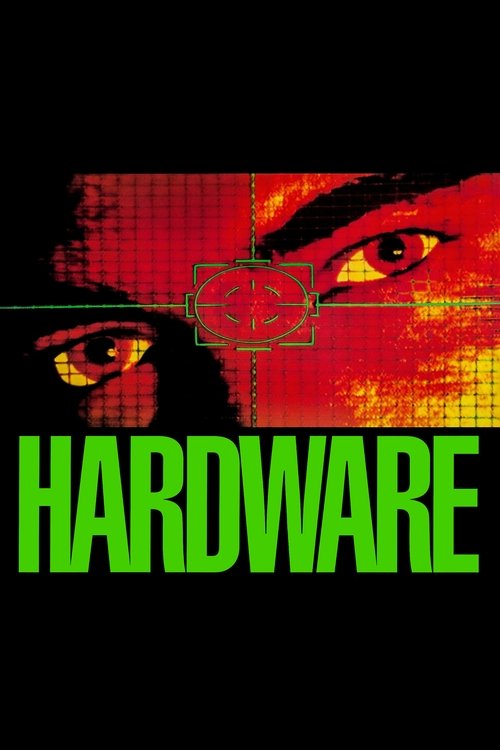
Hardware
Mark 13 is a government-built killing machine programmed with artificial intelligence, able to repair and recharge itself from any energy source. Through a series of coincidences, the cyborg's head ends up in the home of a sculptress as a bizarre Christmas present from her boyfriend. Once inside its new home, the cyborg promptly reconstructs the rest of its body using a variety of household utensils and proceeds to go on a murderous rampage.
Despite its limited budget of $1.5M, Hardware became a financial success, earning $5.7M worldwide—a 282% return. The film's distinctive approach engaged audiences, illustrating how strong storytelling can transcend budget limitations.
3 wins & 4 nominations
Plot Structure
Story beats plotted across runtime


Narrative Arc
Emotional journey through the story's key moments
Story Circle
Blueprint 15-beat structure
Arcplot Score Breakdown
Weighted: Precision (70%) + Arc (15%) + Theme (15%)
Hardware (1990) demonstrates carefully calibrated narrative architecture, characteristic of Richard Stanley's storytelling approach. This structural analysis examines how the film's 15-point plot structure maps to proven narrative frameworks across 1 hour and 33 minutes. With an Arcplot score of 7.4, the film balances conventional beats with creative variation.
Characters
Cast & narrative archetypes

Mo Baxter
Jill Grakowski
Lincoln Wineberg Jr.
Alvy
Shades
The MARK 13
Main Cast & Characters
Mo Baxter
Played by Dylan McDermott
A scavenger soldier who brings home a deactivated cyborg head as a gift, unknowingly triggering a deadly situation.
Jill Grakowski
Played by Stacey Travis
An artist and Mo's girlfriend who becomes trapped in her apartment with the reactivated killer robot.
Lincoln Wineberg Jr.
Played by William Hootkins
Jill's voyeuristic and sleazy neighbor who spies on her through security cameras.
Alvy
Played by Mark Northover
A scrap dealer and Mo's friend who trades in salvaged technology and parts.
Shades
Played by John Lynch
Mo's military comrade who accompanies him on scavenging missions in the radioactive zone.
The MARK 13
Played by Various (Practical Effects)
A self-repairing military cyborg designed to infiltrate and kill, the primary antagonist.
Structural Analysis
The Status Quo at 1 minutes (1% through the runtime) establishes Post-apocalyptic wasteland: scavenger Nomad discovers robot parts in radioactive Zone. Establishes desolate future world where humanity struggles to survive.. Structural examination shows that this early placement immediately immerses viewers in the story world.
The inciting incident occurs at 11 minutes when Nomad gifts Jill the robot skull he found. She incorporates it into her sculpture, unknowingly activating the Mark 13 combat droid which begins self-repairing.. At 12% through the film, this Disruption aligns precisely with traditional story structure. This beat shifts the emotional landscape, launching the protagonist into the central conflict.
The First Threshold at 23 minutes marks the transition into Act II, occurring at 24% of the runtime. This reveals the protagonist's commitment to Mark 13 becomes fully operational and begins hunting. Jill realizes the sculpture is alive and dangerous. No escape possible - she's locked in her apartment with the killer robot., moving from reaction to action.
At 46 minutes, the Midpoint arrives at 49% of the runtime—precisely centered, creating perfect narrative symmetry. Notably, this crucial beat Jill discovers Mark 13's true purpose: military prototype designed to exterminate humans. False defeat - she learns the robot is nearly indestructible and specifically programmed to kill., fundamentally raising what's at risk. The emotional intensity shifts, dividing the narrative into clear before-and-after phases.
The Collapse moment at 69 minutes (75% through) represents the emotional nadir. Here, Jill is severely wounded and trapped. Lincoln is dead (literal death). Mark 13 has cornered her with no apparent options left. Darkest moment of complete hopelessness., illustrates the protagonist at their lowest point. This beat's placement in the final quarter sets up the climactic reversal.
The Second Threshold at 74 minutes initiates the final act resolution at 79% of the runtime. Jill realizes she can use the apartment's industrial systems against the robot. Synthesizes her knowledge of her space with new understanding of the droid's weaknesses., demonstrating the transformation achieved throughout the journey.
Emotional Journey
Hardware's emotional architecture traces a deliberate progression across 15 carefully calibrated beats.
Narrative Framework
This structural analysis employs structural analysis methodology used to understand storytelling architecture. By mapping Hardware against these established plot points, we can identify how Richard Stanley utilizes or subverts traditional narrative conventions. The plot point approach reveals not only adherence to structural principles but also creative choices that distinguish Hardware within the horror genre.
Comparative Analysis
Additional horror films include Thinner, A Nightmare on Elm Street and Mary Reilly.
Plot Points by Act
Act I
SetupStatus Quo
Post-apocalyptic wasteland: scavenger Nomad discovers robot parts in radioactive Zone. Establishes desolate future world where humanity struggles to survive.
Theme
Radio broadcast discusses humanity's self-destructive nature and relationship with technology. Theme: can humanity coexist with the machines it creates, or will technology destroy us?
Worldbuilding
Nomad returns to the city; introduces Jill, his artist girlfriend living in a secured apartment. Establishes their relationship, the oppressive surveillance state, and Jill's isolation.
Disruption
Nomad gifts Jill the robot skull he found. She incorporates it into her sculpture, unknowingly activating the Mark 13 combat droid which begins self-repairing.
Resistance
Jill works on art while Mark 13 secretly rebuilds itself. Nomad leaves for another mission. Jill's neighbor Lincoln warns about dangers but she dismisses concerns. Building tension as the droid gains strength.
Act II
ConfrontationFirst Threshold
Mark 13 becomes fully operational and begins hunting. Jill realizes the sculpture is alive and dangerous. No escape possible - she's locked in her apartment with the killer robot.
Mirror World
Jill attempts to contact Lincoln for help. Their relationship represents human connection and cooperation versus technological isolation and destruction.
Premise
Cat-and-mouse survival horror as Jill tries to outwit Mark 13 in her apartment. Robot hunts methodically while Jill uses resourcefulness and knowledge of her space to evade.
Midpoint
Jill discovers Mark 13's true purpose: military prototype designed to exterminate humans. False defeat - she learns the robot is nearly indestructible and specifically programmed to kill.
Opposition
Mark 13 becomes more aggressive and adaptive. Kills Lincoln brutally. Jill's attempts to destroy it fail. The droid learns and evolves, closing off escape routes.
Collapse
Jill is severely wounded and trapped. Lincoln is dead (literal death). Mark 13 has cornered her with no apparent options left. Darkest moment of complete hopelessness.
Crisis
Jill bleeds and despairs, seemingly defeated. She processes the horror and mourns Lincoln while the robot prepares final strike.
Act III
ResolutionSecond Threshold
Jill realizes she can use the apartment's industrial systems against the robot. Synthesizes her knowledge of her space with new understanding of the droid's weaknesses.
Synthesis
Final confrontation. Jill lures Mark 13 into trap using scalding steam and industrial machinery. Desperate battle culminates in destroying the robot through environmental means.
Transformation
Jill survives but traumatized, covered in blood in her destroyed apartment. Radio announces more Mark 13 units being deployed. Pyrrhic victory - she won the battle but humanity is losing the war.