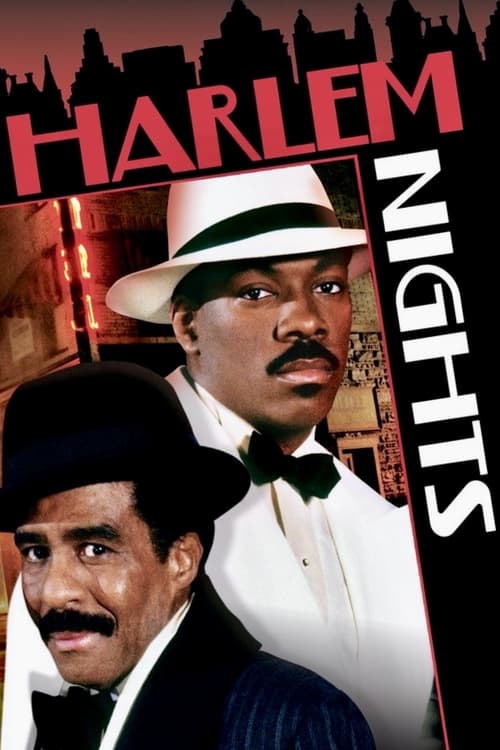
Harlem Nights
'Sugar' Ray is the owner of an illegal casino and must contend with the pressure of vicious gangsters and corrupt police who want to see him go out of business. In the world of organised crime and police corruption in the 1920s, any dastardly trick is fair.
Despite a mid-range budget of $30.0M, Harlem Nights became a financial success, earning $60.9M worldwide—a 103% return.
Nominated for 1 Oscar. 2 wins & 2 nominations


Plot Structure
Story beats plotted across runtime


Narrative Arc
Emotional journey through the story's key moments
Story Circle
Blueprint 15-beat structure
Arcplot Score Breakdown
Weighted: Precision (70%) + Arc (15%) + Theme (15%)
Harlem Nights (1989) exemplifies deliberately positioned story structure, characteristic of Eddie Murphy's storytelling approach. This structural analysis examines how the film's 15-point plot structure maps to proven narrative frameworks across 1 hour and 56 minutes. With an Arcplot score of 7.7, the film showcases strong structural fundamentals.
Characters
Cast & narrative archetypes

Quick Brown
Sugar Ray
Bugsy Calhoune
Phil Cantone
Dominique La Rue
Vera
Bennie Wilson
Crying Man
Main Cast & Characters
Quick Brown
Played by Eddie Murphy
Sharp, street-smart hustler and adopted son of Sugar Ray who runs the Club Sugar Ray alongside his father figure. Quick-witted and resourceful, he navigates Harlem's dangerous nightlife scene.
Sugar Ray
Played by Richard Pryor
Veteran nightclub owner and father figure to Quick, running the successful Club Sugar Ray. Wise, dignified, and commanding respect in Harlem's underground scene.
Bugsy Calhoune
Played by Michael Lerner
Ruthless white gangster and corrupt cop who runs the numbers racket. He attempts to muscle in on Sugar Ray's territory through intimidation and violence.
Phil Cantone
Played by Danny Aiello
Bugsy's calculating and dangerous mob enforcer who carries out the dirty work. Cold-blooded and methodical in his approach to eliminating opposition.
Dominique La Rue
Played by Jasmine Guy
Sultry, seductive femme fatale sent by Bugsy to seduce and rob Quick. She uses her beauty and charm as weapons in the criminal underworld.
Vera
Played by Della Reese
Tough, no-nonsense bookkeeper and accountant at Club Sugar Ray. She's fiercely loyal to Sugar Ray and Quick, handling the club's finances and keeping operations running.
Bennie Wilson
Played by Stan Shaw
Loyal and dependable right-hand man at Club Sugar Ray. He stands by Quick and Sugar Ray through thick and thin as tensions escalate.
Crying Man
Played by Arsenio Hall
Emotional, volatile hitman working for Quick and Sugar Ray. Known for his tearful outbursts and unpredictable temperament.
Structural Analysis
The Status Quo at 2 minutes (2% through the runtime) establishes Club Sugar Ray in full swing - 1938 Harlem's premier Black-owned nightclub thriving with music, gambling, and success. Sugar Ray and Quick run a prosperous operation.. Of particular interest, this early placement immediately immerses viewers in the story world.
The inciting incident occurs at 13 minutes when Bugsy Calhoune and Phil Cantone (white gangsters) arrive at the club, making clear they want to take over Sugar Ray's territory and operation. The old world of Black independence is threatened.. At 12% through the film, this Disruption aligns precisely with traditional story structure. This beat shifts the emotional landscape, launching the protagonist into the central conflict.
The First Threshold at 28 minutes marks the transition into Act II, occurring at 24% of the runtime. This reveals the protagonist's commitment to Sugar Ray and Quick make the active choice to stay and fight rather than flee. They begin planning their counter-strategy to protect the club and eliminate the threat posed by Bugsy Calhoune., moving from reaction to action.
At 57 minutes, the Midpoint arrives at 49% of the runtime—precisely centered, creating perfect narrative symmetry. Notably, this crucial beat False defeat: Bugsy escalates violence, killing Bennie Wilson. The stakes become life and death. What was a territorial dispute becomes personal vendetta. Sugar Ray and Quick realize they must go all-in or lose everything., fundamentally raising what's at risk. The emotional intensity shifts, dividing the narrative into clear before-and-after phases.
The Collapse moment at 85 minutes (73% through) represents the emotional nadir. Here, The club is shut down by police working for Bugsy. Sugar Ray and Quick have lost their empire. Everything they built is gone. Metaphorical death of their dream and their way of life., reveals the protagonist at their lowest point. This beat's placement in the final quarter sets up the climactic reversal.
The Second Threshold at 92 minutes initiates the final act resolution at 79% of the runtime. Sugar Ray and Quick realize they can combine their resources, use their knowledge of Harlem, and execute a final plan: take all of Bugsy's money and leave on their own terms. Synthesis of street smarts and strategic thinking., demonstrating the transformation achieved throughout the journey.
Emotional Journey
Harlem Nights's emotional architecture traces a deliberate progression across 15 carefully calibrated beats.
Narrative Framework
This structural analysis employs structural analysis methodology used to understand storytelling architecture. By mapping Harlem Nights against these established plot points, we can identify how Eddie Murphy utilizes or subverts traditional narrative conventions. The plot point approach reveals not only adherence to structural principles but also creative choices that distinguish Harlem Nights within the comedy genre.
Comparative Analysis
Additional comedy films include The Bad Guys, Ella Enchanted and The Evening Star.
Plot Points by Act
Act I
SetupStatus Quo
Club Sugar Ray in full swing - 1938 Harlem's premier Black-owned nightclub thriving with music, gambling, and success. Sugar Ray and Quick run a prosperous operation.
Theme
Bennie Wilson warns about the changing times and white gangsters moving into Harlem: "They want what we got." Theme of survival and protecting what's yours in a corrupt world.
Worldbuilding
Establishing the world of Club Sugar Ray: the father-son relationship between Sugar Ray and Quick, the supporting cast (Bennie, Vera), the illegal gambling operation, corrupt police taking bribes, and the vibrant Harlem nightlife culture.
Disruption
Bugsy Calhoune and Phil Cantone (white gangsters) arrive at the club, making clear they want to take over Sugar Ray's territory and operation. The old world of Black independence is threatened.
Resistance
Sugar Ray and Quick debate their options. Quick wants to fight back immediately, but Sugar Ray counsels patience and strategy. They discuss the power dynamics, police corruption, and whether they can survive against organized white criminals backed by the system.
Act II
ConfrontationFirst Threshold
Sugar Ray and Quick make the active choice to stay and fight rather than flee. They begin planning their counter-strategy to protect the club and eliminate the threat posed by Bugsy Calhoune.
Mirror World
Quick's relationship with Dominique deepens. She represents the personal stakes and the life Quick could have beyond violence - a thematic mirror showing what he fights for and what he could lose.
Premise
The "game" of cat-and-mouse between Sugar Ray's crew and Bugsy's organization. Quick uses his charm and cunning to gather intelligence, set traps, and outmaneuver the gangsters. Comedic and tense moments of the crew defending their turf.
Midpoint
False defeat: Bugsy escalates violence, killing Bennie Wilson. The stakes become life and death. What was a territorial dispute becomes personal vendetta. Sugar Ray and Quick realize they must go all-in or lose everything.
Opposition
Bugsy's forces close in from all sides. Corrupt cops raid the club. Quick faces assassination attempts. Vera is threatened. The crew is scattered and defensive, losing ground as Bugsy's power grows.
Collapse
The club is shut down by police working for Bugsy. Sugar Ray and Quick have lost their empire. Everything they built is gone. Metaphorical death of their dream and their way of life.
Crisis
Sugar Ray and Quick in their darkest moment, processing the loss. Quick wants revenge but Sugar Ray counsels him about the cost. They face the reality that they may have to leave Harlem forever or die trying to stay.
Act III
ResolutionSecond Threshold
Sugar Ray and Quick realize they can combine their resources, use their knowledge of Harlem, and execute a final plan: take all of Bugsy's money and leave on their own terms. Synthesis of street smarts and strategic thinking.
Synthesis
The finale heist and showdown. The crew executes their plan to rob Bugsy during a major cash night. Confrontations with Bugsy, Phil, and corrupt cop Sgt. Smalls. Quick and Sugar Ray fight their way out, eliminating threats and reclaiming their dignity.
Transformation
Sugar Ray and Quick escape Harlem with their money and lives, heading west. Mirror to opening: still together, still survivors, but transformed from nightclub owners to outlaws who chose freedom over territory. They controlled their own fate.