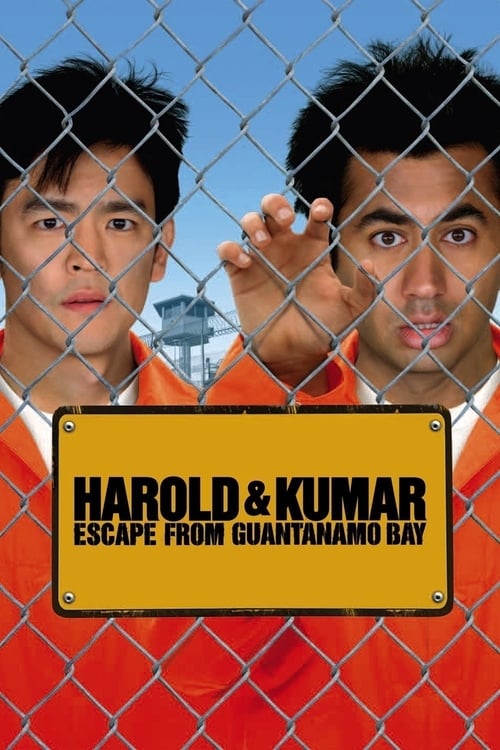
Harold & Kumar Escape from Guantanamo Bay
Having satisfied their urge for White Castle, Harold and Kumar jump on a plane to catch up with Harold's love interest, who's headed for the Netherlands. But the pair must change their plans when Kumar is accused of being a terrorist. Rob Corddry also stars in this wild comedy sequel that follows the hapless stoners' misadventures as they try to avoid being captured by the Department of Homeland Security.
Despite its small-scale budget of $12.0M, Harold & Kumar Escape from Guantanamo Bay became a financial success, earning $43.5M worldwide—a 262% return. The film's unconventional structure engaged audiences, demonstrating that strong storytelling can transcend budget limitations.
1 win & 1 nomination


Plot Structure
Story beats plotted across runtime


Narrative Arc
Emotional journey through the story's key moments
Story Circle
Blueprint 15-beat structure
Arcplot Score Breakdown
Weighted: Precision (70%) + Arc (15%) + Theme (15%)
Harold & Kumar Escape from Guantanamo Bay (2008) exhibits meticulously timed narrative design, characteristic of Jon Hurwitz's storytelling approach. This structural analysis examines how the film's 15-point plot structure maps to proven narrative frameworks across 1 hour and 41 minutes. With an Arcplot score of 6.7, the film balances conventional beats with creative variation.
Characters
Cast & narrative archetypes

Harold Lee
Kumar Patel
Ron Fox
Vanessa Fanning
Colton Graham
Neil Patrick Harris
Main Cast & Characters
Harold Lee
Played by John Cho
An uptight investment banker who embarks on a wild journey with his best friend, learning to embrace spontaneity and stand up for himself.
Kumar Patel
Played by Kal Penn
A rebellious slacker who defies his family's expectations and helps Harold break free from conformity while pursuing his own path.
Ron Fox
Played by Rob Corddry
A paranoid, racist Homeland Security agent obsessed with stopping terrorism at any cost, regardless of civil liberties or truth.
Vanessa Fanning
Played by Danneel Ackles
Harold's ex-girlfriend who represents the life of conformity and expectations Harold is trying to escape.
Colton Graham
Played by Eric Winter
Vanessa's wealthy, conservative fiancé who embodies everything Harold was expected to be but ultimately rejects.
Neil Patrick Harris
Played by Neil Patrick Harris
A fictionalized version of himself living a wild, hedonistic lifestyle who helps the duo in unexpected ways.
Structural Analysis
The Status Quo at 1 minutes (1% through the runtime) establishes Harold and Kumar board their flight to Amsterdam, excited and optimistic about their European adventure and reuniting with Maria. Their friendship is solid and they're ready for fun.. Significantly, this early placement immediately immerses viewers in the story world.
The inciting incident occurs at 12 minutes when An old woman mistakes Kumar's bong for a bomb. Air marshals violently subdue them, and the plane makes an emergency landing. Their dream trip is shattered in an instant.. At 12% through the film, this Disruption aligns precisely with traditional story structure. This beat shifts the emotional landscape, launching the protagonist into the central conflict.
The First Threshold at 25 minutes marks the transition into Act II, occurring at 25% of the runtime. This demonstrates the protagonist's commitment to Harold and Kumar actively choose to escape from Guantanamo Bay, performing oral sex on guards to get keys. They commit to the adventure of clearing their names on the run., moving from reaction to action.
At 50 minutes, the Midpoint arrives at 49% of the runtime—precisely centered, creating perfect narrative symmetry. The analysis reveals that this crucial beat False victory: Harold and Kumar share a bonding moment and believe they're making progress toward Texas and freedom. They feel hopeful about clearing their names and reuniting with their girls., fundamentally raising what's at risk. The emotional intensity shifts, dividing the narrative into clear before-and-after phases.
The Collapse moment at 74 minutes (74% through) represents the emotional nadir. Here, Harold and Kumar are recaptured. Their friendship is tested as they blame each other for their predicament. They face execution or life imprisonment, and all hope seems lost., reveals the protagonist at their lowest point. This beat's placement in the final quarter sets up the climactic reversal.
The Second Threshold at 80 minutes initiates the final act resolution at 79% of the runtime. They discover Ron Fox's phone revealing his corruption and the truth about the setup. This evidence gives them the key to proving their innocence and taking down the real villain., demonstrating the transformation achieved throughout the journey.
Emotional Journey
Harold & Kumar Escape from Guantanamo Bay's emotional architecture traces a deliberate progression across 15 carefully calibrated beats.
Narrative Framework
This structural analysis employs structural analysis methodology used to understand storytelling architecture. By mapping Harold & Kumar Escape from Guantanamo Bay against these established plot points, we can identify how Jon Hurwitz utilizes or subverts traditional narrative conventions. The plot point approach reveals not only adherence to structural principles but also creative choices that distinguish Harold & Kumar Escape from Guantanamo Bay within the comedy genre.
Jon Hurwitz's Structural Approach
Among the 2 Jon Hurwitz films analyzed on Arcplot, the average structural score is 7.1, reflecting strong command of classical structure. Harold & Kumar Escape from Guantanamo Bay takes a more unconventional approach compared to the director's typical style. For comparative analysis, explore the complete Jon Hurwitz filmography.
Comparative Analysis
Additional comedy films include The Bad Guys, Ella Enchanted and The Evening Star. For more Jon Hurwitz analyses, see American Reunion.
Plot Points by Act
Act I
SetupStatus Quo
Harold and Kumar board their flight to Amsterdam, excited and optimistic about their European adventure and reuniting with Maria. Their friendship is solid and they're ready for fun.
Theme
A fellow passenger comments on judging people by appearances and jumping to conclusions, foreshadowing the film's exploration of racial profiling and prejudice.
Worldbuilding
The setup establishes Harold and Kumar's excitement for Amsterdam, Kumar's smokeless bong mishap on the plane, and the post-9/11 paranoid atmosphere that will doom them.
Disruption
An old woman mistakes Kumar's bong for a bomb. Air marshals violently subdue them, and the plane makes an emergency landing. Their dream trip is shattered in an instant.
Resistance
Interrogated at Guantanamo Bay by Ron Fox, Harold and Kumar debate their options. They realize the system won't listen to reason and they must escape to prove their innocence.
Act II
ConfrontationFirst Threshold
Harold and Kumar actively choose to escape from Guantanamo Bay, performing oral sex on guards to get keys. They commit to the adventure of clearing their names on the run.
Mirror World
They encounter a friendly Cuban community and later reconnect with the redneck characters, establishing the counterpoint that not everyone judges by appearance—some people see their humanity.
Premise
The fun of the premise: absurd road trip adventures including encounters with the KKK, a brothel, Neil Patrick Harris, and various mishaps while evading capture and trying to reach Texas.
Midpoint
False victory: Harold and Kumar share a bonding moment and believe they're making progress toward Texas and freedom. They feel hopeful about clearing their names and reuniting with their girls.
Opposition
Ron Fox intensifies his pursuit, turning public opinion against them. The friends face increasing danger, close calls, and their situation becomes more desperate as they're labeled terrorists nationwide.
Collapse
Harold and Kumar are recaptured. Their friendship is tested as they blame each other for their predicament. They face execution or life imprisonment, and all hope seems lost.
Crisis
In their darkest moment, Harold and Kumar reconcile and reaffirm their friendship. They process their fear and find renewed determination to fight for their freedom together.
Act III
ResolutionSecond Threshold
They discover Ron Fox's phone revealing his corruption and the truth about the setup. This evidence gives them the key to proving their innocence and taking down the real villain.
Synthesis
Harold and Kumar execute their plan to expose Fox, confronting him and clearing their names. They use their friendship, resourcefulness, and the allies they've made to achieve vindication.
Transformation
Harold and Kumar finally make it to Amsterdam, transformed by their journey. Their friendship is stronger, they've learned about standing up to injustice, and they're reunited with their loves.