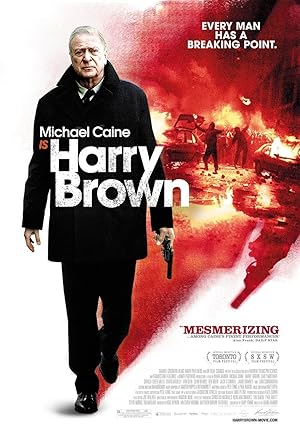
Harry Brown
In England, retired Royal Marine Harry Brown spends his lonely life between the hospital, where his beloved wife Kath is terminally ill, and playing chess with his only friend Leonard Attwell in the Barge pub owned by Sid Rourke. After the death of Kath, Len tells his grieving friend the local gang is harassing him and he is carrying an old bayonet for self-defence. Harry suggests he to go to the police. When Len is beaten and stabbed to death, detective Inspector Alice Frampton and her partner Sergeant Terry Hicock are sent to investigate. They pay Harry a visit but don't have good news; the police have not found any other evidence, other than the bayonet, in order to arrest the hoodlums. This mean that should the case go to trial the gang would claim self-defence. Harry Brown sees that justice will not be granted and decides to take matters into his own hands.
Working with a small-scale budget of $7.3M, the film achieved a steady performer with $10.3M in global revenue (+42% profit margin).
1 win & 4 nominations


Plot Structure
Story beats plotted across runtime


Narrative Arc
Emotional journey through the story's key moments
Story Circle
Blueprint 15-beat structure
Arcplot Score Breakdown
Weighted: Precision (70%) + Arc (15%) + Theme (15%)
Harry Brown (2009) exemplifies deliberately positioned story structure, characteristic of Daniel Barber's storytelling approach. This structural analysis examines how the film's 15-point plot structure maps to proven narrative frameworks across 1 hour and 43 minutes. With an Arcplot score of 7.4, the film balances conventional beats with creative variation.
Characters
Cast & narrative archetypes

Harry Brown
DI Alice Frampton
Leonard Attwell
Noel Winters
DCI Childs
Stretch
Marky
Carl
Main Cast & Characters
Harry Brown
Played by Michael Caine
An elderly ex-Royal Marine who turns vigilante after his best friend is murdered by local gang members on a London estate.
DI Alice Frampton
Played by Emily Mortimer
A dedicated detective investigating the gang-related murders who suspects Harry's involvement but struggles with the moral complexity.
Leonard Attwell
Played by David Bradley
Harry's best friend and chess partner who is killed by gang members, triggering Harry's descent into vigilantism.
Noel Winters
Played by Sean Harris
A paranoid drug dealer who supplies weapons and narcotics from his filthy apartment, killed by Harry during a confrontation.
DCI Childs
Played by Charlie Creed-Miles
Frampton's superior officer who leads the investigation into the estate violence with a more pragmatic, cynical approach.
Stretch
Played by Sean Harris
A violent gang leader who terrorizes the estate and is one of Harry's primary targets.
Marky
Played by Jack O'Connell
A young drug dealer and gang associate who represents the casual brutality of the estate's youth culture.
Carl
Played by Ben Drew
A gang member involved in the harassment and violence on the estate.
Structural Analysis
The Status Quo at 1 minutes (1% through the runtime) establishes Harry Brown lives a lonely, monotonous existence on a run-down London housing estate, visiting his comatose wife in hospital and playing chess with his friend Leonard at the pub. The estate is terrorized by a gang who control the underpass.. Structural examination shows that this early placement immediately immerses viewers in the story world.
The inciting incident occurs at 12 minutes when Harry's wife Kath dies in hospital, leaving him utterly alone. Shortly after her funeral, Leonard is brutally murdered by the gang in the underpass when he confronts them with his bayonet. Harry has lost everything that anchored him to his passive existence.. At 12% through the film, this Disruption aligns precisely with traditional story structure. This beat shifts the emotional landscape, launching the protagonist into the central conflict.
The First Threshold at 26 minutes marks the transition into Act II, occurring at 25% of the runtime. This reveals the protagonist's commitment to Harry makes the irrevocable choice to become a vigilante when he kills a drug dealer who attacks him with a knife. He takes the dealer's gun, crossing the point of no return from victim to avenger. His old Marine training resurfaces., moving from reaction to action.
At 52 minutes, the Midpoint arrives at 50% of the runtime—precisely centered, creating perfect narrative symmetry. Of particular interest, this crucial beat Harry successfully obtains weapons and kills Stretch and Kenny after discovering they filmed themselves assaulting women. His mission gains moral clarity—these aren't just thugs but monsters. He has the tools and conviction to complete his vendetta. False victory: he believes he can surgically eliminate the evil., fundamentally raising what's at risk. The emotional intensity shifts, dividing the narrative into clear before-and-after phases.
The Collapse moment at 77 minutes (75% through) represents the emotional nadir. Here, Harry collapses from his emphysema and is taken to hospital. DI Frampton confronts him with evidence of his killings. He is exposed, defeated, and seemingly finished—his body betraying him before he can complete his mission. Noel Winters remains free, and riots erupt across the estate., reveals the protagonist at their lowest point. This beat's placement in the final quarter sets up the climactic reversal.
The Second Threshold at 82 minutes initiates the final act resolution at 80% of the runtime. Harry learns that Noel Winters has taken DI Frampton hostage in the pub during the riots. Despite his illness, he leaves the hospital to save her. He synthesizes his mission: it's no longer about personal vengeance but protecting the innocent. He chooses to be a protector, not just an avenger., demonstrating the transformation achieved throughout the journey.
Emotional Journey
Harry Brown's emotional architecture traces a deliberate progression across 15 carefully calibrated beats.
Narrative Framework
This structural analysis employs systematic plot point analysis that identifies crucial turning points. By mapping Harry Brown against these established plot points, we can identify how Daniel Barber utilizes or subverts traditional narrative conventions. The plot point approach reveals not only adherence to structural principles but also creative choices that distinguish Harry Brown within the action genre.
Comparative Analysis
Additional action films include The Bad Guys, Puss in Boots and Venom: The Last Dance.
Plot Points by Act
Act I
SetupStatus Quo
Harry Brown lives a lonely, monotonous existence on a run-down London housing estate, visiting his comatose wife in hospital and playing chess with his friend Leonard at the pub. The estate is terrorized by a gang who control the underpass.
Theme
Leonard tells Harry that he's purchased an old bayonet for protection, stating "There's nobody to help us, Harry. We're on our own." This establishes the theme: when society fails to protect the vulnerable, individuals must choose between victimhood and action.
Worldbuilding
The estate's lawless nature is established through Harry's daily routines, his visits to his dying wife, and the constant threat posed by the gang. We see Harry's isolation, his friendship with Leonard, and the community's fear of the criminals who operate with impunity.
Disruption
Harry's wife Kath dies in hospital, leaving him utterly alone. Shortly after her funeral, Leonard is brutally murdered by the gang in the underpass when he confronts them with his bayonet. Harry has lost everything that anchored him to his passive existence.
Resistance
Detective Inspector Alice Frampton investigates Leonard's murder but the case stalls due to lack of witnesses. Harry attends Leonard's funeral alone and begins wrestling with grief and rage. He starts observing the gang, remembering his military past, and contemplating whether to take action himself.
Act II
ConfrontationFirst Threshold
Harry makes the irrevocable choice to become a vigilante when he kills a drug dealer who attacks him with a knife. He takes the dealer's gun, crossing the point of no return from victim to avenger. His old Marine training resurfaces.
Mirror World
DI Frampton becomes Harry's mirror world character. She represents lawful justice struggling against the same criminals Harry hunts. Their parallel paths—one legal, one vigilante—embody the film's central tension between justice and vengeance, order and chaos.
Premise
Harry methodically tracks down Leonard's killers. He visits Stretch and Kenny, two drug dealers, in their squalid den to buy a gun—a harrowing sequence where he witnesses their depravity. He executes them and begins eliminating gang members one by one, becoming the hunter rather than the hunted.
Midpoint
Harry successfully obtains weapons and kills Stretch and Kenny after discovering they filmed themselves assaulting women. His mission gains moral clarity—these aren't just thugs but monsters. He has the tools and conviction to complete his vendetta. False victory: he believes he can surgically eliminate the evil.
Opposition
The gang, led by Noel Winters, realizes someone is targeting them and becomes more dangerous. DI Frampton's investigation points toward Harry. His health deteriorates as emphysema weakens him. The police close in while the gang grows more desperate and violent. Harry's crusade draws him deeper into darkness.
Collapse
Harry collapses from his emphysema and is taken to hospital. DI Frampton confronts him with evidence of his killings. He is exposed, defeated, and seemingly finished—his body betraying him before he can complete his mission. Noel Winters remains free, and riots erupt across the estate.
Crisis
Harry lies in hospital as chaos engulfs the estate. Riots sparked by a police shooting spread. He faces the dark truth: his vigilantism has changed nothing—violence breeds violence. He must confront whether his actions were justice or merely revenge, and whether he has anything left to give.
Act III
ResolutionSecond Threshold
Harry learns that Noel Winters has taken DI Frampton hostage in the pub during the riots. Despite his illness, he leaves the hospital to save her. He synthesizes his mission: it's no longer about personal vengeance but protecting the innocent. He chooses to be a protector, not just an avenger.
Synthesis
Harry navigates through the riot-torn estate to the pub. In the climactic confrontation, he faces Noel Winters and his remaining gang members. Using his Marine training and hard-won weapons, he rescues DI Frampton and kills Noel, ending the gang's reign of terror over the estate.
Transformation
Harry walks through the now-quiet estate. The underpass that once symbolized fear and death is peaceful. Unlike the opening where he avoided it in terror, he now passes through freely. He has transformed from a forgotten, helpless pensioner into a man who took a stand—at great cost, but with purpose reclaimed.