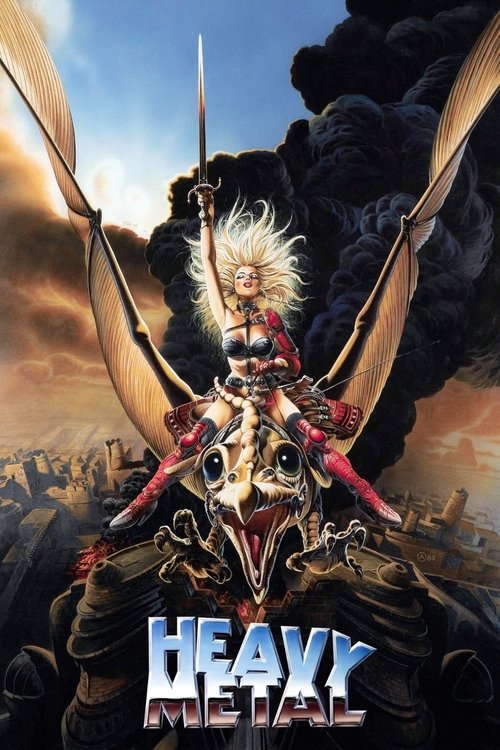
Heavy Metal
The embodiment of ultimate evil, a glowing orb terrorizes a young girl with bizarre stories of dark fantasy, eroticism and horror.
Despite its modest budget of $9.3M, Heavy Metal became a financial success, earning $20.1M worldwide—a 116% return.
4 wins & 2 nominations


Plot Structure
Story beats plotted across runtime


Narrative Arc
Emotional journey through the story's key moments
Story Circle
Blueprint 15-beat structure
Arcplot Score Breakdown
Weighted: Precision (70%) + Arc (15%) + Theme (15%)
Heavy Metal (1981) showcases deliberately positioned narrative design, characteristic of Gerald Potterton's storytelling approach. This structural analysis examines how the film's 15-point plot structure maps to proven narrative frameworks across 1 hour and 30 minutes. With an Arcplot score of 7.1, the film balances conventional beats with creative variation.
Characters
Cast & narrative archetypes
Taarna

Den

Captain Lincoln F. Sternn
Harry Canyon

Girl

Katherine

Hanover Fiste
Ard

The Loc-Nar
Main Cast & Characters
Taarna
Played by August Schellenberg
The last Taarakian warrior, a silent avenging hero who battles evil to protect the innocent.
Den
Played by John Candy
A nerdy teenager transformed into a muscular barbarian hero in an alien world.
Captain Lincoln F. Sternn
Played by Eugene Levy
A corrupt space captain on trial for numerous crimes, charming and morally bankrupt.
Harry Canyon
Played by Richard Romanus
A cynical New York cab driver in a dystopian future who gets caught up in dangerous events.
Girl
Played by Susan Roman
A beautiful young woman rescued by Harry Canyon, pursued by criminals for the Loc-Nar.
Katherine
Played by Jackie Burroughs
Den's companion in the alien world, a sensual warrior woman who helps him on his quest.
Hanover Fiste
Played by Rodger Bumpass
Captain Sternn's former associate turned witness, mutates into a vengeful monster.
Ard
Played by John Candy
An evil sorcerer who kidnaps Katherine and serves as Den's primary antagonist.
The Loc-Nar
Played by Percy Rodriguez
The sentient green orb of ultimate evil that corrupts everything it touches across time and space.
Structural Analysis
The Status Quo at 1 minutes (1% through the runtime) establishes A Corvette is ejected from a space shuttle and descends to Earth in the iconic opening sequence, establishing a world where the extraordinary intersects with the mundane as an astronaut father returns home.. Notably, this early placement immediately immerses viewers in the story world.
The inciting incident occurs at 11 minutes when In the Harry Canyon segment, a woman fleeing gangsters throws herself into Harry's cab, dragging him into a deadly conflict over the Loc-Nar, demonstrating how the orb corrupts everyone who seeks it.. At 12% through the film, this Disruption aligns precisely with traditional story structure. This beat shifts the emotional landscape, launching the protagonist into the central conflict.
The First Threshold at 22 minutes marks the transition into Act II, occurring at 25% of the runtime. This indicates the protagonist's commitment to Den chooses to embrace his new heroic identity, rescuing the beautiful Katherine from sacrifice and committing to fight against the immortals Ard and the Queen who serve the Loc-Nar, fully entering the anthology's pattern of ordinary people transformed by evil., moving from reaction to action.
At 44 minutes, the Midpoint arrives at 49% of the runtime—precisely centered, creating perfect narrative symmetry. Structural examination shows that this crucial beat The B-17 segment concludes with the sole survivor escaping only to crash on an island graveyard of planes, surrounded by the undead. This false defeat marks the anthology's darkest tone, suggesting evil cannot be escaped., fundamentally raising what's at risk. The emotional intensity shifts, dividing the narrative into clear before-and-after phases.
The Collapse moment at 67 minutes (74% through) represents the emotional nadir. Here, The Taarna segment begins with the Loc-Nar landing on a peaceful city and transforming its inhabitants into a barbaric horde that massacres the people of a council city. The last Taarakian warrior, Taarna, arrives too late to save anyone, finding only death., reveals the protagonist at their lowest point. This beat's placement in the final quarter sets up the climactic reversal.
The Second Threshold at 72 minutes initiates the final act resolution at 80% of the runtime. Taarna's loyal mount rescues her from the pit. Though wounded and weakened, she chooses to continue her mission, realizing that self-sacrifice is the only way to destroy the Loc-Nar and end its cycle of corruption., demonstrating the transformation achieved throughout the journey.
Emotional Journey
Heavy Metal's emotional architecture traces a deliberate progression across 15 carefully calibrated beats.
Narrative Framework
This structural analysis employs a 15-point narrative structure framework that maps key story moments. By mapping Heavy Metal against these established plot points, we can identify how Gerald Potterton utilizes or subverts traditional narrative conventions. The plot point approach reveals not only adherence to structural principles but also creative choices that distinguish Heavy Metal within the animation genre.
Comparative Analysis
Additional animation films include The Bad Guys, Puss in Boots and Violet Evergarden: Eternity and the Auto Memory Doll.
Plot Points by Act
Act I
SetupStatus Quo
A Corvette is ejected from a space shuttle and descends to Earth in the iconic opening sequence, establishing a world where the extraordinary intersects with the mundane as an astronaut father returns home.
Theme
The Loc-Nar declares itself to be "the sum of all evils" and announces it will show the girl how its evil has influenced lives throughout time and space, establishing the anthology's thematic framework of corruption versus innocence.
Worldbuilding
The frame narrative establishes the Loc-Nar's power as it kills the father and traps the daughter, then transitions into the Harry Canyon segment set in a dystopian New York 2031, introducing the anthology's pulp science fiction aesthetic.
Disruption
In the Harry Canyon segment, a woman fleeing gangsters throws herself into Harry's cab, dragging him into a deadly conflict over the Loc-Nar, demonstrating how the orb corrupts everyone who seeks it.
Resistance
The Harry Canyon segment concludes with betrayal and death as the Loc-Nar claims another victim. The Den segment begins, showing nerdy teenager Dan transformed into a muscular barbarian hero in the world of Neverwhere, guided by the Loc-Nar's influence.
Act II
ConfrontationFirst Threshold
Den chooses to embrace his new heroic identity, rescuing the beautiful Katherine from sacrifice and committing to fight against the immortals Ard and the Queen who serve the Loc-Nar, fully entering the anthology's pattern of ordinary people transformed by evil.
Mirror World
The Captain Sternn segment introduces a comedic tone as the smuggler faces trial, with his bribed witness Hanover Fiste transformed by the Loc-Nar into a raging monster, reflecting the theme that evil corrupts even the corrupt.
Premise
The anthology delivers on its premise of interconnected tales of corruption: Den battles immortals in Neverwhere, Captain Sternn escapes his creation, and the horrifying B-17 segment shows dead crew members reanimated by the Loc-Nar as zombies attacking survivors.
Midpoint
The B-17 segment concludes with the sole survivor escaping only to crash on an island graveyard of planes, surrounded by the undead. This false defeat marks the anthology's darkest tone, suggesting evil cannot be escaped.
Opposition
The "So Beautiful and So Dangerous" segment provides surreal comic relief as scientists and a secretary are abducted by drug-addled aliens, while the Loc-Nar's narration grows more menacing, promising the girl her own destruction as evil seems triumphant.
Collapse
The Taarna segment begins with the Loc-Nar landing on a peaceful city and transforming its inhabitants into a barbaric horde that massacres the people of a council city. The last Taarakian warrior, Taarna, arrives too late to save anyone, finding only death.
Crisis
Taarna tracks the mutant barbarians to their volcanic lair. She is captured, tortured, and left for dead, representing the darkest moment as the Loc-Nar's victory seems complete and the last defender of good appears defeated.
Act III
ResolutionSecond Threshold
Taarna's loyal mount rescues her from the pit. Though wounded and weakened, she chooses to continue her mission, realizing that self-sacrifice is the only way to destroy the Loc-Nar and end its cycle of corruption.
Synthesis
Taarna battles the mutant leader in aerial combat over the volcano. Mortally wounded but victorious, she flies directly into the Loc-Nar, destroying it through her sacrifice. In the frame narrative, the orb explodes as the girl watches, freeing her from its power.
Transformation
The girl emerges from her home as Taarna's mount descends from the sky. She mounts the bird, revealed as the next Taarakian defender, her hair transformed to white like Taarna's. Innocence has not just survived evil but inherited the duty to fight it.