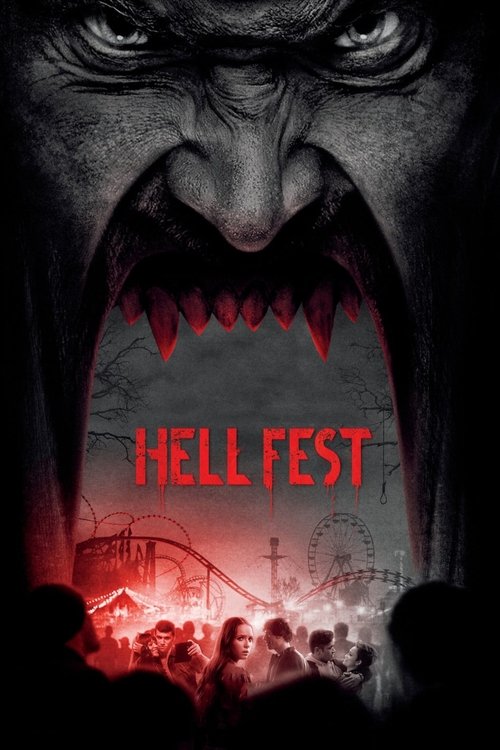
Hell Fest
On Halloween night at a horror theme park, a costumed killer begins slaying innocent patrons who believe that it's all part of the festivities.
Despite its tight budget of $5.5M, Hell Fest became a box office success, earning $18.2M worldwide—a 230% return. The film's unconventional structure resonated with audiences, demonstrating that strong storytelling can transcend budget limitations.


Plot Structure
Story beats plotted across runtime


Narrative Arc
Emotional journey through the story's key moments
Story Circle
Blueprint 15-beat structure
Arcplot Score Breakdown
Weighted: Precision (70%) + Arc (15%) + Theme (15%)
Hell Fest (2018) demonstrates meticulously timed narrative architecture, characteristic of Gregory Plotkin's storytelling approach. This structural analysis examines how the film's 15-point plot structure maps to proven narrative frameworks across 1 hour and 29 minutes. With an Arcplot score of 7.1, the film balances conventional beats with creative variation.
Characters
Cast & narrative archetypes

Natalie
Brooke
Taylor
Gavin
Quinn
Asher
The Other
Main Cast & Characters
Natalie
Played by Amy Forsyth
A college student visiting her best friend who becomes the primary target of a masked killer at Hell Fest.
Brooke
Played by Reign Edwards
Natalie's outgoing best friend who invites her to Hell Fest and tries to keep the group together.
Taylor
Played by Bex Taylor-Klaus
Brooke's roommate and third member of the friend group, more cautious and observant.
Gavin
Played by Roby Attal
A friendly guy who has a romantic interest in Natalie and tries to protect the group.
Quinn
Played by Christian James
Brooke's boyfriend who joins the group at Hell Fest.
Asher
Played by Matt Mercurio
Taylor's date for the evening, adds to the group dynamic at the horror theme park.
The Other
Played by Stephen Conroy
A masked serial killer who hunts victims at Hell Fest, hiding among the park's costumed actors.
Structural Analysis
The Status Quo at 1 minutes (1% through the runtime) establishes Natalie arrives at her friend Brooke's apartment, hesitant about going out. She's the cautious, reserved friend who has been away and is uncomfortable with social situations.. Significantly, this early placement immediately immerses viewers in the story world.
The inciting incident occurs at 10 minutes when The group enters Hell Fest. A masked killer (The Other) is shown stalking the park, having already killed a girl in the opening scene. The ordinary night out enters dangerous territory.. At 12% through the film, this Disruption aligns precisely with traditional story structure. This beat shifts the emotional landscape, launching the protagonist into the central conflict.
The First Threshold at 22 minutes marks the transition into Act II, occurring at 25% of the runtime. This illustrates the protagonist's commitment to Natalie witnesses what she believes might be a real murder but is dismissed by her friends and park staff. She makes the choice to investigate further rather than leave, entering the "game" with the killer., moving from reaction to action.
At 44 minutes, the Midpoint arrives at 49% of the runtime—precisely centered, creating perfect narrative symmetry. Of particular interest, this crucial beat The killer claims his first victim from their group (Quinn is killed). The stakes raise dramatically - this is no longer about suspicion, people are actually dying, but others still don't believe it., fundamentally raising what's at risk. The emotional intensity shifts, dividing the narrative into clear before-and-after phases.
The Collapse moment at 66 minutes (74% through) represents the emotional nadir. Here, Brooke is killed brutally in front of Natalie. Her best friend - the one who brought her out tonight - is gone. Natalie's worst fears are confirmed and she's now truly alone., indicates the protagonist at their lowest point. This beat's placement in the final quarter sets up the climactic reversal.
The Second Threshold at 70 minutes initiates the final act resolution at 79% of the runtime. Natalie stops running and decides to fight back. She realizes she must use the park's own tricks against the killer. She synthesizes her caution with newfound courage., demonstrating the transformation achieved throughout the journey.
Emotional Journey
Hell Fest's emotional architecture traces a deliberate progression across 15 carefully calibrated beats.
Narrative Framework
This structural analysis employs a 15-point narrative structure framework that maps key story moments. By mapping Hell Fest against these established plot points, we can identify how Gregory Plotkin utilizes or subverts traditional narrative conventions. The plot point approach reveals not only adherence to structural principles but also creative choices that distinguish Hell Fest within the horror genre.
Gregory Plotkin's Structural Approach
Among the 2 Gregory Plotkin films analyzed on Arcplot, the average structural score is 7.3, reflecting strong command of classical structure. Hell Fest takes a more unconventional approach compared to the director's typical style. For comparative analysis, explore the complete Gregory Plotkin filmography.
Comparative Analysis
Additional horror films include Thinner, A Nightmare on Elm Street and Mary Reilly. For more Gregory Plotkin analyses, see Paranormal Activity: The Ghost Dimension.
Plot Points by Act
Act I
SetupStatus Quo
Natalie arrives at her friend Brooke's apartment, hesitant about going out. She's the cautious, reserved friend who has been away and is uncomfortable with social situations.
Theme
The group discusses Hell Fest and how "it's all fake" and "they can't actually hurt you." The theme: the danger of assuming everything is pretend when real evil hides in plain sight.
Worldbuilding
Introduction to the friend group (Natalie, Brooke, Taylor, Asher, Quinn, Gavin), their dynamics, and the world of Hell Fest - a traveling horror theme park where actors scare patrons. Establishes Natalie's awkwardness around Gavin and her cautious personality.
Disruption
The group enters Hell Fest. A masked killer (The Other) is shown stalking the park, having already killed a girl in the opening scene. The ordinary night out enters dangerous territory.
Resistance
The group explores various attractions, experiencing staged scares. Natalie begins to warm up to Gavin. They debate what's real vs. fake. The killer stalks them but they can't distinguish him from the actors.
Act II
ConfrontationFirst Threshold
Natalie witnesses what she believes might be a real murder but is dismissed by her friends and park staff. She makes the choice to investigate further rather than leave, entering the "game" with the killer.
Mirror World
Natalie and Gavin share a genuine moment together in a quieter part of the park, developing their romantic connection. He represents trust and connection - what she needs to overcome her isolation.
Premise
Cat-and-mouse games through Hell Fest's attractions. The killer targets the group individually while they remain unaware. The promise of the premise: a slasher movie where you can't tell actors from a real killer.
Midpoint
The killer claims his first victim from their group (Quinn is killed). The stakes raise dramatically - this is no longer about suspicion, people are actually dying, but others still don't believe it.
Opposition
The group splits up and is picked off one by one. Natalie tries to convince others of the danger but the park's design works against her. The killer gains ground, using the environment to his advantage.
Collapse
Brooke is killed brutally in front of Natalie. Her best friend - the one who brought her out tonight - is gone. Natalie's worst fears are confirmed and she's now truly alone.
Crisis
Natalie, devastated and terrified, must process that her friends are dead and no one believes her. She faces the dark reality that she's on her own in this nightmare.
Act III
ResolutionSecond Threshold
Natalie stops running and decides to fight back. She realizes she must use the park's own tricks against the killer. She synthesizes her caution with newfound courage.
Synthesis
Final confrontation with The Other. Natalie fights for survival, using the maze-like park to her advantage. She saves Gavin and they escape, while the killer vanishes back into the park.
Transformation
Natalie survives but is traumatized. The killer is shown at home with his family, removing his mask - he'll return to Hell Fest next year. Evil persists, hiding in plain sight. Natalie is transformed from naive to aware, but at terrible cost.