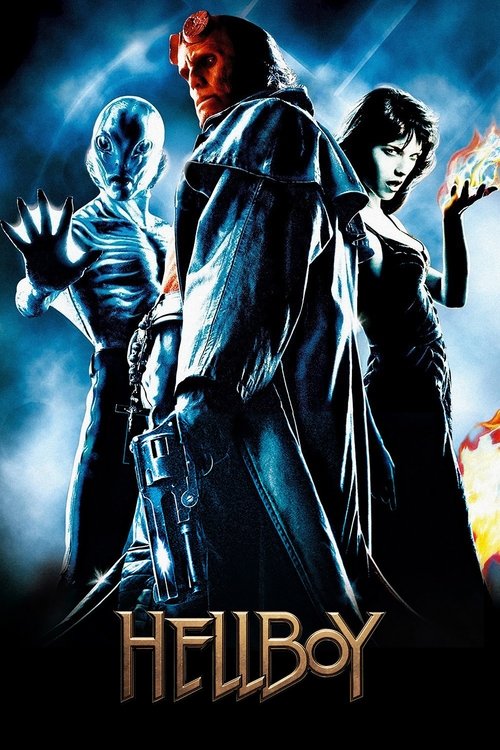
Hellboy
In the final days of World War II, the Nazis attempt to use black magic to aid their dying cause. The Allies raid the camp where the ceremony is taking place, but not before they summon a baby demon who is rescued by Allied forces and dubbed "Hellboy". Sixty years later, Hellboy serves the cause of good rather than evil as an agent in the Bureau of Paranormal Research & Defense, along with Abe Sapien - a merman with psychic powers, and Liz Sherman - a woman with pyrokinesis, protecting America against dark forces.
Working with a respectable budget of $66.0M, the film achieved a modest success with $99.3M in global revenue (+50% profit margin).
3 wins & 23 nominations


Plot Structure
Story beats plotted across runtime


Narrative Arc
Emotional journey through the story's key moments
Story Circle
Blueprint 15-beat structure
Arcplot Score Breakdown
Weighted: Precision (70%) + Arc (15%) + Theme (15%)
Hellboy (2004) showcases strategically placed narrative architecture, characteristic of Guillermo del Toro's storytelling approach. This structural analysis examines how the film's 15-point plot structure maps to proven narrative frameworks across 2 hours and 2 minutes. With an Arcplot score of 7.0, the film balances conventional beats with creative variation.
Characters
Cast & narrative archetypes

Hellboy
Liz Sherman
Abe Sapien
Trevor Bruttenholm
Grigori Rasputin
John Myers
Tom Manning
Main Cast & Characters
Hellboy
Played by Ron Perlman
A demon raised by humans to fight paranormal threats for the B.P.R.D., struggling with his destiny and identity.
Liz Sherman
Played by Selma Blair
A pyrokinetic agent who struggles to control her dangerous abilities and maintains a complicated relationship with Hellboy.
Abe Sapien
Played by Doug Jones
An amphibious empath and scholar who serves as Hellboy's best friend and intellectual counterpart at the B.P.R.D.
Trevor Bruttenholm
Played by John Hurt
The professor who discovered and raised Hellboy, serving as his father figure and founder of the B.P.R.D.
Grigori Rasputin
Played by Karel Roden
The undead Russian mystic who seeks to unleash the Ogdru Jahad and fulfill Hellboy's apocalyptic destiny.
John Myers
Played by Rupert Evans
A young FBI agent assigned as Hellboy's liaison, serving as the audience surrogate into the world of the B.P.R.D.
Tom Manning
Played by Jeffrey Tambor
The bureaucratic director of the B.P.R.D. who struggles to keep the organization secret and maintain control.
Structural Analysis
The Status Quo at 1 minutes (1% through the runtime) establishes Scotland, 1944: Nazi occultists attempt to open a portal to the Ogdru Jahad while Allied forces close in. This dark supernatural world establishes the stakes and foreshadows the conflict between destiny and choice.. The analysis reveals that this early placement immediately immerses viewers in the story world.
The inciting incident occurs at 15 minutes when Rasputin is resurrected in his arctic tomb by his followers. Simultaneously, Sammael attacks the museum, killing a security guard. The ancient evil has returned, disrupting the BPRD's routine monster-hunting operations.. At 12% through the film, this Disruption aligns precisely with traditional story structure. This beat shifts the emotional landscape, launching the protagonist into the central conflict.
The First Threshold at 31 minutes marks the transition into Act II, occurring at 25% of the runtime. This reveals the protagonist's commitment to Hellboy convinces Liz to leave the asylum and return to the BPRD. He makes an active choice to bring her back into his world despite the dangers, and commits fully to hunting Sammael rather than following protocol., moving from reaction to action.
At 61 minutes, the Midpoint arrives at 50% of the runtime—precisely centered, creating perfect narrative symmetry. Significantly, this crucial beat Hellboy discovers that every time Sammael is killed, two more are born from eggs hidden in the subway tunnels. His victories have been multiplying the enemy. This false defeat raises stakes dramatically—brute force won't win this fight., fundamentally raising what's at risk. The emotional intensity shifts, dividing the narrative into clear before-and-after phases.
The Collapse moment at 92 minutes (75% through) represents the emotional nadir. Here, Professor Bruttenholm is murdered by Kroenen. Dying in Hellboy's arms, he reveals he always knew what Hellboy was destined to become—but chose to raise him with love anyway. The father figure's death is the whiff of death that shatters Hellboy's world., illustrates the protagonist at their lowest point. This beat's placement in the final quarter sets up the climactic reversal.
The Second Threshold at 98 minutes initiates the final act resolution at 80% of the runtime. Hellboy chooses to storm Rasputin's stronghold in Moscow to save Liz, fully aware he may be walking into a trap designed to fulfill his apocalyptic destiny. He synthesizes his father's teaching—it's not what you are, but what you choose—and commits to fighting fate itself., demonstrating the transformation achieved throughout the journey.
Emotional Journey
Hellboy's emotional architecture traces a deliberate progression across 15 carefully calibrated beats.
Narrative Framework
This structural analysis employs systematic plot point analysis that identifies crucial turning points. By mapping Hellboy against these established plot points, we can identify how Guillermo del Toro utilizes or subverts traditional narrative conventions. The plot point approach reveals not only adherence to structural principles but also creative choices that distinguish Hellboy within the fantasy genre.
Guillermo del Toro's Structural Approach
Among the 9 Guillermo del Toro films analyzed on Arcplot, the average structural score is 6.9, demonstrating varied approaches to story architecture. Hellboy represents one of the director's most structurally precise works. For comparative analysis, explore the complete Guillermo del Toro filmography.
Comparative Analysis
Additional fantasy films include Thinner, Ella Enchanted and Conan the Barbarian. For more Guillermo del Toro analyses, see The Shape of Water, Nightmare Alley and Crimson Peak.
Plot Points by Act
Act I
SetupStatus Quo
Scotland, 1944: Nazi occultists attempt to open a portal to the Ogdru Jahad while Allied forces close in. This dark supernatural world establishes the stakes and foreshadows the conflict between destiny and choice.
Theme
Professor Bruttenholm narrates: "What makes a man a man? A friend of mine once wondered. Is it his origins? The way he comes to life? I don't think so. It's the choices he makes." This establishes the central thematic question of nature versus choice.
Worldbuilding
The BPRD is established as a secret government agency housing paranormal beings. We meet adult Hellboy—gruff, lonely, obsessed with TV and cats, pining for Liz Sherman. Agent Myers is recruited. The rules of this world are set: monsters exist, and Hellboy fights them while hiding from the public.
Disruption
Rasputin is resurrected in his arctic tomb by his followers. Simultaneously, Sammael attacks the museum, killing a security guard. The ancient evil has returned, disrupting the BPRD's routine monster-hunting operations.
Resistance
Agent Myers becomes Hellboy's new handler, serving as audience surrogate. Hellboy investigates the museum attack, encounters Sammael, and visits Liz at the mental institution. Professor Bruttenholm mentors both Hellboy and Myers, preparing them for the threat ahead.
Act II
ConfrontationFirst Threshold
Hellboy convinces Liz to leave the asylum and return to the BPRD. He makes an active choice to bring her back into his world despite the dangers, and commits fully to hunting Sammael rather than following protocol.
Mirror World
Liz returns to the BPRD and reconnects with Hellboy. Their relationship represents the thematic counterpoint—she struggles with her own dangerous nature (pyrokinesis) just as he does with his demonic heritage. Together they embody the possibility of choosing humanity over destructive destiny.
Premise
The promise of the premise delivers: Hellboy tracks Sammael through subways and city streets, fighting demons while cracking wise. He bonds with Myers, jealously watches Liz, and showcases his Right Hand of Doom. The fun of supernatural action-comedy unfolds as the team investigates Rasputin's resurrection.
Midpoint
Hellboy discovers that every time Sammael is killed, two more are born from eggs hidden in the subway tunnels. His victories have been multiplying the enemy. This false defeat raises stakes dramatically—brute force won't win this fight.
Opposition
Rasputin's plan accelerates. Kroenen infiltrates the BPRD. The Sammael swarm grows. Hellboy learns more about his prophesied role as the Beast of the Apocalypse. Tension builds between Hellboy and Myers over Liz. The walls close in as Rasputin targets those Hellboy loves.
Collapse
Professor Bruttenholm is murdered by Kroenen. Dying in Hellboy's arms, he reveals he always knew what Hellboy was destined to become—but chose to raise him with love anyway. The father figure's death is the whiff of death that shatters Hellboy's world.
Crisis
Hellboy grieves for his father while processing the revelation of his true name—Anung Un Rama—and his destiny to bring about the apocalypse. Liz is kidnapped by Rasputin. Hellboy must confront whether he is defined by prophecy or by choice.
Act III
ResolutionSecond Threshold
Hellboy chooses to storm Rasputin's stronghold in Moscow to save Liz, fully aware he may be walking into a trap designed to fulfill his apocalyptic destiny. He synthesizes his father's teaching—it's not what you are, but what you choose—and commits to fighting fate itself.
Synthesis
The finale unfolds in Rasputin's underground temple. Hellboy confronts Kroenen and defeats him. Rasputin forces Hellboy to unlock his full demonic power to save Liz, opening the portal to the Ogdru Jahad. But Myers reminds Hellboy of his father's words. Hellboy rejects his destiny, breaks off his regrown horns, and destroys Rasputin and the tentacled god that emerges.
Transformation
Hellboy revives Liz with a kiss, proving that love and choice triumph over destiny and destruction. The closing image mirrors the opening: where baby Hellboy emerged from darkness into a world of war, adult Hellboy now walks into dawn with Liz, having chosen humanity, family, and love over apocalyptic power.