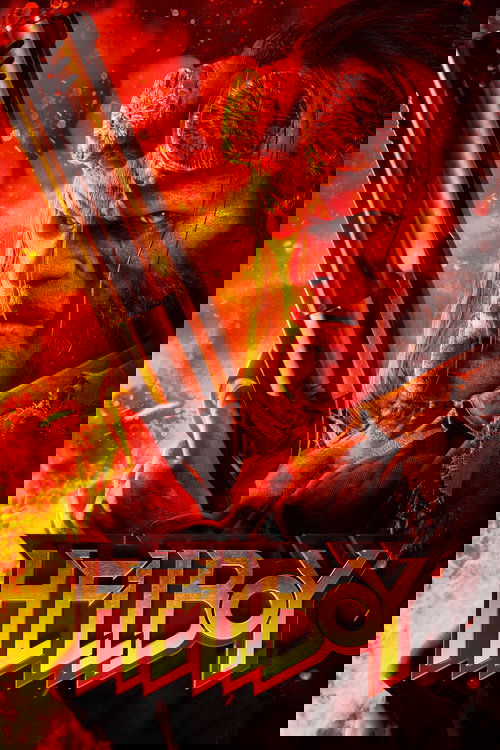
Hellboy
Hellboy comes to England, where he must defeat Nimue, Merlin's consort and the Blood Queen. But their battle will bring about the end of the world, a fate he desperately tries to turn away.
Working with a respectable budget of $50.0M, the film achieved a respectable showing with $55.1M in global revenue (+10% profit margin).
1 win & 8 nominations


Plot Structure
Story beats plotted across runtime


Narrative Arc
Emotional journey through the story's key moments
Story Circle
Blueprint 15-beat structure
Arcplot Score Breakdown
Weighted: Precision (70%) + Arc (15%) + Theme (15%)
Hellboy (2019) exemplifies carefully calibrated narrative architecture, characteristic of Neil Marshall's storytelling approach. This structural analysis examines how the film's 15-point plot structure maps to proven narrative frameworks across 2 hours and 1 minutes. With an Arcplot score of 6.2, the film takes an unconventional approach to traditional narrative frameworks.
Characters
Cast & narrative archetypes

Hellboy
Nimue the Blood Queen
Alice Monaghan
Ben Daimio
Trevor Bruttenholm
Gruagach
Main Cast & Characters
Hellboy
Played by David Harbour
A demon raised by humans who works for the Bureau for Paranormal Research and Defense, struggling with his apocalyptic destiny while trying to save humanity.
Nimue the Blood Queen
Played by Milla Jovovich
An ancient sorceress resurrected to bring about the apocalypse, seeking revenge on humanity and recruiting Hellboy to fulfill his dark destiny.
Alice Monaghan
Played by Sasha Lane
A young medium with supernatural abilities who can communicate with the dead, joining Hellboy on his mission.
Ben Daimio
Played by Daniel Dae Kim
A military officer with a dark secret and shape-shifting abilities who initially clashes with Hellboy but becomes an ally.
Trevor Bruttenholm
Played by Ian McShane
Hellboy's adoptive father and founder of the B.P.R.D., a father figure who raised him to fight for good despite his demonic origins.
Gruagach
Played by Douglas Tait
A monstrous fairy changeling seeking revenge against Hellboy for past grievances, serving as an agent of the Blood Queen.
Structural Analysis
The Status Quo at 1 minutes (1% through the runtime) establishes Hellboy works as a paranormal investigator for the B.P.R.D., hunting monsters while struggling with his demonic heritage and desire for acceptance in the human world.. Of particular interest, this early placement immediately immerses viewers in the story world.
The inciting incident occurs at 15 minutes when Hellboy is sent to England where he learns that the ancient Blood Queen Nimue is being resurrected by her followers. This mission puts him on a collision course with his supernatural destiny.. At 13% through the film, this Disruption is delayed, allowing extended setup of the story world. This beat shifts the emotional landscape, launching the protagonist into the central conflict.
The First Threshold at 30 minutes marks the transition into Act II, occurring at 25% of the runtime. This reveals the protagonist's commitment to Hellboy actively chooses to hunt down Nimue and stop her resurrection, fully committing to the mission despite warnings about his destiny. He crosses into a darker supernatural world beyond typical B.P.R.D. Operations., moving from reaction to action.
At 61 minutes, the Midpoint arrives at 50% of the runtime—precisely centered, creating perfect narrative symmetry. Of particular interest, this crucial beat Nimue is fully resurrected and reveals the truth about Hellboy's destiny: he is prophesied to become the Beast of the Apocalypse. She offers him power and acceptance. This false defeat raises the stakes - Hellboy now knows he's connected to the villain., fundamentally raising what's at risk. The emotional intensity shifts, dividing the narrative into clear before-and-after phases.
The Collapse moment at 91 minutes (75% through) represents the emotional nadir. Here, Professor Broom is killed by Nimue. Hellboy loses his father figure and moral anchor, representing the death of his human childhood and innocence. This devastating loss leaves Hellboy vulnerable to Nimue's manipulation., illustrates the protagonist at their lowest point. This beat's placement in the final quarter sets up the climactic reversal.
The Second Threshold at 97 minutes initiates the final act resolution at 80% of the runtime. Alice and Daimio's faith in Hellboy breaks through his rage. He remembers his father's lessons and realizes that destiny isn't fixed - he can choose who he wants to be. This synthesis of his demonic power with human values gives him clarity for the final battle., demonstrating the transformation achieved throughout the journey.
Emotional Journey
Hellboy's emotional architecture traces a deliberate progression across 15 carefully calibrated beats.
Narrative Framework
This structural analysis employs a 15-point narrative structure framework that maps key story moments. By mapping Hellboy against these established plot points, we can identify how Neil Marshall utilizes or subverts traditional narrative conventions. The plot point approach reveals not only adherence to structural principles but also creative choices that distinguish Hellboy within the fantasy genre.
Neil Marshall's Structural Approach
Among the 4 Neil Marshall films analyzed on Arcplot, the average structural score is 6.7, demonstrating varied approaches to story architecture. Hellboy takes a more unconventional approach compared to the director's typical style. For comparative analysis, explore the complete Neil Marshall filmography.
Comparative Analysis
Additional fantasy films include Thinner, Ella Enchanted and Conan the Barbarian. For more Neil Marshall analyses, see Centurion, Doomsday and The Descent.
Plot Points by Act
Act I
SetupStatus Quo
Hellboy works as a paranormal investigator for the B.P.R.D., hunting monsters while struggling with his demonic heritage and desire for acceptance in the human world.
Theme
Professor Broom tells Hellboy about his true nature and destiny, questioning whether he will choose to be a force for good or succumb to his demonic birthright. The theme explores identity, choice, and whether heritage determines fate.
Worldbuilding
Establishes Hellboy's world: his relationship with adoptive father Professor Broom, his work with the B.P.R.D., his outsider status among humans, and the broader supernatural world. Includes flashback to Arthurian legend and Nimue the Blood Queen's original defeat.
Disruption
Hellboy is sent to England where he learns that the ancient Blood Queen Nimue is being resurrected by her followers. This mission puts him on a collision course with his supernatural destiny.
Resistance
Hellboy teams with Alice Monaghan and Ben Daimio, learning about Nimue's plan and his own connection to her prophecy. He resists the idea that he's destined to bring about the apocalypse, seeking to prove he can choose his own path.
Act II
ConfrontationFirst Threshold
Hellboy actively chooses to hunt down Nimue and stop her resurrection, fully committing to the mission despite warnings about his destiny. He crosses into a darker supernatural world beyond typical B.P.R.D. operations.
Mirror World
Alice Monaghan becomes Hellboy's moral compass and thematic mirror. She represents humanity accepting supernatural beings based on their choices rather than their nature, embodying the film's central theme.
Premise
Hellboy battles supernatural creatures, confronts giants and witches, and explores his demonic heritage. This section delivers the monster-hunting action the premise promises while Nimue's followers gather her body parts for resurrection.
Midpoint
Nimue is fully resurrected and reveals the truth about Hellboy's destiny: he is prophesied to become the Beast of the Apocalypse. She offers him power and acceptance. This false defeat raises the stakes - Hellboy now knows he's connected to the villain.
Opposition
Nimue grows stronger and actively pursues Hellboy, tempting him to embrace his true nature. Professor Broom's secrets are revealed, trust fractures within the team, and Hellboy's internal struggle intensifies as he questions his place in the world.
Collapse
Professor Broom is killed by Nimue. Hellboy loses his father figure and moral anchor, representing the death of his human childhood and innocence. This devastating loss leaves Hellboy vulnerable to Nimue's manipulation.
Crisis
Hellboy mourns his father and wrestles with rage and grief. Nimue exploits his emotional state, and Hellboy briefly gives in to his demonic nature, pulling Excalibur from its stone and releasing his apocalyptic power.
Act III
ResolutionSecond Threshold
Alice and Daimio's faith in Hellboy breaks through his rage. He remembers his father's lessons and realizes that destiny isn't fixed - he can choose who he wants to be. This synthesis of his demonic power with human values gives him clarity for the final battle.
Synthesis
Hellboy uses his full demonic power but controls it through his humanity. He confronts Nimue in an apocalyptic battle, rejects the crown of the underworld, and defeats her by choosing to be a hero rather than a destroyer.
Transformation
Hellboy stands with his team, having proven that identity is defined by choices, not destiny. He has integrated his demonic heritage with his humanity, becoming neither fully human nor fully monster, but himself.