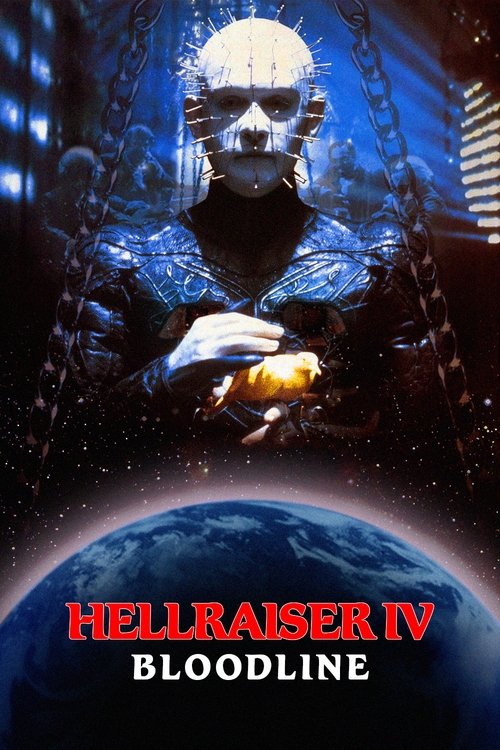
Hellraiser: Bloodline
Three generations of the same family deal with the consequences of unleashing the forces of hell.
Despite its tight budget of $4.0M, Hellraiser: Bloodline became a financial success, earning $16.7M worldwide—a 317% return. The film's unique voice resonated with audiences, demonstrating that strong storytelling can transcend budget limitations.
1 win & 2 nominations


Plot Structure
Story beats plotted across runtime


Narrative Arc
Emotional journey through the story's key moments
Story Circle
Blueprint 15-beat structure
Arcplot Score Breakdown
Weighted: Precision (70%) + Arc (15%) + Theme (15%)
Hellraiser: Bloodline (1996) exhibits carefully calibrated dramatic framework, characteristic of Alan Smithee's storytelling approach. This structural analysis examines how the film's 15-point plot structure maps to proven narrative frameworks across 1 hour and 26 minutes. With an Arcplot score of 7.5, the film showcases strong structural fundamentals.
Characters
Cast & narrative archetypes

Dr. Paul Merchant
Pinhead
Angelique
John Merchant
Philippe Lemarchand
Rimmer
Main Cast & Characters
Dr. Paul Merchant
Played by Bruce Ramsay
Space station engineer in 2127, descendant of the Lament Configuration's creator, determined to destroy Pinhead forever.
Pinhead
Played by Doug Bradley
The lead Cenobite, an eternal demon summoned through the puzzle box across multiple timelines.
Angelique
Played by Valentina Vargas
A demon princess summoned in 18th century France, seductive and manipulative, bound to serve through dark magic.
John Merchant
Played by Bruce Ramsay
Architect in 1996 New York, descendant trying to seal the gateway to hell within his building.
Philippe Lemarchand
Played by Bruce Ramsay
18th century French toymaker who unknowingly creates the Lament Configuration for a corrupt aristocrat.
Rimmer
Played by Christine Harnos
Security officer on the space station who doubts Dr. Merchant's sanity and tries to regain control.
Structural Analysis
The Status Quo at 1 minutes (1% through the runtime) establishes Dr. Paul Merchant works alone on space station Minos in 2127, attempting to close the gateway to hell his ancestor opened. He is stopped by security forces who believe he's gone mad.. Significantly, this early placement immediately immerses viewers in the story world.
The inciting incident occurs at 11 minutes when Angelique is summoned and kills the Duc de L'Isle. LeMarchand realizes his creation has unleashed evil into the world and that his family is now cursed to deal with this horror.. At 13% through the film, this Disruption is delayed, allowing extended setup of the story world. This beat shifts the emotional landscape, launching the protagonist into the central conflict.
The First Threshold at 21 minutes marks the transition into Act II, occurring at 25% of the runtime. This illustrates the protagonist's commitment to John Merchant actively chooses to confront his family's legacy when Angelique manipulates him into opening the box. He crosses into the world of the Cenobites, accepting that he must deal with what his ancestor created., moving from reaction to action.
At 43 minutes, the Midpoint arrives at 50% of the runtime—precisely centered, creating perfect narrative symmetry. Significantly, this crucial beat Pinhead kills John Merchant's family and transforms the Elysium building into a trap, turning John's solution into another horror. What seemed like progress toward ending the curse becomes a false defeat., fundamentally raising what's at risk. The emotional intensity shifts, dividing the narrative into clear before-and-after phases.
The Collapse moment at 64 minutes (74% through) represents the emotional nadir. Here, Rimmer is killed by Pinhead. Paul is alone, captured, and faces the same failure that destroyed his ancestors. The weight of 300 years of family curse seems insurmountable, and death surrounds him., demonstrates the protagonist at their lowest point. This beat's placement in the final quarter sets up the climactic reversal.
The Second Threshold at 69 minutes initiates the final act resolution at 80% of the runtime. Paul realizes the space station itself IS the Elysium Configuration his ancestor designed - perfected over three generations. He understands he has the power to finally end the curse. He chooses to sacrifice everything to activate it., demonstrating the transformation achieved throughout the journey.
Emotional Journey
Hellraiser: Bloodline's emotional architecture traces a deliberate progression across 15 carefully calibrated beats.
Narrative Framework
This structural analysis employs systematic plot point analysis that identifies crucial turning points. By mapping Hellraiser: Bloodline against these established plot points, we can identify how Alan Smithee utilizes or subverts traditional narrative conventions. The plot point approach reveals not only adherence to structural principles but also creative choices that distinguish Hellraiser: Bloodline within the horror genre.
Comparative Analysis
Additional horror films include Thinner, A Nightmare on Elm Street and Mary Reilly.
Plot Points by Act
Act I
SetupStatus Quo
Dr. Paul Merchant works alone on space station Minos in 2127, attempting to close the gateway to hell his ancestor opened. He is stopped by security forces who believe he's gone mad.
Theme
Rimmer tells Merchant: "Your family has quite a history." The theme of inherited sin and the burden of legacy across generations is established.
Worldbuilding
Flashback to 1796 France: toymaker Phillip LeMarchand creates the Lament Configuration for the occultist Duc de L'Isle, unwittingly opening a portal that summons the demon Angelique. Establishes the origin of the box and the Merchant bloodline's connection to it.
Disruption
Angelique is summoned and kills the Duc de L'Isle. LeMarchand realizes his creation has unleashed evil into the world and that his family is now cursed to deal with this horror.
Resistance
LeMarchand attempts to understand what he's created and begins designing a way to undo it. The narrative shifts to 1996 where his descendant John Merchant is an architect who begins experiencing the consequences of his family legacy as Angelique and Pinhead resurface.
Act II
ConfrontationFirst Threshold
John Merchant actively chooses to confront his family's legacy when Angelique manipulates him into opening the box. He crosses into the world of the Cenobites, accepting that he must deal with what his ancestor created.
Mirror World
Angelique represents the dark mirror of creation - while the Merchants create to build and solve, she and Pinhead exist to corrupt and destroy. She tries to seduce John, offering him dark power instead of redemption.
Premise
John Merchant explores his family's history with the box and attempts to protect his family while uncovering the design for the Elysium Configuration - a building that can permanently close the gateway. Pinhead and Angelique hunt him, creating chaos.
Midpoint
Pinhead kills John Merchant's family and transforms the Elysium building into a trap, turning John's solution into another horror. What seemed like progress toward ending the curse becomes a false defeat.
Opposition
Back in 2127, Pinhead has followed Paul Merchant to the space station. The demons close in as Paul struggles to complete his ancestor's work. The military team is systematically killed, and Paul's plan seems doomed to fail like his ancestors before him.
Collapse
Rimmer is killed by Pinhead. Paul is alone, captured, and faces the same failure that destroyed his ancestors. The weight of 300 years of family curse seems insurmountable, and death surrounds him.
Crisis
Paul confronts his despair and the seeming futility of fighting against eternal evil. He processes the deaths of everyone who tried to help him and must decide whether to give up or complete what his family started centuries ago.
Act III
ResolutionSecond Threshold
Paul realizes the space station itself IS the Elysium Configuration his ancestor designed - perfected over three generations. He understands he has the power to finally end the curse. He chooses to sacrifice everything to activate it.
Synthesis
Paul activates the station's true purpose - twin light beams that create a permanent seal. He traps Pinhead and the Cenobites, then triggers the station to become a configuration that banishes them. The 300-year curse ends as the Merchant bloodline completes its purpose.
Transformation
The space station-turned-light-prison drifts in space, permanently sealing hell. Unlike the opening where Paul was alone and desperate, he has completed his family's three-century mission. The curse is broken; the Merchants are finally free.