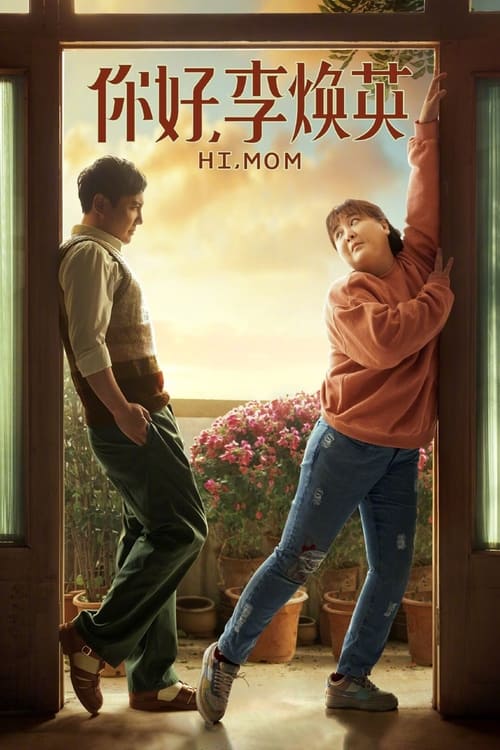
Hi, Mom
A woman travels back in time to befriend her own mother in an attempt to make her life better.
Despite a mid-range budget of $59.0M, Hi, Mom became a box office phenomenon, earning $822.0M worldwide—a remarkable 1293% return.
Plot Structure
Story beats plotted across runtime


Narrative Arc
Emotional journey through the story's key moments
Story Circle
Blueprint 15-beat structure
Characters
Cast & narrative archetypes

Jia Xiaoling
Li Huanying (Young)
Li Huanying (2001)
Shen Guanglin
Jia Wentian
Main Cast & Characters
Jia Xiaoling
Played by Jia Ling
A devoted daughter who time-travels to 1981 to meet her young mother and change her fate after a tragic accident.
Li Huanying (Young)
Played by Zhang Xiaofei
Jia Xiaoling's mother in her youth - a vibrant, optimistic factory worker with dreams and kindness.
Li Huanying (2001)
Played by Zhang Xiaofei
The older version of Li Huanying, Xiaoling's beloved mother in the present day.
Shen Guanglin
Played by Shen Teng
A kind-hearted young man who becomes romantically interested in young Li Huanying in 1981.
Jia Wentian
Played by Chen He
Xiaoling's father, a gentle and supportive husband to Li Huanying.
Structural Analysis
The Status Quo at 2 minutes (1% through the runtime) establishes Jia Xiaoling arrives at her college acceptance celebration in 2001, embarrassed by her modest background as her mother Li Huanying proudly celebrates her achievement despite their humble circumstances.. Significantly, this early placement immediately immerses viewers in the story world.
The inciting incident occurs at 16 minutes when Li Huanying is critically injured in an accident after chasing Xiaoling, who ran away in shame after her college ranking lies were exposed. Xiaoling is devastated by guilt, realizing her mother was hurt because of her.. At 12% through the film, this Disruption aligns precisely with traditional story structure. This beat shifts the emotional landscape, launching the protagonist into the central conflict.
The First Threshold at 32 minutes marks the transition into Act II, occurring at 25% of the runtime. This illustrates the protagonist's commitment to Xiaoling decides to actively intervene in the past, choosing to befriend her young mother and dedicate herself to making Li Huanying happy and successful, attempting to give her mother the life she deserved., moving from reaction to action.
At 63 minutes, the Midpoint arrives at 49% of the runtime—precisely centered, creating perfect narrative symmetry. Significantly, this crucial beat False victory: Xiaoling's plans seem to be working as Li Huanying wins the volleyball competition and gains recognition at the factory. However, Xiaoling begins to notice that her mother seems to know more than she should, creating unease beneath the triumph., fundamentally raising what's at risk. The emotional intensity shifts, dividing the narrative into clear before-and-after phases.
The Collapse moment at 95 minutes (74% through) represents the emotional nadir. Here, Xiaoling discovers the devastating truth: Li Huanying has known all along that Xiaoling is her daughter from the future. Her mother time-traveled first after Xiaoling's birth to ensure her daughter would have a happy life, sacrificing everything for her child., reveals the protagonist at their lowest point. This beat's placement in the final quarter sets up the climactic reversal.
The Second Threshold at 101 minutes initiates the final act resolution at 79% of the runtime. Xiaoling realizes that true love isn't about changing someone or giving them what you think they need—it's about accepting and cherishing them as they are. She understands her mother's happiness came from having her, just as her happiness came from having her mother., demonstrating the transformation achieved throughout the journey.
Emotional Journey
Hi, Mom's emotional architecture traces a deliberate progression across 15 carefully calibrated beats.
Narrative Framework
This structural analysis employs proven narrative structure principles that track dramatic progression. By mapping Hi, Mom against these established plot points, we can identify how Jia Ling utilizes or subverts traditional narrative conventions. The plot point approach reveals not only adherence to structural principles but also creative choices that distinguish Hi, Mom within the comedy genre.
Jia Ling's Structural Approach
Among the 2 Jia Ling films analyzed on Arcplot, Hi, Mom exemplifies the director's characteristic narrative technique. For comparative analysis, explore the complete Jia Ling filmography.
Comparative Analysis
Additional comedy films include The Bad Guys, Ella Enchanted and The Evening Star. For more Jia Ling analyses, see Yolo.
Plot Points by Act
Act I
SetupStatus Quo
Jia Xiaoling arrives at her college acceptance celebration in 2001, embarrassed by her modest background as her mother Li Huanying proudly celebrates her achievement despite their humble circumstances.
Theme
Li Huanying tells Xiaoling that she doesn't need to be successful or outstanding, just happy. This maternal wish becomes the film's central theme about unconditional love and what truly matters in life.
Worldbuilding
Establishment of Xiaoling's relationship with her selfless mother, her embarrassment about their poverty, and the dynamics at the factory celebration where Xiaoling's lies about her college ranking create tension between mother and daughter.
Disruption
Li Huanying is critically injured in an accident after chasing Xiaoling, who ran away in shame after her college ranking lies were exposed. Xiaoling is devastated by guilt, realizing her mother was hurt because of her.
Resistance
In her grief and regret at the hospital, Xiaoling experiences a mysterious time-travel event that transports her back to 1981, arriving at the factory where her young mother works. She debates whether this is real and what she should do.
Act II
ConfrontationFirst Threshold
Xiaoling decides to actively intervene in the past, choosing to befriend her young mother and dedicate herself to making Li Huanying happy and successful, attempting to give her mother the life she deserved.
Mirror World
Xiaoling develops a genuine friendship with young Li Huanying, seeing her mother as a vibrant young woman with dreams rather than just as "mom." This relationship becomes the emotional core that teaches Xiaoling to truly see and appreciate her mother.
Premise
Xiaoling schemes to improve her mother's life in 1981: trying to set her up with a better husband than her father, getting her into the prestigious factory volleyball team, and arranging opportunities for success. Comic misadventures ensue as she meddles in the past.
Midpoint
False victory: Xiaoling's plans seem to be working as Li Huanying wins the volleyball competition and gains recognition at the factory. However, Xiaoling begins to notice that her mother seems to know more than she should, creating unease beneath the triumph.
Opposition
Xiaoling's interference creates complications: her attempts to prevent her parents' relationship threaten her own existence, Li Huanying makes unexpected choices that diverge from the plan, and Xiaoling struggles with the realization that she cannot control her mother's happiness or destiny.
Collapse
Xiaoling discovers the devastating truth: Li Huanying has known all along that Xiaoling is her daughter from the future. Her mother time-traveled first after Xiaoling's birth to ensure her daughter would have a happy life, sacrificing everything for her child.
Crisis
Xiaoling processes the profound revelation that while she was trying to give her mother happiness, her mother had already sacrificed her own dreams to ensure Xiaoling's happiness. The cycle of maternal love and sacrifice becomes clear, devastating Xiaoling with understanding.
Act III
ResolutionSecond Threshold
Xiaoling realizes that true love isn't about changing someone or giving them what you think they need—it's about accepting and cherishing them as they are. She understands her mother's happiness came from having her, just as her happiness came from having her mother.
Synthesis
Xiaoling returns to 2001 and her mother's hospital bedside, finally at peace with their relationship and her mother's choices. She reconciles with who her mother was and who she herself is, accepting their imperfect but loving life together.
Transformation
Xiaoling, now mature and at peace, smiles with genuine happiness rather than embarrassment when thinking of her mother. She embodies the lesson her mother taught: happiness comes not from success or perfection, but from love and acceptance.