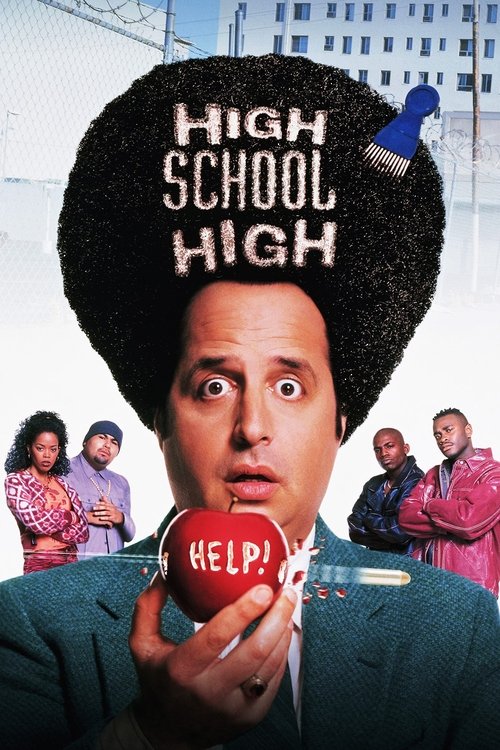
High School High
Richard Clark has just left the well-known Wellington Academy to teach at Marion Barry High School. Now, he will try to inspire the D-average students into making good grades and try to woo a fellow teacher.
The film earned $21.3M at the global box office.


Plot Structure
Story beats plotted across runtime


Narrative Arc
Emotional journey through the story's key moments
Story Circle
Blueprint 15-beat structure
Arcplot Score Breakdown
Weighted: Precision (70%) + Arc (15%) + Theme (15%)
High School High (1996) showcases precise narrative design, characteristic of Hart Bochner's storytelling approach. This structural analysis examines how the film's 15-point plot structure maps to proven narrative frameworks across 1 hour and 26 minutes. With an Arcplot score of 7.3, the film balances conventional beats with creative variation.
Characters
Cast & narrative archetypes

Richard Clark
Victoria Chapell
Griff McReynolds
Natalie
Paco
Evelyn Doyle
Main Cast & Characters
Richard Clark
Played by Jon Lovitz
An idealistic teacher from a privileged background who takes a job at Marion Barry High School in an inner-city neighborhood to make a difference.
Victoria Chapell
Played by Tia Carrere
A dedicated and street-smart teacher at Marion Barry High who becomes Richard's love interest and helps him navigate the school's challenges.
Griff McReynolds
Played by Mekhi Phifer
The corrupt and sleazy principal of Marion Barry High School who is involved in criminal activities and opposes Richard's reforms.
Natalie
Played by Malinda Williams
A tough student at Marion Barry High who initially clashes with Richard but eventually respects his dedication.
Paco
Played by Guillermo Díaz
A gang member and student who tests Richard's commitment to teaching and reform.
Evelyn Doyle
Played by Louise Fletcher
Richard's wealthy and snobbish ex-fiancée who represents the privileged world he left behind.
Structural Analysis
The Status Quo at 1 minutes (1% through the runtime) establishes Richard Clark teaches at an elite prep school where privileged students excel. He represents idealistic optimism about education, though he's complacent in his comfortable position.. Of particular interest, this early placement immediately immerses viewers in the story world.
The inciting incident occurs at 9 minutes when Richard learns Marion Barry High School needs teachers. His father's words echo in his mind, creating pressure to prove himself as more than a privileged prep school teacher.. At 11% through the film, this Disruption aligns precisely with traditional story structure. This beat shifts the emotional landscape, launching the protagonist into the central conflict.
The First Threshold at 20 minutes marks the transition into Act II, occurring at 24% of the runtime. This demonstrates the protagonist's commitment to Richard actively chooses to accept the position at Marion Barry High and arrives at the school, entering a dangerous, chaotic world completely opposite to his prep school experience., moving from reaction to action.
At 43 minutes, the Midpoint arrives at 50% of the runtime—precisely centered, creating perfect narrative symmetry. The analysis reveals that this crucial beat False victory: Richard believes he's connecting with students and making progress. He has a romantic moment with Victoria. His confidence peaks, but he hasn't yet faced the real institutional corruption., fundamentally raising what's at risk. The emotional intensity shifts, dividing the narrative into clear before-and-after phases.
The Collapse moment at 63 minutes (74% through) represents the emotional nadir. Here, Richard is humiliated and defeated. His failure is exposed—students mock him, Victoria rejects him, and the corrupt principal seemingly wins. Richard's idealistic dream of making a difference appears dead., indicates the protagonist at their lowest point. This beat's placement in the final quarter sets up the climactic reversal.
The Second Threshold at 69 minutes initiates the final act resolution at 80% of the runtime. Richard discovers evidence of Principal Doyle's embezzlement scheme. Armed with this truth and renewed genuine commitment, he decides to fight for the school and students, synthesizing idealism with real action., demonstrating the transformation achieved throughout the journey.
Emotional Journey
High School High's emotional architecture traces a deliberate progression across 15 carefully calibrated beats.
Narrative Framework
This structural analysis employs a 15-point narrative structure framework that maps key story moments. By mapping High School High against these established plot points, we can identify how Hart Bochner utilizes or subverts traditional narrative conventions. The plot point approach reveals not only adherence to structural principles but also creative choices that distinguish High School High within the comedy genre.
Comparative Analysis
Additional comedy films include The Bad Guys, Ella Enchanted and The Evening Star.
Plot Points by Act
Act I
SetupStatus Quo
Richard Clark teaches at an elite prep school where privileged students excel. He represents idealistic optimism about education, though he's complacent in his comfortable position.
Theme
Richard's father (former principal) tells him that real teaching means making a difference where it matters most, not just where it's easiest. Sets up the film's exploration of dedication vs. comfort.
Worldbuilding
Establishment of Richard's privileged teaching world, his naive idealism, and introduction to the dire state of Marion Barry High School through news reports and his father's legacy.
Disruption
Richard learns Marion Barry High School needs teachers. His father's words echo in his mind, creating pressure to prove himself as more than a privileged prep school teacher.
Resistance
Richard debates the decision, faces warnings about the dangerous school, and is encouraged by his desire to honor his father's legacy. He prepares to leave his comfortable life behind.
Act II
ConfrontationFirst Threshold
Richard actively chooses to accept the position at Marion Barry High and arrives at the school, entering a dangerous, chaotic world completely opposite to his prep school experience.
Mirror World
Richard meets Victoria Chapell, a dedicated teacher who represents what he aspires to be—someone truly committed to these students despite the chaos. Their relationship will teach him authenticity.
Premise
Fish-out-of-water comedy as Richard encounters metal detectors, violent students, corrupt administrators, and complete chaos. He applies his naive prep school methods with absurd results while falling for Victoria.
Midpoint
False victory: Richard believes he's connecting with students and making progress. He has a romantic moment with Victoria. His confidence peaks, but he hasn't yet faced the real institutional corruption.
Opposition
Principal Doyle's corruption is revealed. The school's problems are systemic, not just surface-level. Richard's idealistic methods prove insufficient. Victoria pulls away, questioning his authenticity and staying power.
Collapse
Richard is humiliated and defeated. His failure is exposed—students mock him, Victoria rejects him, and the corrupt principal seemingly wins. Richard's idealistic dream of making a difference appears dead.
Crisis
Richard processes his failure and confronts whether to give up or truly commit. He realizes he's been performing idealism rather than living it—the students and Victoria need real dedication, not theatrics.
Act III
ResolutionSecond Threshold
Richard discovers evidence of Principal Doyle's embezzlement scheme. Armed with this truth and renewed genuine commitment, he decides to fight for the school and students, synthesizing idealism with real action.
Synthesis
Richard rallies the students, exposes the principal's corruption, and proves his authentic commitment. Climactic confrontation where students and teachers unite to save their school and educational integrity.
Transformation
Richard remains at Marion Barry High, now a transformed teacher who has earned his students' respect and Victoria's love. Mirror of Status Quo—still teaching, but now with authentic purpose and belonging.