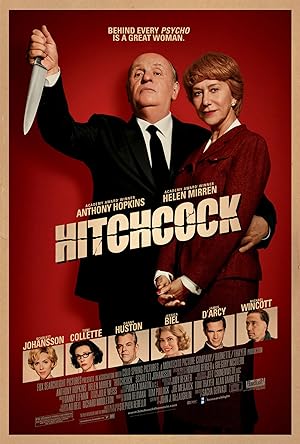
Hitchcock
In 1959, Sir Alfred Hitchcock (Sir Anthony Hopkins) and his wife, Alma Reville (Dame Helen Mirren), are at the top of their creative game as filmmakers amidst disquieting insinuations about it being time to retire. To recapture his youth's artistic daring, Sir Alfred decides his next movie will adapt the lurid horror novel, "Psycho", over everyone's misgivings. Unfortunately, as Sir Alfred self-finances and labors on this movie, Alma finally loses patience with his roving eye and controlling habits with his actresses. When an ambitious friend lures her to collaborate on a work of their own, the resulting marital tension colors Sir Alfred's work, even as the novel's inspiration haunts his dreams.
Working with a respectable budget of $15.7M, the film achieved a respectable showing with $27.0M in global revenue (+72% profit margin).
Nominated for 1 Oscar. 6 wins & 30 nominations


Plot Structure
Story beats plotted across runtime


Narrative Arc
Emotional journey through the story's key moments
Story Circle
Blueprint 15-beat structure
Arcplot Score Breakdown
Weighted: Precision (70%) + Arc (15%) + Theme (15%)
Hitchcock (2012) reveals meticulously timed story structure, characteristic of Sacha Gervasi's storytelling approach. This structural analysis examines how the film's 15-point plot structure maps to proven narrative frameworks across 1 hour and 38 minutes. With an Arcplot score of 7.5, the film showcases strong structural fundamentals.
Characters
Cast & narrative archetypes

Alfred Hitchcock
Alma Reville
Janet Leigh
Barney Balaban
Whitfield Cook
Peggy Robertson
Ed Gein
Main Cast & Characters
Alfred Hitchcock
Played by Anthony Hopkins
The legendary filmmaker struggling to finance and create Psycho while battling studio executives, censors, and his own obsessions.
Alma Reville
Played by Helen Mirren
Hitchcock's wife, creative partner, and emotional anchor who demands recognition while managing her own screenwriting career and a potential affair.
Janet Leigh
Played by Scarlett Johansson
The star of Psycho who takes a risk on Hitchcock's controversial project and brings Marion Crane to life in the iconic shower scene.
Barney Balaban
Played by Richard Portnow
The head of Paramount Pictures who refuses to finance Psycho, forcing Hitchcock to mortgage his home.
Whitfield Cook
Played by Danny Huston
A charming screenwriter who collaborates with Alma and develops a close relationship that threatens the Hitchcock marriage.
Peggy Robertson
Played by Toni Collette
Hitchcock's loyal assistant who manages the production logistics and helps shield him from external pressures.
Ed Gein
Played by Michael Wincott
The real-life killer whose crimes inspired Psycho, appearing as a phantom figure in Hitchcock's imagination throughout the film.
Structural Analysis
The Status Quo at 1 minutes (1% through the runtime) establishes Hitchcock at the premiere of North by Northwest, introducing the film with his signature dark humor about a corpse. He's at the height of his fame, the "Master of Suspense," but the success feels routine.. The analysis reveals that this early placement immediately immerses viewers in the story world.
The inciting incident occurs at 12 minutes when Hitchcock discovers the book "Psycho" about Ed Gein's murders. He becomes obsessed with the lurid, taboo material - something shocking and dangerous that could reinvigorate his career.. At 12% through the film, this Disruption aligns precisely with traditional story structure. This beat shifts the emotional landscape, launching the protagonist into the central conflict.
The First Threshold at 24 minutes marks the transition into Act II, occurring at 25% of the runtime. This illustrates the protagonist's commitment to Hitchcock makes the active choice to mortgage his house and self-finance Psycho. He and Alma commit everything to this risky, controversial project. No turning back., moving from reaction to action.
At 50 minutes, the Midpoint arrives at 51% of the runtime—precisely centered, creating perfect narrative symmetry. Of particular interest, this crucial beat False defeat: Hitchcock discovers Alma has been secretly meeting with Whitfield at his beach house, working on his script. His jealousy and paranoia spike. Simultaneously, the film production faces mounting problems and budget overruns. The stakes escalate., fundamentally raising what's at risk. The emotional intensity shifts, dividing the narrative into clear before-and-after phases.
The Collapse moment at 73 minutes (74% through) represents the emotional nadir. Here, Hitchcock suffers a collapse - literal and metaphorical. After wrapping production, exhausted and paranoid, he has a health crisis. He's hospitalized. His obsession has nearly destroyed him, his marriage, and everything. "Whiff of death" as he faces mortality., demonstrates the protagonist at their lowest point. This beat's placement in the final quarter sets up the climactic reversal.
The Second Threshold at 78 minutes initiates the final act resolution at 80% of the runtime. Alma returns to Hitchcock. She shows him the final cut of Psycho with her editorial changes - synthesizing their partnership. He realizes the film (and their marriage) works because of their collaboration, not his solo genius., demonstrating the transformation achieved throughout the journey.
Emotional Journey
Hitchcock's emotional architecture traces a deliberate progression across 15 carefully calibrated beats.
Narrative Framework
This structural analysis employs proven narrative structure principles that track dramatic progression. By mapping Hitchcock against these established plot points, we can identify how Sacha Gervasi utilizes or subverts traditional narrative conventions. The plot point approach reveals not only adherence to structural principles but also creative choices that distinguish Hitchcock within the biography genre.
Comparative Analysis
Additional biography films include After Thomas, Taking Woodstock and The Fire Inside.
Plot Points by Act
Act I
SetupStatus Quo
Hitchcock at the premiere of North by Northwest, introducing the film with his signature dark humor about a corpse. He's at the height of his fame, the "Master of Suspense," but the success feels routine.
Theme
Alma tells Hitchcock, "We've always made a good team." The theme is partnership - creative collaboration, marriage, and the cost of obsession on relationships.
Worldbuilding
Establishing Hitchcock and Alma's world: their successful partnership, his celebrity status, Paramount's reluctance to fund another thriller, and hints of strain in their marriage. Hitchcock is restless, seeking his next challenge.
Disruption
Hitchcock discovers the book "Psycho" about Ed Gein's murders. He becomes obsessed with the lurid, taboo material - something shocking and dangerous that could reinvigorate his career.
Resistance
Hitchcock debates whether to make Psycho. Paramount refuses to finance it, calling it "disgusting." Everyone warns against it - too violent, too sexual, career suicide. But his obsession grows.
Act II
ConfrontationFirst Threshold
Hitchcock makes the active choice to mortgage his house and self-finance Psycho. He and Alma commit everything to this risky, controversial project. No turning back.
Mirror World
Alma meets Whitfield Cook, a writer who shows romantic interest in her. This subplot will mirror the main story: as Hitchcock becomes obsessed with his blonde actresses and the film, Alma faces her own temptation and questions about their partnership.
Premise
The "fun and games" of making Psycho: casting Janet Leigh, building the Bates Motel set, shooting the shower scene, navigating censors. Hitchcock is energized but increasingly obsessed with his leading lady and with Ed Gein's psychology.
Midpoint
False defeat: Hitchcock discovers Alma has been secretly meeting with Whitfield at his beach house, working on his script. His jealousy and paranoia spike. Simultaneously, the film production faces mounting problems and budget overruns. The stakes escalate.
Opposition
Everything tightens: Hitchcock's obsession with Janet Leigh alienates Alma; his imaginary conversations with Ed Gein intensify; the marriage deteriorates; censors threaten the film; financial ruin looms. Alma grows closer to Whitfield.
Collapse
Hitchcock suffers a collapse - literal and metaphorical. After wrapping production, exhausted and paranoid, he has a health crisis. He's hospitalized. His obsession has nearly destroyed him, his marriage, and everything. "Whiff of death" as he faces mortality.
Crisis
Hitchcock's dark night: recovering in the hospital, facing the ruins of his marriage. Alma must decide whether to stay or leave. He confronts his demons - Ed Gein vanishes from his visions as he processes his destructive behavior.
Act III
ResolutionSecond Threshold
Alma returns to Hitchcock. She shows him the final cut of Psycho with her editorial changes - synthesizing their partnership. He realizes the film (and their marriage) works because of their collaboration, not his solo genius.
Synthesis
The finale: Psycho's premiere. Hitchcock nervously listens to audience reactions from the lobby. The shower scene plays - screams, terror, success. The film triumphs. Critics rave. Their partnership is vindicated.
Transformation
Closing image mirrors opening: Hitchcock introduces his next film (The Birds) to camera, but this time Alma stands beside him as equal partner. He acknowledges her contribution. The marriage and partnership are restored, transformed.