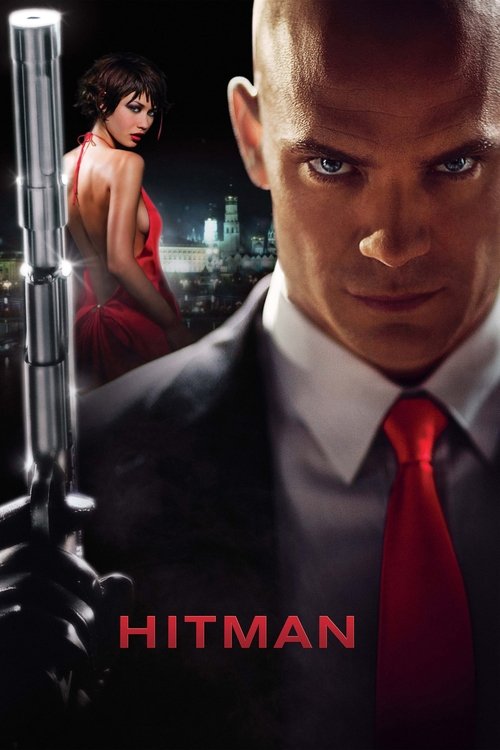
Hitman
A genetically engineered assassin with deadly aim, known only as "Agent 47" eliminates strategic targets for a top-secret organization. But when he's double-crossed, the hunter becomes the prey as 47 finds himself in a life-or-death game of international intrigue.
Despite a respectable budget of $24.0M, Hitman became a commercial success, earning $101.3M worldwide—a 322% return.


Plot Structure
Story beats plotted across runtime


Narrative Arc
Emotional journey through the story's key moments
Story Circle
Blueprint 15-beat structure
Arcplot Score Breakdown
Weighted: Precision (70%) + Arc (15%) + Theme (15%)
Hitman (2007) exhibits carefully calibrated narrative architecture, characteristic of Xavier Gens's storytelling approach. This structural analysis examines how the film's 15-point plot structure maps to proven narrative frameworks across 1 hour and 29 minutes. With an Arcplot score of 6.8, the film balances conventional beats with creative variation.
Characters
Cast & narrative archetypes

Agent 47
Nika Boronina
Mike Whittier
Mikhail Belicoff
Yuri Marklov
Main Cast & Characters
Agent 47
Played by Timothy Olyphant
A genetically engineered assassin who becomes entangled in a conspiracy while protecting a woman marked for death.
Nika Boronina
Played by Olga Kurylenko
A vulnerable Ukrainian woman caught in the crossfire who becomes 47's unexpected companion and moral compass.
Mike Whittier
Played by Dougray Scott
An Interpol agent obsessed with tracking down Agent 47, torn between duty and grudging respect for his quarry.
Mikhail Belicoff
Played by Ulrich Thomsen
A corrupt Russian politician who stages his own assassination to consolidate power and eliminate enemies.
Yuri Marklov
Played by Henry Ian Cusick
Belicoff's ruthless FSB lieutenant and enforcer who orchestrates the conspiracy against Agent 47.
Structural Analysis
The Status Quo at 1 minutes (1% through the runtime) establishes A montage reveals the Organization's training facility where young boys have barcodes tattooed on their heads, being molded into emotionless killers. Agent 47 exists as the perfect assassin - alone, efficient, and devoid of human connection.. Notably, this early placement immediately immerses viewers in the story world.
The inciting incident occurs at 11 minutes when Agent 47 successfully assassinates Russian President Belicoff with a sniper shot to the head. However, he immediately discovers he's been set up when Belicoff appears alive on television, and 47 receives orders to eliminate the witness - Nika Boronina.. At 12% through the film, this Disruption aligns precisely with traditional story structure. This beat shifts the emotional landscape, launching the protagonist into the central conflict.
The First Threshold at 22 minutes marks the transition into Act II, occurring at 25% of the runtime. This indicates the protagonist's commitment to 47 makes the active choice to spare Nika and take her with him rather than execute her as ordered. By defying the Organization, he crosses an irreversible threshold - he is now both hunter and hunted, operating outside his programming for the first time., moving from reaction to action.
At 45 minutes, the Midpoint arrives at 50% of the runtime—precisely centered, creating perfect narrative symmetry. The analysis reveals that this crucial beat 47 discovers the truth: the real Belicoff was indeed killed, but his brother Udre has installed a body double to maintain power. This false victory gives 47 a target and a plan, but he doesn't yet understand the full scope of the conspiracy or the danger Nika faces., fundamentally raising what's at risk. The emotional intensity shifts, dividing the narrative into clear before-and-after phases.
The Collapse moment at 67 minutes (75% through) represents the emotional nadir. Here, 47 is captured and Nika is taken. For a man who has never failed a mission or formed attachments, this represents complete defeat. The whiff of death is both literal - he faces execution - and metaphorical, as his awakening humanity may have cost him everything., shows the protagonist at their lowest point. This beat's placement in the final quarter sets up the climactic reversal.
The Second Threshold at 71 minutes initiates the final act resolution at 80% of the runtime. 47 escapes captivity using his skills but with new purpose - not just survival or mission completion, but to save Nika and expose the conspiracy. He synthesizes his lethal training with his newfound humanity, becoming more dangerous because he now has something to fight for., demonstrating the transformation achieved throughout the journey.
Emotional Journey
Hitman's emotional architecture traces a deliberate progression across 15 carefully calibrated beats.
Narrative Framework
This structural analysis employs structural analysis methodology used to understand storytelling architecture. By mapping Hitman against these established plot points, we can identify how Xavier Gens utilizes or subverts traditional narrative conventions. The plot point approach reveals not only adherence to structural principles but also creative choices that distinguish Hitman within the action genre.
Xavier Gens's Structural Approach
Among the 2 Xavier Gens films analyzed on Arcplot, the average structural score is 7.3, reflecting strong command of classical structure. Hitman takes a more unconventional approach compared to the director's typical style. For comparative analysis, explore the complete Xavier Gens filmography.
Comparative Analysis
Additional action films include The Bad Guys, Puss in Boots and Venom: The Last Dance. For more Xavier Gens analyses, see The Crucifixion.
Plot Points by Act
Act I
SetupStatus Quo
A montage reveals the Organization's training facility where young boys have barcodes tattooed on their heads, being molded into emotionless killers. Agent 47 exists as the perfect assassin - alone, efficient, and devoid of human connection.
Theme
During the opening sequence depicting 47's upbringing, the voice-over establishes that these agents were engineered to be weapons without humanity. The implicit question: can something created to kill ever become something more?
Worldbuilding
The world of international assassination is established. We see 47 operate with cold precision, his relationship with his handler Diana, and the shadowy Organization that controls him. Interpol agent Mike Whittier is introduced pursuing 47's trail across crime scenes.
Disruption
Agent 47 successfully assassinates Russian President Belicoff with a sniper shot to the head. However, he immediately discovers he's been set up when Belicoff appears alive on television, and 47 receives orders to eliminate the witness - Nika Boronina.
Resistance
47 investigates the conspiracy, discovering he was meant to be killed after the hit. He locates Nika but hesitates to kill her. Other Organization agents are sent to eliminate him. 47 must decide whether to follow orders or trust his instincts that something is deeply wrong.
Act II
ConfrontationFirst Threshold
47 makes the active choice to spare Nika and take her with him rather than execute her as ordered. By defying the Organization, he crosses an irreversible threshold - he is now both hunter and hunted, operating outside his programming for the first time.
Mirror World
Nika becomes 47's mirror world guide. As Belicoff's former mistress who was used and discarded, she represents what it means to be treated as property. Her damaged humanity reflects his stunted emotional development, and her desire for freedom parallels his unconscious longing.
Premise
47 and Nika navigate across Europe while he eliminates the agents sent to kill him. The cat-and-mouse game delivers the action-thriller premise as 47 uses his lethal skills while protecting someone for the first time. Their dynamic evolves from captor/captive to something more complex.
Midpoint
47 discovers the truth: the real Belicoff was indeed killed, but his brother Udre has installed a body double to maintain power. This false victory gives 47 a target and a plan, but he doesn't yet understand the full scope of the conspiracy or the danger Nika faces.
Opposition
The opposition intensifies from all sides. Interpol closes in on 47's trail. FSB agents hunt him. The Organization sends elite assassins. Udre Belicoff consolidates power. 47's growing attachment to Nika becomes a liability as enemies recognize she's his weakness.
Collapse
47 is captured and Nika is taken. For a man who has never failed a mission or formed attachments, this represents complete defeat. The whiff of death is both literal - he faces execution - and metaphorical, as his awakening humanity may have cost him everything.
Crisis
In captivity, 47 confronts what Nika has come to mean to him. His training says attachment is weakness, but his actions have proven otherwise. He must reconcile the weapon he was made to be with the man he might become.
Act III
ResolutionSecond Threshold
47 escapes captivity using his skills but with new purpose - not just survival or mission completion, but to save Nika and expose the conspiracy. He synthesizes his lethal training with his newfound humanity, becoming more dangerous because he now has something to fight for.
Synthesis
47 executes his final plan with precision. He infiltrates Udre's compound, rescues Nika, eliminates the body double Belicoff, and kills Udre. He also provides evidence to Interpol agent Whittier, choosing exposure over shadows. The Organization's conspiracy is dismantled.
Transformation
47 sets Nika up with money and a vineyard - giving her the freedom she dreamed of. He walks away, returning to the shadows, but transformed. He chose to protect rather than destroy, to free rather than possess. The weapon discovered he had a soul.