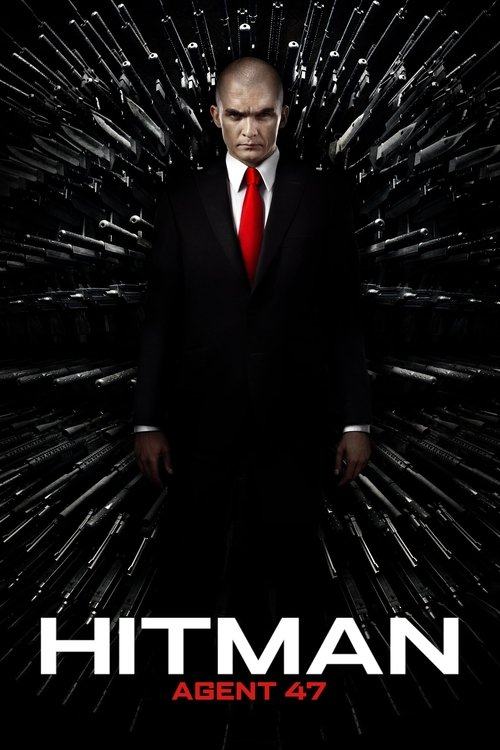
Hitman: Agent 47
An assassin teams up with a woman to help her find her father and uncover the mysteries of her ancestry.
Despite a moderate budget of $35.0M, Hitman: Agent 47 became a commercial success, earning $82.0M worldwide—a 134% return.


Plot Structure
Story beats plotted across runtime


Narrative Arc
Emotional journey through the story's key moments
Story Circle
Blueprint 15-beat structure
Arcplot Score Breakdown
Weighted: Precision (70%) + Arc (15%) + Theme (15%)
Hitman: Agent 47 (2015) demonstrates strategically placed plot construction, characteristic of Aleksander Bach's storytelling approach. This structural analysis examines how the film's 15-point plot structure maps to proven narrative frameworks across 1 hour and 36 minutes. With an Arcplot score of 7.6, the film showcases strong structural fundamentals.
Characters
Cast & narrative archetypes

Agent 47
Katia van Dees
John Smith
Dr. Litvenko
Le Clerq
Main Cast & Characters
Agent 47
Played by Rupert Friend
A genetically engineered assassin with enhanced abilities seeking to complete his mission and find the Agent program's creator.
Katia van Dees
Played by Hannah Ware
A young woman with enhanced reflexes and intuition searching for her missing father, unaware of her true origins.
John Smith
Played by Zachary Quinto
A mysterious operative claiming to help Katia, actually working for the Syndicate to capture her and her father.
Dr. Litvenko
Played by Ciaran Hinds
The brilliant scientist who created the Agent program, now in hiding to prevent his work from being exploited.
Le Clerq
Played by Thomas Kretschmann
The ruthless chairman of the Syndicate International corporation seeking to weaponize the Agent program for profit.
Structural Analysis
The Status Quo at 1 minutes (1% through the runtime) establishes Agent 47 executes a precision kill in a crowded square, demonstrating his engineered perfection as a genetically enhanced assassin. His cold, methodical existence as a weapon is established.. The analysis reveals that this early placement immediately immerses viewers in the story world.
The inciting incident occurs at 11 minutes when Agent 47 confronts Katia at the U-Bahn station, revealing she is being hunted. Her ordinary life as a lost woman searching for family is shattered by violent reality.. At 12% through the film, this Disruption aligns precisely with traditional story structure. This beat shifts the emotional landscape, launching the protagonist into the central conflict.
The First Threshold at 24 minutes marks the transition into Act II, occurring at 25% of the runtime. This indicates the protagonist's commitment to Katia chooses to trust John Smith and enters Syndicate's facility, actively deciding to seek answers about her father despite 47's warnings. She crosses into the dangerous world of the Agent Program., moving from reaction to action.
At 47 minutes, the Midpoint arrives at 49% of the runtime—precisely centered, creating perfect narrative symmetry. Of particular interest, this crucial beat The reveal: John Smith is actually a Syndicate operative, and Katia has been manipulated. False defeat - she's been on the wrong side, and her father is the key to creating more agents. Stakes raise dramatically., fundamentally raising what's at risk. The emotional intensity shifts, dividing the narrative into clear before-and-after phases.
The Collapse moment at 71 minutes (74% through) represents the emotional nadir. Here, Katia is captured and fully controlled by Syndicate, her mind invaded and autonomy destroyed. 47 appears outgunned and unable to prevent the creation of a new agent army. The "death" of free will., demonstrates the protagonist at their lowest point. This beat's placement in the final quarter sets up the climactic reversal.
The Second Threshold at 76 minutes initiates the final act resolution at 79% of the runtime. Katia breaks conditioning through force of will, asserting her humanity over programming. 47 reveals Dr. Litvenko's location and his true mission. The synthesis: they choose to fight together, combining their abilities., demonstrating the transformation achieved throughout the journey.
Emotional Journey
Hitman: Agent 47's emotional architecture traces a deliberate progression across 15 carefully calibrated beats.
Narrative Framework
This structural analysis employs systematic plot point analysis that identifies crucial turning points. By mapping Hitman: Agent 47 against these established plot points, we can identify how Aleksander Bach utilizes or subverts traditional narrative conventions. The plot point approach reveals not only adherence to structural principles but also creative choices that distinguish Hitman: Agent 47 within the action genre.
Comparative Analysis
Additional action films include The Bad Guys, Puss in Boots and Venom: The Last Dance.
Plot Points by Act
Act I
SetupStatus Quo
Agent 47 executes a precision kill in a crowded square, demonstrating his engineered perfection as a genetically enhanced assassin. His cold, methodical existence as a weapon is established.
Theme
Voiceover narration introduces Dr. Litvenko's dilemma: "What is the cost of creating the perfect weapon?" The theme of humanity versus engineered purpose is stated.
Worldbuilding
Introduction to the Agent Program, Syndicate International's pursuit of Dr. Litvenko, and Katia van Dees searching for her past in Berlin. The world of genetic engineering, corporate warfare, and enhanced assassins is established.
Disruption
Agent 47 confronts Katia at the U-Bahn station, revealing she is being hunted. Her ordinary life as a lost woman searching for family is shattered by violent reality.
Resistance
John Smith appears as apparent savior, rescuing Katia from 47. Katia debates whom to trust while discovering her enhanced abilities. Smith claims to protect her while 47 pursues, creating confusion about allegiances.
Act II
ConfrontationFirst Threshold
Katia chooses to trust John Smith and enters Syndicate's facility, actively deciding to seek answers about her father despite 47's warnings. She crosses into the dangerous world of the Agent Program.
Mirror World
Agent 47 reveals his connection to Diana and his handler relationship, introducing the subplot about loyalty, programming, and whether agents can have genuine human connections beyond their design.
Premise
The "agent action" premise delivers: 47 infiltrates Syndicate, spectacular action sequences showcase enhanced abilities, and the conspiracy unfolds. Katia discovers her own genetic enhancements and abilities.
Midpoint
The reveal: John Smith is actually a Syndicate operative, and Katia has been manipulated. False defeat - she's been on the wrong side, and her father is the key to creating more agents. Stakes raise dramatically.
Opposition
Syndicate closes in with superior numbers. Le Clerq attempts to force Katia to locate her father. 47 and Katia form uneasy alliance but face overwhelming opposition. Katia's enhancements are weaponized against her will.
Collapse
Katia is captured and fully controlled by Syndicate, her mind invaded and autonomy destroyed. 47 appears outgunned and unable to prevent the creation of a new agent army. The "death" of free will.
Crisis
47 processes the implications of failure while Katia struggles internally against programming. Both confront their nature as weapons versus their emerging humanity and choice.
Act III
ResolutionSecond Threshold
Katia breaks conditioning through force of will, asserting her humanity over programming. 47 reveals Dr. Litvenko's location and his true mission. The synthesis: they choose to fight together, combining their abilities.
Synthesis
Final assault on Syndicate. 47 and Katia execute coordinated attack using both their enhancements. Confrontation with Le Clerq and John Smith. Dr. Litvenko's fate resolved. The Agent Program threat eliminated.
Transformation
Katia, once lost and searching for identity, now walks confidently as Agent 90, having chosen her path rather than having it forced upon her. 47 shows subtle humanity, proving weapons can choose their purpose.