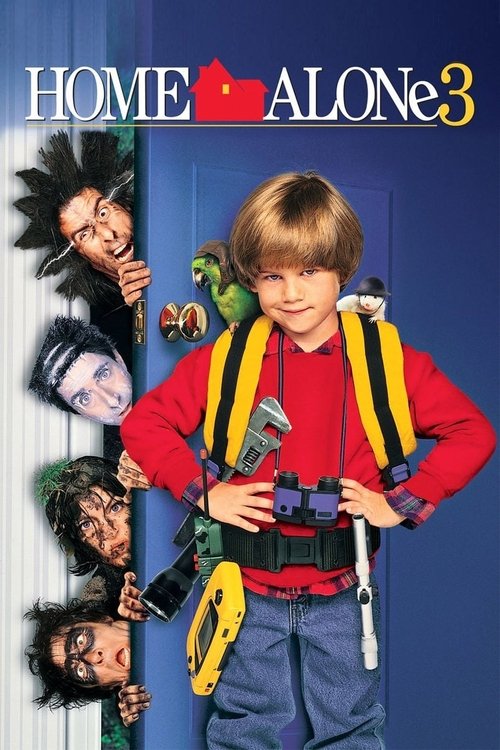
Home Alone 3
9-year-old Alex Pruitt is home alone with the chicken pox. Turns out, due to a mix-up among nefarious spies, Alex was given a toy car concealing a top-secret microchip. Now Alex must fend off the spies as they try to break into his house to get it back.
Despite a respectable budget of $32.0M, Home Alone 3 became a financial success, earning $79.1M worldwide—a 147% return.


Plot Structure
Story beats plotted across runtime


Narrative Arc
Emotional journey through the story's key moments
Story Circle
Blueprint 15-beat structure
Arcplot Score Breakdown
Weighted: Precision (70%) + Arc (15%) + Theme (15%)
Home Alone 3 (1997) showcases carefully calibrated dramatic framework, characteristic of Raja Gosnell's storytelling approach. This structural analysis examines how the film's 15-point plot structure maps to proven narrative frameworks across 1 hour and 42 minutes. With an Arcplot score of 6.8, the film balances conventional beats with creative variation.
Characters
Cast & narrative archetypes

Alex Pruitt
Peter Beaupre
Alice Ribbons
Burton Jernigan
Earl Unger
Karen Pruitt
Jack Pruitt
Main Cast & Characters
Alex Pruitt
Played by Alex D. Linz
An 8-year-old boy with chickenpox who defends his home from international criminals using elaborate traps and clever thinking.
Peter Beaupre
Played by Olek Krupa
The ruthless leader of the international criminals searching for a stolen missile chip, methodical and determined.
Alice Ribbons
Played by Rya Kihlstedt
A cunning and athletic member of the criminal team, skilled in combat and willing to do whatever it takes to recover the chip.
Burton Jernigan
Played by Lenny Von Dohlen
A tech-savvy criminal who handles surveillance and breaking into security systems for the team.
Earl Unger
Played by David Thornton
The muscle of the criminal group, often taking the brunt of Alex's traps with brutal physical comedy.
Karen Pruitt
Played by Haviland Morris
Alex's loving and protective mother who initially doesn't believe his warnings about the criminals.
Jack Pruitt
Played by Kevin Kilner
Alex's father who works from home and is oblivious to the danger until it's almost too late.
Structural Analysis
The Status Quo at 1 minutes (1% through the runtime) establishes International spies smuggle a stolen U.S. Defense chip through airport security by hiding it inside a remote control car, establishing a world of high-stakes espionage that will soon collide with suburban normalcy.. Of particular interest, this early placement immediately immerses viewers in the story world.
The inciting incident occurs at 12 minutes when Alex spots suspicious figures casing houses through his telescope and witnesses the criminals breaking into a neighbor's home, transforming his sick day from boring isolation into a dangerous mystery.. At 12% through the film, this Disruption aligns precisely with traditional story structure. This beat shifts the emotional landscape, launching the protagonist into the central conflict.
The First Threshold at 26 minutes marks the transition into Act II, occurring at 25% of the runtime. This reveals the protagonist's commitment to After being dismissed by everyone, Alex makes the choice to take matters into his own hands, committing to investigate and stop the criminals himself rather than waiting for adults who won't listen., moving from reaction to action.
At 51 minutes, the Midpoint arrives at 50% of the runtime—precisely centered, creating perfect narrative symmetry. Significantly, this crucial beat The terrorists discover that the chip is in Alex's house and he knows about them. The stakes escalate dramatically as what was surveillance becomes a direct confrontation—they're coming for him specifically., fundamentally raising what's at risk. The emotional intensity shifts, dividing the narrative into clear before-and-after phases.
The Collapse moment at 77 minutes (75% through) represents the emotional nadir. Here, Alex's traps are exhausted and the criminals finally breach the house. Alone, outmatched, and with no more tricks left, Alex faces the terrifying reality that four dangerous adults are inside his home hunting him., shows the protagonist at their lowest point. This beat's placement in the final quarter sets up the climactic reversal.
The Second Threshold at 82 minutes initiates the final act resolution at 80% of the runtime. Alex realizes he has one final gambit—luring all four criminals into Mrs. Hess's house where he's prepared a last line of defense. He commits to this desperate plan, turning the neighboring home into the ultimate trap., demonstrating the transformation achieved throughout the journey.
Emotional Journey
Home Alone 3's emotional architecture traces a deliberate progression across 15 carefully calibrated beats.
Narrative Framework
This structural analysis employs systematic plot point analysis that identifies crucial turning points. By mapping Home Alone 3 against these established plot points, we can identify how Raja Gosnell utilizes or subverts traditional narrative conventions. The plot point approach reveals not only adherence to structural principles but also creative choices that distinguish Home Alone 3 within the comedy genre.
Raja Gosnell's Structural Approach
Among the 9 Raja Gosnell films analyzed on Arcplot, the average structural score is 7.3, reflecting strong command of classical structure. Home Alone 3 takes a more unconventional approach compared to the director's typical style. For comparative analysis, explore the complete Raja Gosnell filmography.
Comparative Analysis
Additional comedy films include The Bad Guys, Ella Enchanted and The Evening Star. For more Raja Gosnell analyses, see The Smurfs, Never Been Kissed and Show Dogs.
Plot Points by Act
Act I
SetupStatus Quo
International spies smuggle a stolen U.S. defense chip through airport security by hiding it inside a remote control car, establishing a world of high-stakes espionage that will soon collide with suburban normalcy.
Theme
Alex's mother tells him that being sick doesn't mean he can't be helpful, and that everyone has to pull their weight—foreshadowing how this underestimated child will prove his worth when it matters most.
Worldbuilding
Alex Pruitt's ordinary suburban life is established: a bright, resourceful 8-year-old home sick with chicken pox while his parents work and siblings attend school. Meanwhile, four international terrorists systematically search the neighborhood for their lost chip, hidden in the toy car now in Alex's possession.
Disruption
Alex spots suspicious figures casing houses through his telescope and witnesses the criminals breaking into a neighbor's home, transforming his sick day from boring isolation into a dangerous mystery.
Resistance
Alex tries to alert authorities about the intruders but no one believes him—not the police, not his parents, not his siblings. Each failed attempt to get help reinforces that he'll have to handle this himself. He continues surveillance while the terrorists narrow their search.
Act II
ConfrontationFirst Threshold
After being dismissed by everyone, Alex makes the choice to take matters into his own hands, committing to investigate and stop the criminals himself rather than waiting for adults who won't listen.
Mirror World
Alex bonds with his pet parrot and rat, who become unlikely allies in his surveillance operation. Mrs. Hess, the grumpy elderly neighbor, is also introduced as someone who initially dismisses Alex but will later validate his heroism.
Premise
Alex transforms his home into a surveillance headquarters and begins designing elaborate traps. He plays cat-and-mouse with the criminals, using his telescope to track their movements while rigging his house with defensive measures—the promise of the premise as a clever kid outsmarts adult villains.
Midpoint
The terrorists discover that the chip is in Alex's house and he knows about them. The stakes escalate dramatically as what was surveillance becomes a direct confrontation—they're coming for him specifically.
Opposition
The four criminals launch their first assault on the Pruitt house. Alex's traps work but the terrorists regroup, learning from their mistakes. Each wave of attack grows more determined as the professionals adapt to the child's defenses, and Alex must stay one step ahead.
Collapse
Alex's traps are exhausted and the criminals finally breach the house. Alone, outmatched, and with no more tricks left, Alex faces the terrifying reality that four dangerous adults are inside his home hunting him.
Crisis
Alex hides as the terrorists search room by room. The tension peaks as he narrowly evades capture, knowing that one wrong move means disaster. His resourcefulness seems to have reached its limit.
Act III
ResolutionSecond Threshold
Alex realizes he has one final gambit—luring all four criminals into Mrs. Hess's house where he's prepared a last line of defense. He commits to this desperate plan, turning the neighboring home into the ultimate trap.
Synthesis
Alex executes his master plan at Mrs. Hess's house, unleashing a spectacular final gauntlet of traps. The FBI arrives as the criminals are systematically defeated. Alex's family returns to find their son a hero, and even Mrs. Hess becomes his ally, confirming everything he reported was true.
Transformation
Alex, once dismissed and underestimated, is celebrated as the boy who single-handedly captured international terrorists. His family and community finally see him for the capable, brave young man he is—no longer just a sick kid home alone.