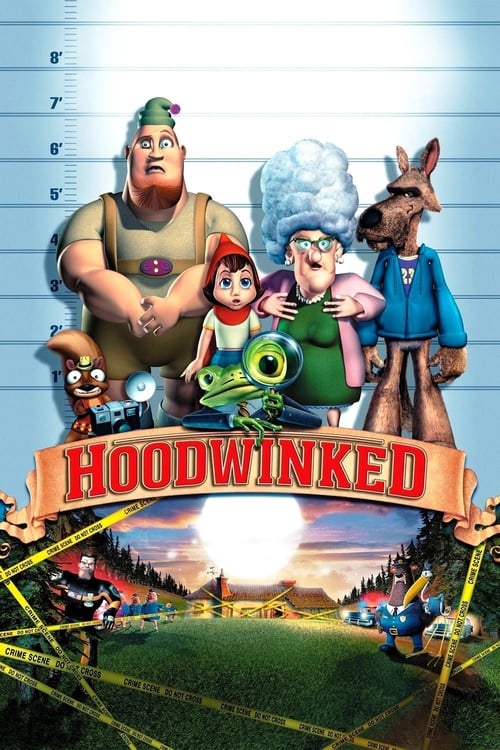
Hoodwinked!
Little Red Riding Hood: A classic story, but there's more to every tale than meets the eye. Before you judge a book by its cover, you've got to flip through the pages. In the re-telling of this classic fable, the story begins at the end of the tale and winds its way back. Chief Grizzly and Detective Bill Stork investigate a domestic disturbance at Granny's cottage, involving a karate-kicking Red Riding Hood, a sarcastic wolf and an oafish Woodsman.
Despite its modest budget of $8.0M, Hoodwinked! became a box office phenomenon, earning $110.0M worldwide—a remarkable 1275% return. The film's unique voice connected with viewers, showing that strong storytelling can transcend budget limitations.

Plot Structure
Story beats plotted across runtime


Narrative Arc
Emotional journey through the story's key moments
Story Circle
Blueprint 15-beat structure
Arcplot Score Breakdown
Weighted: Precision (70%) + Arc (15%) + Theme (15%)
Hoodwinked! (2005) exemplifies deliberately positioned story structure, characteristic of Cory Edwards's storytelling approach. This structural analysis examines how the film's 15-point plot structure maps to proven narrative frameworks across 1 hour and 21 minutes. With an Arcplot score of 3.8, the film takes an unconventional approach to traditional narrative frameworks.
Characters
Cast & narrative archetypes

Red Puckett
The Wolf
Granny Puckett
Kirk the Woodsman
Chief Grizzly
Detective Bill Stork
Boingo the Bunny
Nicky Flippers
Main Cast & Characters
Red Puckett
Played by Anne Hathaway
A plucky delivery girl who becomes the prime suspect in a granny robbery case. She's resourceful, determined, and skilled in extreme sports.
The Wolf
Played by Patrick Warburton
A cynical, fast-talking investigative journalist trying to crack the goody recipe theft case. He's quick-witted and street-smart.
Granny Puckett
Played by Glenn Close
Red's grandmother who is secretly an extreme sports enthusiast and Triple-G competitor. She's spunky, athletic, and full of surprises.
Kirk the Woodsman
Played by Jim Belushi
An aspiring actor and schnitzel enthusiast who dreams of stardom. He's naive, enthusiastic, and overly dramatic.
Chief Grizzly
Played by Xzibit
The gruff, no-nonsense police chief investigating the goody recipe thefts. He's methodical and skeptical of unusual explanations.
Detective Bill Stork
Played by Anthony Anderson
The chief's loyal but somewhat bumbling partner who helps interrogate the suspects. He's earnest and follows procedure.
Boingo the Bunny
Played by Andy Dick
A cheerful, fast-talking cable car operator who seems helpful but harbors dark secrets. He's energetic and deceptively cunning.
Nicky Flippers
Played by David Ogden Stiers
A wise, mysterious frog detective who arrives to solve the case with his calm demeanor and investigative expertise.
Structural Analysis
The Status Quo at 1 minutes (1% through the runtime) establishes The classic fairy tale scene unfolds: Red arrives at Granny's cottage with her basket. The familiar setup establishes the story we think we know before the investigation reveals the truth behind appearances.. Of particular interest, this early placement immediately immerses viewers in the story world.
The inciting incident occurs at 10 minutes when Flippers announces the Goody Bandit has been stealing recipes from the forest's small businesses, and this crime scene may be connected. The disruption reframes the cottage incident from simple fairy tale to criminal investigation with forest-wide stakes.. At 12% through the film, this Disruption aligns precisely with traditional story structure. This beat shifts the emotional landscape, launching the protagonist into the central conflict.
The First Threshold at 21 minutes marks the transition into Act II, occurring at 25% of the runtime. This indicates the protagonist's commitment to Flippers decides all four testimonies must be heard to solve the case. The investigation commits fully to the multiple-perspective structure, and Red's story concludes with her choosing to trust the process rather than accept the obvious narrative., moving from reaction to action.
At 41 minutes, the Midpoint arrives at 51% of the runtime—precisely centered, creating perfect narrative symmetry. Notably, this crucial beat All four testimonies complete, the characters realize they were all at the cottage for the same reason: protecting recipes from the Goody Bandit. False victory—they believe the mystery is solved and the suspects can be cleared, but the real villain remains hidden., fundamentally raising what's at risk. The emotional intensity shifts, dividing the narrative into clear before-and-after phases.
The Collapse moment at 60 minutes (75% through) represents the emotional nadir. Here, Boingo reveals himself as the Goody Bandit and captures the team. The whiff of death arrives as he explains his plan to monopolize the forest's snack industry using the stolen recipes. The heroes are bound and helpless as Boingo prepares his evil scheme., illustrates the protagonist at their lowest point. This beat's placement in the final quarter sets up the climactic reversal.
The Second Threshold at 65 minutes initiates the final act resolution at 80% of the runtime. Red realizes that their combined skills—learned through their separate adventures—can defeat Boingo. Each character's hidden talents (Granny's athletics, Wolf's investigation, Kirk's acting, Red's quick thinking) must unite. They break free and launch their counterattack., demonstrating the transformation achieved throughout the journey.
Emotional Journey
Hoodwinked!'s emotional architecture traces a deliberate progression across 15 carefully calibrated beats.
Narrative Framework
This structural analysis employs a 15-point narrative structure framework that maps key story moments. By mapping Hoodwinked! against these established plot points, we can identify how Cory Edwards utilizes or subverts traditional narrative conventions. The plot point approach reveals not only adherence to structural principles but also creative choices that distinguish Hoodwinked! within the animation genre.
Comparative Analysis
Additional animation films include The Bad Guys, Puss in Boots and Violet Evergarden: Eternity and the Auto Memory Doll.
Plot Points by Act
Act I
SetupStatus Quo
The classic fairy tale scene unfolds: Red arrives at Granny's cottage with her basket. The familiar setup establishes the story we think we know before the investigation reveals the truth behind appearances.
Theme
Detective Nicky Flippers arrives and states the film's theme: "You can't judge a book by its cover." He insists on hearing everyone's story before making assumptions about the crime scene, establishing the Rashomon structure.
Worldbuilding
The opening crime scene at Granny's cottage introduces all four suspects: Red, the Wolf, Granny, and Kirk the Woodsman. Police arrive, suspects are detained, and Detective Flippers sets up the interview process that will structure the entire narrative.
Disruption
Flippers announces the Goody Bandit has been stealing recipes from the forest's small businesses, and this crime scene may be connected. The disruption reframes the cottage incident from simple fairy tale to criminal investigation with forest-wide stakes.
Resistance
Red's flashback testimony: She reveals her ordinary life delivering goodies for Granny's business, her encounter with the seemingly menacing Wolf on the forest path, and her desperate journey to warn Granny. Each suspect's perspective begins to complicate the simple story.
Act II
ConfrontationFirst Threshold
Flippers decides all four testimonies must be heard to solve the case. The investigation commits fully to the multiple-perspective structure, and Red's story concludes with her choosing to trust the process rather than accept the obvious narrative.
Mirror World
The Wolf's perspective begins, revealing he's actually an investigative journalist with his hyperactive squirrel cameraman Twitchy. This mirror subplot shows the same events from a completely different angle, embodying the theme that appearances deceive.
Premise
The fun of the premise delivers: each flashback reveals surprising truths. The Wolf is a reporter, not a predator. Granny is secretly an extreme sports champion. Kirk the Woodsman is an aspiring actor with an overbearing goat agent. Comedy and mystery interweave as perspectives overlap.
Midpoint
All four testimonies complete, the characters realize they were all at the cottage for the same reason: protecting recipes from the Goody Bandit. False victory—they believe the mystery is solved and the suspects can be cleared, but the real villain remains hidden.
Opposition
The team investigates leads on the Goody Bandit. Red, Wolf, Granny, and Kirk work together but face setbacks. The cute bunny Boingo, who appeared in multiple flashbacks as a helpful character, assists them—while secretly being the mastermind behind everything.
Collapse
Boingo reveals himself as the Goody Bandit and captures the team. The whiff of death arrives as he explains his plan to monopolize the forest's snack industry using the stolen recipes. The heroes are bound and helpless as Boingo prepares his evil scheme.
Crisis
Trapped in Boingo's lair on the aerial tramway, the team faces defeat. Red must confront that she underestimated the danger by trusting cute appearances—the very lesson she should have learned. The villain monologues while heroes seem doomed.
Act III
ResolutionSecond Threshold
Red realizes that their combined skills—learned through their separate adventures—can defeat Boingo. Each character's hidden talents (Granny's athletics, Wolf's investigation, Kirk's acting, Red's quick thinking) must unite. They break free and launch their counterattack.
Synthesis
The team battles Boingo's henchmen on the tramway. Granny uses her extreme sports skills, Wolf and Twitchy document the action, Kirk finds his heroic moment, and Red outsmarts Boingo. The tramway careens toward destruction as they work together to save the day.
Transformation
Boingo is defeated and arrested. Flippers recruits the unlikely team as a covert Happily Ever After Agency. Red, Wolf, Granny, and Kirk—once suspects who misjudged each other—are now partners who've learned to look beyond appearances. The fairy tale becomes a spy origin story.