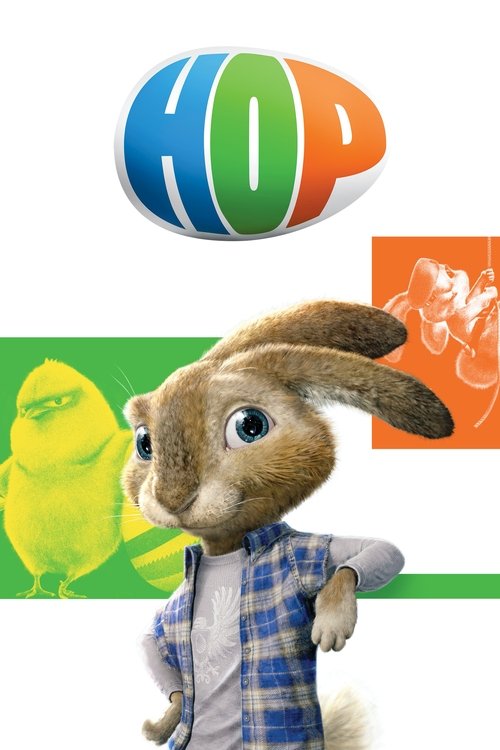
Hop
E.B., the Easter Bunny's teenage son, heads to Hollywood, determined to become a drummer in a rock 'n' roll band. In LA, he's taken in by Fred after the out-of-work slacker hits E.B. with his car.
Despite a mid-range budget of $63.0M, Hop became a financial success, earning $184.0M worldwide—a 192% return.


Plot Structure
Story beats plotted across runtime


Narrative Arc
Emotional journey through the story's key moments
Story Circle
Blueprint 15-beat structure
Characters
Cast & narrative archetypes

E.B.
Fred O'Hare
Carlos
E.B.'s Father
Sam O'Hare
Main Cast & Characters
E.B.
Played by Russell Brand
The teenage son of the Easter Bunny who dreams of becoming a drummer instead of taking over the family business.
Fred O'Hare
Played by James Marsden
An unemployed slacker who accidentally hits E.B. with his car and reluctantly helps him pursue his dreams.
Carlos
Played by Hank Azaria
An ambitious chick who works in the Easter Bunny's factory and plots to take over Easter for himself.
E.B.'s Father
Played by Hugh Laurie
The current Easter Bunny who is desperate for his son to take over the family tradition.
Sam O'Hare
Played by Kaley Cuoco
Fred's sister who tries to help her brother get his life together.
Structural Analysis
The Status Quo at 1 minutes (1% through the runtime) establishes Young E.B. Is introduced on Easter Island, eager and excited about becoming the Easter Bunny, establishing his destined role in the family business.. Of particular interest, this early placement immediately immerses viewers in the story world.
The inciting incident occurs at 11 minutes when E.B. Flees Easter Island on the eve of his succession ceremony, running away from his destiny to pursue his dream of becoming a drummer in Hollywood.. At 11% through the film, this Disruption aligns precisely with traditional story structure. This beat shifts the emotional landscape, launching the protagonist into the central conflict.
The First Threshold at 23 minutes marks the transition into Act II, occurring at 24% of the runtime. This demonstrates the protagonist's commitment to Fred decides to help E.B. Achieve his dream of drumming and they form a partnership, with Fred becoming E.B.'s manager and both committing to this new adventure together., moving from reaction to action.
At 48 minutes, the Midpoint arrives at 50% of the runtime—precisely centered, creating perfect narrative symmetry. Structural examination shows that this crucial beat E.B. Gets his big break - a chance to drum on the David Hasselhoff show, appearing to achieve his dream. False victory as he's still running from his true calling., fundamentally raising what's at risk. The emotional intensity shifts, dividing the narrative into clear before-and-after phases.
The Collapse moment at 70 minutes (73% through) represents the emotional nadir. Here, E.B. And Fred have a falling out. E.B. Is captured and taken back to Easter Island where Carlos is about to execute his father. Fred hits rock bottom, having lost E.B. And facing his own failure., illustrates the protagonist at their lowest point. This beat's placement in the final quarter sets up the climactic reversal.
The Second Threshold at 76 minutes initiates the final act resolution at 80% of the runtime. Fred realizes he can become the Easter Bunny himself (combining human and rabbit worlds) and rushes to save E.B. E.B. Accepts his responsibility to Easter while honoring his creative side., demonstrating the transformation achieved throughout the journey.
Emotional Journey
Hop's emotional architecture traces a deliberate progression across 15 carefully calibrated beats.
Narrative Framework
This structural analysis employs proven narrative structure principles that track dramatic progression. By mapping Hop against these established plot points, we can identify how Tim Hill utilizes or subverts traditional narrative conventions. The plot point approach reveals not only adherence to structural principles but also creative choices that distinguish Hop within the animation genre.
Tim Hill's Structural Approach
Among the 6 Tim Hill films analyzed on Arcplot, the average structural score is 7.0, reflecting strong command of classical structure. Hop exemplifies the director's characteristic narrative technique. For comparative analysis, explore the complete Tim Hill filmography.
Comparative Analysis
Additional animation films include The Bad Guys, Puss in Boots and Violet Evergarden: Eternity and the Auto Memory Doll. For more Tim Hill analyses, see The SpongeBob Movie: Sponge on the Run, The War with Grandpa and Alvin and the Chipmunks.
Plot Points by Act
Act I
SetupStatus Quo
Young E.B. is introduced on Easter Island, eager and excited about becoming the Easter Bunny, establishing his destined role in the family business.
Theme
E.B.'s father tells him about responsibility and carrying on tradition, stating the theme about growing up and accepting one's destiny versus pursuing one's dreams.
Worldbuilding
Introduction to adult E.B. who doesn't want to be the Easter Bunny, and Fred O'Hare, an unemployed slacker living with his parents, both avoiding their responsibilities and facing pressure from family.
Disruption
E.B. flees Easter Island on the eve of his succession ceremony, running away from his destiny to pursue his dream of becoming a drummer in Hollywood.
Resistance
E.B. arrives in Hollywood and is hit by Fred's car. Fred reluctantly takes E.B. in, and they navigate their initial resistance to helping each other while both avoiding their responsibilities.
Act II
ConfrontationFirst Threshold
Fred decides to help E.B. achieve his dream of drumming and they form a partnership, with Fred becoming E.B.'s manager and both committing to this new adventure together.
Mirror World
Fred and E.B. bond over their shared rejection of expectations, with E.B. representing what Fred could be if he pursued his dreams instead of running from responsibility.
Premise
The fun of E.B. and Fred's adventures in Hollywood - auditions, drumming, bonding, and hijinks. Meanwhile, Carlos the chick plots to take over Easter on the island.
Midpoint
E.B. gets his big break - a chance to drum on the David Hasselhoff show, appearing to achieve his dream. False victory as he's still running from his true calling.
Opposition
Carlos takes over Easter Island and imprisons E.B.'s father. Fred's family pressures intensify. The friendship between E.B. and Fred fractures as both face consequences of avoiding responsibility.
Collapse
E.B. and Fred have a falling out. E.B. is captured and taken back to Easter Island where Carlos is about to execute his father. Fred hits rock bottom, having lost E.B. and facing his own failure.
Crisis
Fred reflects on his friendship with E.B. and realizes he needs to step up. E.B. faces his father's potential death and understands what truly matters. Both process their dark night separately.
Act III
ResolutionSecond Threshold
Fred realizes he can become the Easter Bunny himself (combining human and rabbit worlds) and rushes to save E.B. E.B. accepts his responsibility to Easter while honoring his creative side.
Synthesis
Fred and E.B. team up to defeat Carlos, save Easter, and rescue E.B.'s father. They create a new model where Fred becomes co-Easter Bunny, blending responsibility with innovation.
Transformation
Fred and E.B. successfully deliver Easter together, with E.B. as Easter Bunny incorporating his drumming talent and Fred as the first human co-Easter Bunny, both having found purpose and maturity.