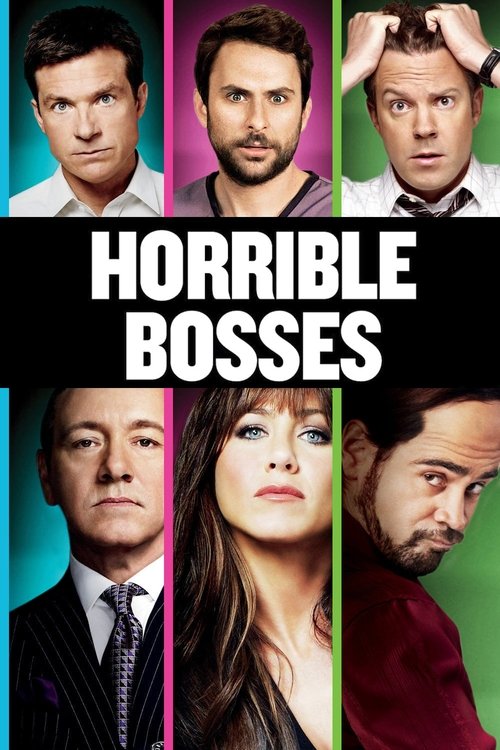
Horrible Bosses
For Nick, Kurt and Dale, the only thing that would make the daily grind more tolerable would be to grind their intolerable bosses into dust. Quitting is not an option, so, with the benefit of a few-too-many drinks and some dubious advice from a hustling ex-con, the three friends devise a convoluted and seemingly foolproof plan to rid themselves of their respective employers... permanently.
Despite a moderate budget of $35.0M, Horrible Bosses became a box office success, earning $209.8M worldwide—a 500% return.
3 wins & 14 nominations


Plot Structure
Story beats plotted across runtime


Narrative Arc
Emotional journey through the story's key moments
Story Circle
Blueprint 15-beat structure
Arcplot Score Breakdown
Weighted: Precision (70%) + Arc (15%) + Theme (15%)
Horrible Bosses (2011) showcases deliberately positioned narrative architecture, characteristic of Seth Gordon's storytelling approach. This structural analysis examines how the film's 15-point plot structure maps to proven narrative frameworks across 1 hour and 38 minutes. With an Arcplot score of 7.4, the film balances conventional beats with creative variation.
Characters
Cast & narrative archetypes

Nick Hendricks
Dale Arbus
Kurt Buckman
Dave Harken
Dr. Julia Harris
Bobby Pellitt
Dean "Motherfucker" Jones
Main Cast & Characters
Nick Hendricks
Played by Jason Bateman
A hardworking finance professional tortured by his manipulative boss Dave Harken who constantly promises then denies him a promotion.
Dale Arbus
Played by Charlie Day
A dental assistant being sexually harassed by his predatory boss Dr. Julia Harris, complicated by his registered sex offender status.
Kurt Buckman
Played by Jason Sudeikis
An accountant who loves his job until the owner's coked-up son Bobby Pellitt takes over and threatens to destroy the company.
Dave Harken
Played by Kevin Spacey
Nick's psychopathic boss who manipulates and torments his employees while maintaining complete control through fear and deception.
Dr. Julia Harris
Played by Jennifer Aniston
Dale's sexually aggressive dentist boss who relentlessly harasses him despite his engagement and uses blackmail to control him.
Bobby Pellitt
Played by Colin Farrell
Kurt's new boss, a cocaine-addicted, incompetent manchild who inherited the company and plans to gut it for profit.
Dean "Motherfucker" Jones
Played by Jamie Foxx
A streetwise ex-con who the trio hires as a murder consultant, though he's more talk than action.
Structural Analysis
The Status Quo at 1 minutes (1% through the runtime) establishes Nick arrives at work early, eager and ambitious, hoping for a promotion. Establishes him as a hardworking employee trapped in a corporate hierarchy under the tyrannical Dave Harken.. Notably, this early placement immediately immerses viewers in the story world.
The inciting incident occurs at 11 minutes when Nick is passed over for promotion as Harken promotes himself instead, crushing Nick's hopes. This crystallizes that their situations are intolerable and won't improve through conventional means.. At 11% through the film, this Disruption aligns precisely with traditional story structure. This beat shifts the emotional landscape, launching the protagonist into the central conflict.
The First Threshold at 24 minutes marks the transition into Act II, occurring at 24% of the runtime. This reveals the protagonist's commitment to After Dale is blackmailed by Dr. Harris with compromising photos, the three actively decide to murder their bosses. They seek out "Motherfucker" Jones in a bad neighborhood to hire a hitman, crossing into criminal territory., moving from reaction to action.
At 49 minutes, the Midpoint arrives at 50% of the runtime—precisely centered, creating perfect narrative symmetry. Of particular interest, this crucial beat Nick accidentally leaves his phone behind in Harken's house during a break-in. False defeat - they're now directly connected to a crime scene and must retrieve the phone or be caught. Stakes escalate dramatically., fundamentally raising what's at risk. The emotional intensity shifts, dividing the narrative into clear before-and-after phases.
The Collapse moment at 72 minutes (73% through) represents the emotional nadir. Here, Harken murders Bobby Pellitt and frames Nick for the crime. Nick is arrested. The friends' worst nightmare realized - they're being charged with an actual murder they didn't commit while the real villain walks free., reveals the protagonist at their lowest point. This beat's placement in the final quarter sets up the climactic reversal.
The Second Threshold at 78 minutes initiates the final act resolution at 80% of the runtime. Dale and Kurt realize they can outsmart Harken by using his own narcissism against him. They devise a plan to trick him into confessing on recording by exploiting what they've learned about him., demonstrating the transformation achieved throughout the journey.
Emotional Journey
Horrible Bosses's emotional architecture traces a deliberate progression across 15 carefully calibrated beats.
Narrative Framework
This structural analysis employs structural analysis methodology used to understand storytelling architecture. By mapping Horrible Bosses against these established plot points, we can identify how Seth Gordon utilizes or subverts traditional narrative conventions. The plot point approach reveals not only adherence to structural principles but also creative choices that distinguish Horrible Bosses within the comedy genre.
Seth Gordon's Structural Approach
Among the 4 Seth Gordon films analyzed on Arcplot, the average structural score is 7.1, reflecting strong command of classical structure. Horrible Bosses represents one of the director's most structurally precise works. For comparative analysis, explore the complete Seth Gordon filmography.
Comparative Analysis
Additional comedy films include The Bad Guys, Ella Enchanted and The Evening Star. For more Seth Gordon analyses, see Identity Thief, Baywatch and Four Christmases.
Plot Points by Act
Act I
SetupStatus Quo
Nick arrives at work early, eager and ambitious, hoping for a promotion. Establishes him as a hardworking employee trapped in a corporate hierarchy under the tyrannical Dave Harken.
Theme
Dale tells his friends that sometimes you have to take matters into your own hands when the system doesn't work. Foreshadows the protagonists' decision to circumvent legal solutions.
Worldbuilding
Introduction of all three protagonists and their horrible bosses. Nick endures Harken's psychological abuse, Dale suffers sexual harassment from Dr. Julia Harris, and Kurt discovers his beloved boss has died and been replaced by the cocaine-addicted Bobby Pellitt.
Disruption
Nick is passed over for promotion as Harken promotes himself instead, crushing Nick's hopes. This crystallizes that their situations are intolerable and won't improve through conventional means.
Resistance
The three friends commiserate at a bar, fantasizing about killing their bosses. They debate whether they could actually go through with it, researching online and discussing options. Their situations worsen, pushing them closer to action.
Act II
ConfrontationFirst Threshold
After Dale is blackmailed by Dr. Harris with compromising photos, the three actively decide to murder their bosses. They seek out "Motherfucker" Jones in a bad neighborhood to hire a hitman, crossing into criminal territory.
Mirror World
The friends meet Dean "Motherfucker" Jones, who becomes their "murder consultant." He represents the criminal world they're entering and serves as a dark mentor figure, advising them to kill each other's bosses to avoid motive.
Premise
The fun and games of amateur criminals attempting reconnaissance. They bungle surveillance missions, break into their bosses' homes, and navigate increasingly absurd situations while trying to gather intelligence and find opportunities to commit murder.
Midpoint
Nick accidentally leaves his phone behind in Harken's house during a break-in. False defeat - they're now directly connected to a crime scene and must retrieve the phone or be caught. Stakes escalate dramatically.
Opposition
Desperate to retrieve the phone, their schemes become more dangerous. Kurt accidentally kills Bobby's peanut-allergic victim. The situation spirals out of control as they're forced into an actual murder scenario they didn't plan. Evidence mounts against them.
Collapse
Harken murders Bobby Pellitt and frames Nick for the crime. Nick is arrested. The friends' worst nightmare realized - they're being charged with an actual murder they didn't commit while the real villain walks free.
Crisis
The friends spiral in despair. Nick is in police custody, and they have no evidence to prove Harken's guilt. They process their failure and face the consequences of their actions, hitting emotional rock bottom.
Act III
ResolutionSecond Threshold
Dale and Kurt realize they can outsmart Harken by using his own narcissism against him. They devise a plan to trick him into confessing on recording by exploiting what they've learned about him.
Synthesis
The finale. They execute their plan to get Harken's confession, leading to a chase through traffic. They use their knowledge of their bosses' weaknesses, culminating in successfully recording Harken admitting to murder. Police arrive and arrest Harken.
Transformation
The three friends are free and empowered. They've quit their jobs or been freed from their toxic bosses. Final image shows them together, having grown closer and learned to stand up for themselves rather than being victims.