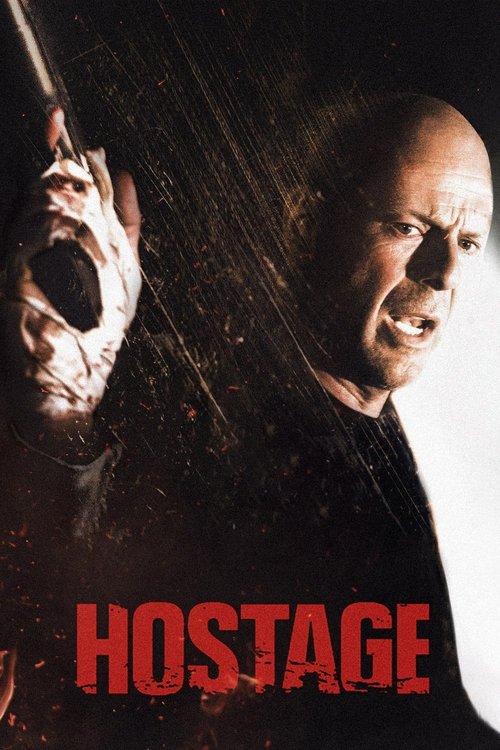
Hostage
When a mafia accountant is taken hostage on his beat, a police officer – wracked by guilt from a prior stint as a negotiator – must negotiate the standoff, even as his own family is held captive by the mob.
Working with a moderate budget of $52.0M, the film achieved a respectable showing with $77.9M in global revenue (+50% profit margin).


Plot Structure
Story beats plotted across runtime


Narrative Arc
Emotional journey through the story's key moments
Story Circle
Blueprint 15-beat structure
Arcplot Score Breakdown
Weighted: Precision (70%) + Arc (15%) + Theme (15%)
Hostage (2005) showcases deliberately positioned dramatic framework, characteristic of Florent-Emilio Siri's storytelling approach. This structural analysis examines how the film's 15-point plot structure maps to proven narrative frameworks across 1 hour and 53 minutes. With an Arcplot score of 7.0, the film balances conventional beats with creative variation.
Characters
Cast & narrative archetypes

Jeff Talley
Dennis Kelly
Kevin Kelly
Mars Krupcheck
Walter Smith
Jennifer Smith
Tommy Smith
Amanda Talley
Jane Talley
Main Cast & Characters
Jeff Talley
Played by Bruce Willis
Former LAPD hostage negotiator now small-town police chief, haunted by a past failure and forced back into negotiation when his family is threatened.
Dennis Kelly
Played by Jonathan Tucker
Volatile and unstable young criminal who takes a family hostage, becoming increasingly unhinged as the situation spirals out of control.
Kevin Kelly
Played by Marshall Allman
Dennis's younger brother and accomplice, less aggressive but still complicit in the violent home invasion.
Mars Krupcheck
Played by Ben Foster
Psychopathic third member of the criminal trio who escalates violence at every opportunity and becomes the most dangerous threat.
Walter Smith
Played by Kevin Pollak
Wealthy accountant and hostage whose home contains dangerous secrets that make the situation far more complicated than a simple robbery.
Jennifer Smith
Played by Michelle Horn
Walter's wife and hostage who tries to protect her children while trapped in her home.
Tommy Smith
Played by Jimmy Bennett
Walter and Jennifer's young son, a hostage who shows resourcefulness and courage despite his age.
Amanda Talley
Played by Rumer Willis
Jeff's teenage daughter who is kidnapped to force her father's cooperation.
Jane Talley
Played by Serena Scott Thomas
Jeff's estranged wife who is also kidnapped as leverage against him.
Structural Analysis
The Status Quo at 1 minutes (1% through the runtime) establishes Jeff Talley is a top LAPD hostage negotiator, confident and skilled, arriving at a tense standoff scene ready to talk down a desperate man.. Of particular interest, this early placement immediately immerses viewers in the story world.
The inciting incident occurs at 14 minutes when Three teenage criminals bungle a carjacking and flee into a fortified compound, taking wealthy accountant Walter Smith and his two children hostage, creating a hostage situation Talley cannot avoid.. At 12% through the film, this Disruption aligns precisely with traditional story structure. This beat shifts the emotional landscape, launching the protagonist into the central conflict.
The First Threshold at 28 minutes marks the transition into Act II, occurring at 25% of the runtime. This indicates the protagonist's commitment to Mysterious crime syndicate operatives kidnap Talley's own wife and daughter, forcing him to take control of the hostage situation and retrieve a DVD containing incriminating evidence from Smith's house., moving from reaction to action.
At 57 minutes, the Midpoint arrives at 50% of the runtime—precisely centered, creating perfect narrative symmetry. Significantly, this crucial beat Dennis kills his own brother Mars in a violent outburst, proving he's completely unhinged. Simultaneously, Talley realizes the mysterious crime syndicate has infiltrated his command post, raising the stakes on both fronts., fundamentally raising what's at risk. The emotional intensity shifts, dividing the narrative into clear before-and-after phases.
The Collapse moment at 85 minutes (75% through) represents the emotional nadir. Here, The crime syndicate takes over the operation entirely, executing Talley's officers and assuming control. Talley is beaten and left for dead, stripped of all authority, his worst fear realized: total helplessness as people die because of him., reveals the protagonist at their lowest point. This beat's placement in the final quarter sets up the climactic reversal.
The Second Threshold at 91 minutes initiates the final act resolution at 80% of the runtime. Talley chooses action over paralysis. He arms himself, accepts help from his deputy, and synthesizes his negotiation skills with direct action. He stops trying to control everything and starts trusting others, including Tommy inside the house., demonstrating the transformation achieved throughout the journey.
Emotional Journey
Hostage's emotional architecture traces a deliberate progression across 15 carefully calibrated beats.
Narrative Framework
This structural analysis employs a 15-point narrative structure framework that maps key story moments. By mapping Hostage against these established plot points, we can identify how Florent-Emilio Siri utilizes or subverts traditional narrative conventions. The plot point approach reveals not only adherence to structural principles but also creative choices that distinguish Hostage within the action genre.
Florent-Emilio Siri's Structural Approach
Among the 2 Florent-Emilio Siri films analyzed on Arcplot, the average structural score is 7.0, reflecting strong command of classical structure. Hostage exemplifies the director's characteristic narrative technique. For comparative analysis, explore the complete Florent-Emilio Siri filmography.
Comparative Analysis
Additional action films include The Bad Guys, Puss in Boots and Venom: The Last Dance. For more Florent-Emilio Siri analyses, see Elyas.
Plot Points by Act
Act I
SetupStatus Quo
Jeff Talley is a top LAPD hostage negotiator, confident and skilled, arriving at a tense standoff scene ready to talk down a desperate man.
Theme
During the opening negotiation, another officer mentions "You can't save everyone," foreshadowing Talley's journey about the limits of control and the cost of heroism.
Worldbuilding
Establishes Talley's world as an elite negotiator, the failed hostage crisis where a child dies, his emotional breakdown, and his retreat to become small-town police chief in Bristo Camino a year later. Shows his fractured marriage and emotional isolation.
Disruption
Three teenage criminals bungle a carjacking and flee into a fortified compound, taking wealthy accountant Walter Smith and his two children hostage, creating a hostage situation Talley cannot avoid.
Resistance
Talley resists involvement, trying to hand off to county sheriffs and maintain distance. He struggles with PTSD triggers from the previous failed negotiation. The situation escalates as Dennis, the unstable criminal, becomes more volatile.
Act II
ConfrontationFirst Threshold
Mysterious crime syndicate operatives kidnap Talley's own wife and daughter, forcing him to take control of the hostage situation and retrieve a DVD containing incriminating evidence from Smith's house.
Mirror World
Tommy Smith, the young son trapped inside, becomes a mirror to Talley's failure to save the child in the opening. Their phone conversations create a bond where Talley must learn to trust and connect rather than control.
Premise
Talley must navigate two impossible situations: managing the volatile hostage-takers while secretly searching for the DVD to save his family. He manipulates both sides, sends in food, uses his negotiation skills, while the criminals grow increasingly paranoid.
Midpoint
Dennis kills his own brother Mars in a violent outburst, proving he's completely unhinged. Simultaneously, Talley realizes the mysterious crime syndicate has infiltrated his command post, raising the stakes on both fronts.
Opposition
The situation deteriorates on all sides. Dennis becomes more homicidal, killing potential rescuers. The crime syndicate closes in, demanding results. Tommy and his sister face increasing danger. Talley's carefully maintained control over both situations unravels.
Collapse
The crime syndicate takes over the operation entirely, executing Talley's officers and assuming control. Talley is beaten and left for dead, stripped of all authority, his worst fear realized: total helplessness as people die because of him.
Crisis
Talley lies defeated, processing his failure and trauma. He confronts the reality that his isolation and fear of engagement have led to this moment. He must choose between remaining paralyzed by past failure or risking everything again.
Act III
ResolutionSecond Threshold
Talley chooses action over paralysis. He arms himself, accepts help from his deputy, and synthesizes his negotiation skills with direct action. He stops trying to control everything and starts trusting others, including Tommy inside the house.
Synthesis
Talley infiltrates the house, works with Tommy to outmaneuver both the criminals and the syndicate. Final confrontation with Dennis, rescue of the Smith children, and climactic showdown with the crime syndicate leader where Talley saves his family.
Transformation
Talley reunites with his wife and daughter, no longer the isolated man running from his past. He has accepted that he cannot control everything but can still choose to engage and fight. He embraces his family, transformed from paralyzed to present.