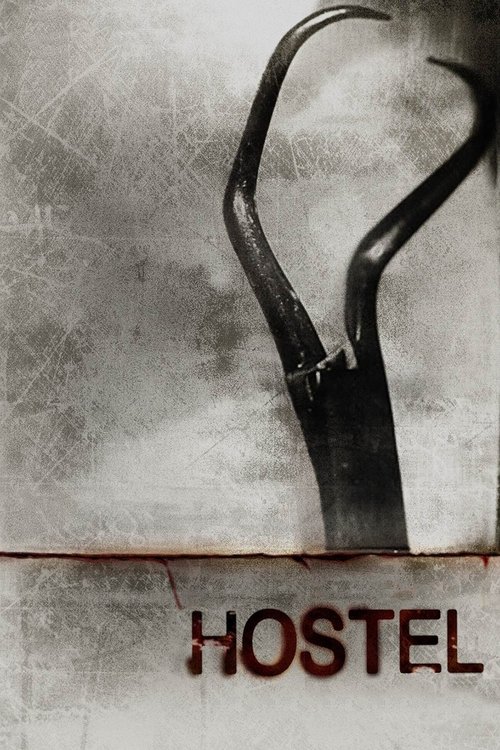
Hostel
Three backpackers head to a Slovakian city that promises to meet their hedonistic expectations, with no idea of the hell that awaits them.
Despite its limited budget of $4.8M, Hostel became a runaway success, earning $82.0M worldwide—a remarkable 1608% return. The film's unique voice resonated with audiences, confirming that strong storytelling can transcend budget limitations.
6 wins & 14 nominations


Plot Structure
Story beats plotted across runtime


Narrative Arc
Emotional journey through the story's key moments
Story Circle
Blueprint 15-beat structure
Arcplot Score Breakdown
Weighted: Precision (70%) + Arc (15%) + Theme (15%)
Hostel (2006) exemplifies strategically placed narrative design, characteristic of Eli Roth's storytelling approach. This structural analysis examines how the film's 15-point plot structure maps to proven narrative frameworks across 1 hour and 34 minutes. With an Arcplot score of 7.2, the film balances conventional beats with creative variation.
Characters
Cast & narrative archetypes

Paxton
Josh
Óli
Alexei
Natalya
Svetlana
The Dutch Businessman
Main Cast & Characters
Paxton
Played by Jay Hernandez
American backpacker traveling through Europe who becomes the sole survivor of a torture organization
Josh
Played by Derek Richardson
Paxton's best friend and traveling companion who is anxious and cautious about their adventure
Óli
Played by Eyþór Guðjónsson
Icelandic traveler who befriends the Americans and joins them on their journey to Slovakia
Alexei
Played by Lubomir Bukovy
Russian businessman and sadistic client of Elite Hunting who tortures Josh
Natalya
Played by Barbara Nedeljakova
Slovakian woman who lures backpackers to the hostel as part of the torture organization
Svetlana
Played by Jana Kaderabkova
Natalya's accomplice who helps seduce and manipulate the backpackers
The Dutch Businessman
Played by Jan Vlasák
Elite Hunting client who pays to torture Paxton but is ultimately killed by him
Structural Analysis
The Status Quo at 1 minutes (1% through the runtime) establishes Three American backpackers - Paxton, Josh, and Oli - party in Amsterdam, indulging in drugs, alcohol, and casual sex. They're living carefree, hedonistic lives with no consequences.. Of particular interest, this early placement immediately immerses viewers in the story world.
The inciting incident occurs at 11 minutes when Alexei tells them about a hostel in Slovakia with beautiful women who love American men. The seed is planted for their journey into danger, though it seems like an opportunity.. At 11% through the film, this Disruption aligns precisely with traditional story structure. This beat shifts the emotional landscape, launching the protagonist into the central conflict.
The First Threshold at 23 minutes marks the transition into Act II, occurring at 25% of the runtime. This illustrates the protagonist's commitment to The backpackers fully commit to staying at the hostel and pursuing the women. They enter the sauna, go to the disco - actively choosing to stay in this new world that seems too good to be true., moving from reaction to action.
At 46 minutes, the Midpoint arrives at 49% of the runtime—precisely centered, creating perfect narrative symmetry. Notably, this crucial beat Josh is captured and tortured to death in the factory. False defeat - what seemed like paradise is revealed as a hunting ground. The stakes become life and death. The audience now knows the truth that Paxton doesn't yet., fundamentally raising what's at risk. The emotional intensity shifts, dividing the narrative into clear before-and-after phases.
The Collapse moment at 67 minutes (71% through) represents the emotional nadir. Here, Paxton is captured, drugged, and wakes up strapped to a chair in the torture room. All hope seems lost. His worst fears are realized - he's about to be tortured to death like his friends., illustrates the protagonist at their lowest point. This beat's placement in the final quarter sets up the climactic reversal.
The Second Threshold at 74 minutes initiates the final act resolution at 79% of the runtime. Paxton manages to turn the tables on his torturer, killing him and escaping his restraints. He transforms from victim to fighter, using violence (mirroring his captors) to survive. He chooses to fight back., demonstrating the transformation achieved throughout the journey.
Emotional Journey
Hostel's emotional architecture traces a deliberate progression across 15 carefully calibrated beats.
Narrative Framework
This structural analysis employs systematic plot point analysis that identifies crucial turning points. By mapping Hostel against these established plot points, we can identify how Eli Roth utilizes or subverts traditional narrative conventions. The plot point approach reveals not only adherence to structural principles but also creative choices that distinguish Hostel within the horror genre.
Eli Roth's Structural Approach
Among the 9 Eli Roth films analyzed on Arcplot, the average structural score is 7.0, demonstrating varied approaches to story architecture. Hostel represents one of the director's most structurally precise works. For comparative analysis, explore the complete Eli Roth filmography.
Comparative Analysis
Additional horror films include Thinner, A Nightmare on Elm Street and Mary Reilly. For more Eli Roth analyses, see The House with a Clock in Its Walls, Death Wish and Thanksgiving.
Plot Points by Act
Act I
SetupStatus Quo
Three American backpackers - Paxton, Josh, and Oli - party in Amsterdam, indulging in drugs, alcohol, and casual sex. They're living carefree, hedonistic lives with no consequences.
Theme
Alexei mentions the hostel in Slovakia where "you can get any girl you want" - establishing the theme of commodification of human bodies and the danger of treating people as objects for consumption.
Worldbuilding
Establishing the backpackers' world of partying across Europe, their personalities (Paxton's arrogance, Josh's sensitivity, Oli's comic relief), and their pursuit of pleasure without depth or connection.
Disruption
Alexei tells them about a hostel in Slovakia with beautiful women who love American men. The seed is planted for their journey into danger, though it seems like an opportunity.
Resistance
The journey to Slovakia. Initial doubts and debates about whether to go, the train ride, arrival at the hostel, meeting Natalya and Svetlana. The paradise seems real - they're seduced by the apparent success of their quest.
Act II
ConfrontationFirst Threshold
The backpackers fully commit to staying at the hostel and pursuing the women. They enter the sauna, go to the disco - actively choosing to stay in this new world that seems too good to be true.
Mirror World
Josh connects with Natalya on a deeper level, showing vulnerability and genuine emotion - mirroring the film's theme by presenting real human connection as the alternative to objectification.
Premise
The "fun and games" of the hostel experience - partying, sex, drugs. But darkness creeps in: Oli disappears, strange characters appear, Josh is lured away. The promise of the premise (torture horror) begins to emerge beneath the surface pleasure.
Midpoint
Josh is captured and tortured to death in the factory. False defeat - what seemed like paradise is revealed as a hunting ground. The stakes become life and death. The audience now knows the truth that Paxton doesn't yet.
Opposition
Paxton searches for Josh, grows suspicious, discovers evidence of the torture organization. He's being hunted but doesn't fully realize it yet. The net closes around him as he gets closer to the truth.
Collapse
Paxton is captured, drugged, and wakes up strapped to a chair in the torture room. All hope seems lost. His worst fears are realized - he's about to be tortured to death like his friends.
Crisis
Paxton is tortured by the German client. He endures unimaginable pain and horror, faces his mortality, and must find the will to survive when death seems inevitable. His darkest moment of suffering.
Act III
ResolutionSecond Threshold
Paxton manages to turn the tables on his torturer, killing him and escaping his restraints. He transforms from victim to fighter, using violence (mirroring his captors) to survive. He chooses to fight back.
Synthesis
Paxton's brutal escape from the factory - fighting guards, freeing Kana, evading pursuers through the corridors and outside. He must use cunning and violence to survive. The final confrontation with Natalya and escape from Slovakia.
Transformation
Paxton encounters his torturer at a gas station and follows him to the bathroom, where he brutally kills him. The carefree hedonist from the opening is gone - he's now traumatized, violent, and fundamentally changed by his experience. The transformation is dark.