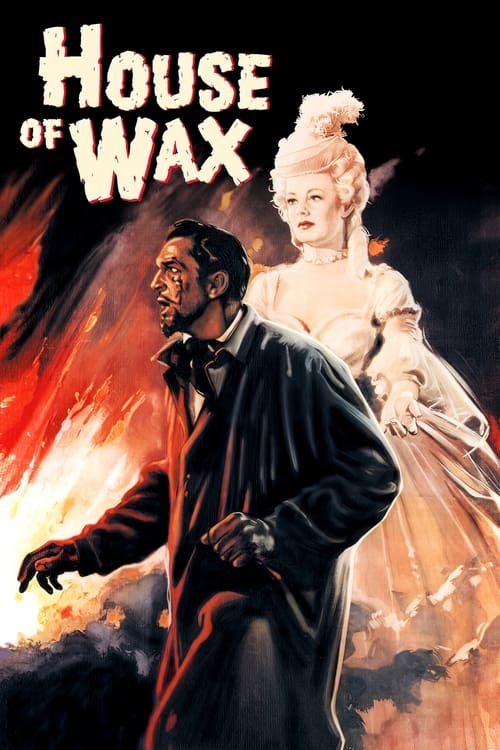
House of Wax
A sculptor opens a wax museum to showcase the likenesses of famous historical figures, but quickly runs into trouble when his business partner demands the exhibits become more extreme in order to increase profits.
Despite its tight budget of $1.0M, House of Wax became a runaway success, earning $23.8M worldwide—a remarkable 2275% return. The film's innovative storytelling resonated with audiences, demonstrating that strong storytelling can transcend budget limitations.
1 win & 3 nominations


Plot Structure
Story beats plotted across runtime


Narrative Arc
Emotional journey through the story's key moments
Story Circle
Blueprint 15-beat structure
Arcplot Score Breakdown
Weighted: Precision (70%) + Arc (15%) + Theme (15%)
House of Wax (1953) reveals deliberately positioned dramatic framework, characteristic of André de Toth's storytelling approach. This structural analysis examines how the film's 15-point plot structure maps to proven narrative frameworks across 1 hour and 28 minutes. With an Arcplot score of 7.2, the film balances conventional beats with creative variation.
Characters
Cast & narrative archetypes

Professor Henry Jarrod
Sue Allen
Scott Andrews
Matthew Burke
Lieutenant Tom Brennan
Cathy Gray
Igor
Main Cast & Characters
Professor Henry Jarrod
Played by Vincent Price
A brilliant sculptor who becomes disfigured and transforms his wax museum into a house of horrors using real corpses.
Sue Allen
Played by Phyllis Kirk
A young woman who becomes targeted by Jarrod after her friend's mysterious death.
Scott Andrews
Played by Paul Picerni
A newspaper reporter and Sue's boyfriend who investigates the mysterious deaths.
Matthew Burke
Played by Roy Roberts
Jarrod's greedy business partner who burns down the original wax museum for insurance money.
Lieutenant Tom Brennan
Played by Frank Lovejoy
A police detective investigating the series of murders connected to the wax museum.
Cathy Gray
Played by Carolyn Jones
Sue's roommate who is murdered and her body stolen to become a wax figure.
Igor
Played by Charles Bronson
Jarrod's deaf-mute assistant who helps procure bodies for the museum.
Structural Analysis
The Status Quo at 1 minutes (1% through the runtime) establishes Professor Henry Jarrod shows his beautiful wax museum to visitors, proudly displaying his artistic creations, particularly Marie Antoinette. He is established as a gentle, talented artist devoted to his craft.. Notably, this early placement immediately immerses viewers in the story world.
The inciting incident occurs at 10 minutes when Burke sets fire to the wax museum to collect insurance money. Jarrod tries desperately to save his creations but is trapped in the burning building. Burke leaves him to die in the flames.. At 11% through the film, this Disruption aligns precisely with traditional story structure. This beat shifts the emotional landscape, launching the protagonist into the central conflict.
The First Threshold at 22 minutes marks the transition into Act II, occurring at 25% of the runtime. This demonstrates the protagonist's commitment to Cathy is murdered by a disfigured killer and her body is stolen from the morgue. Sue becomes actively involved in investigating when she realizes her friend's disappearance is connected to the strange events., moving from reaction to action.
At 44 minutes, the Midpoint arrives at 50% of the runtime—precisely centered, creating perfect narrative symmetry. Of particular interest, this crucial beat Sue discovers the horrifying truth: the wax figures are actual corpses coated in wax. She realizes Jarrod is the killer and that he is planning to kill her to create his Marie Antoinette. She is now in mortal danger., fundamentally raising what's at risk. The emotional intensity shifts, dividing the narrative into clear before-and-after phases.
The Collapse moment at 66 minutes (75% through) represents the emotional nadir. Here, Sue is captured and strapped to a table in Jarrod's workshop, about to be killed and preserved in wax. Jarrod looms over her, ready to transform her into his perfect Marie Antoinette. Death is imminent., indicates the protagonist at their lowest point. This beat's placement in the final quarter sets up the climactic reversal.
The Second Threshold at 70 minutes initiates the final act resolution at 80% of the runtime. Scott and the police break into the museum's hidden workshop. Armed with the knowledge of Jarrod's location and methods, they launch a final rescue attempt., demonstrating the transformation achieved throughout the journey.
Emotional Journey
House of Wax's emotional architecture traces a deliberate progression across 15 carefully calibrated beats.
Narrative Framework
This structural analysis employs structural analysis methodology used to understand storytelling architecture. By mapping House of Wax against these established plot points, we can identify how André de Toth utilizes or subverts traditional narrative conventions. The plot point approach reveals not only adherence to structural principles but also creative choices that distinguish House of Wax within the horror genre.
Comparative Analysis
Additional horror films include Thinner, A Nightmare on Elm Street and Mary Reilly.
Plot Points by Act
Act I
SetupStatus Quo
Professor Henry Jarrod shows his beautiful wax museum to visitors, proudly displaying his artistic creations, particularly Marie Antoinette. He is established as a gentle, talented artist devoted to his craft.
Theme
Jarrod's business partner Matthew Burke states "You're an artist, Henry, but art doesn't pay the bills" - establishing the central conflict between artistic integrity and commercial pressures, beauty versus destruction.
Worldbuilding
Establishment of Jarrod's financial struggles, his partnership with the impatient Burke, the introduction of potential investor Sidney Wallace, and Jarrod's passionate dedication to preserving his wax figures as works of art.
Disruption
Burke sets fire to the wax museum to collect insurance money. Jarrod tries desperately to save his creations but is trapped in the burning building. Burke leaves him to die in the flames.
Resistance
Time jump to years later. Sue Allen and her roommate Cathy Gray are introduced. Burke is mysteriously murdered and his body stolen. Sue's fiancé Scott Andrews investigates. A new wax museum is announced, run by the supposedly wheelchair-bound Professor Jarrod.
Act II
ConfrontationFirst Threshold
Cathy is murdered by a disfigured killer and her body is stolen from the morgue. Sue becomes actively involved in investigating when she realizes her friend's disappearance is connected to the strange events.
Mirror World
Sue visits Jarrod's new wax museum and meets the professor, who seems kind and cultured. He offers her a job as his museum's model for Marie Antoinette, mirroring his earlier artistic dedication but with darker undertones.
Premise
Sue explores the new wax museum and its chamber of horrors. The disfigured killer stalks victims. Sue becomes increasingly suspicious that the wax figures look too realistic, particularly noticing that Joan of Arc resembles her dead friend Cathy.
Midpoint
Sue discovers the horrifying truth: the wax figures are actual corpses coated in wax. She realizes Jarrod is the killer and that he is planning to kill her to create his Marie Antoinette. She is now in mortal danger.
Opposition
Sue is pursued through the museum. Jarrod's deformity and insanity are fully revealed - he is the disfigured killer, his hands destroyed in the fire, now using assistants to coat real bodies in wax. Scott and police race to save Sue as she is trapped.
Collapse
Sue is captured and strapped to a table in Jarrod's workshop, about to be killed and preserved in wax. Jarrod looms over her, ready to transform her into his perfect Marie Antoinette. Death is imminent.
Crisis
Jarrod prepares the wax coating as Sue screams for help. The full horror of his madness is revealed - he cannot create anymore, only preserve death as art. His beautiful dream has become a nightmare.
Act III
ResolutionSecond Threshold
Scott and the police break into the museum's hidden workshop. Armed with the knowledge of Jarrod's location and methods, they launch a final rescue attempt.
Synthesis
Climactic confrontation in the workshop. Scott fights Jarrod and his assistants. Jarrod's wax face mask is shattered, revealing his hideous burn scars. He falls into a vat of boiling wax, destroyed by the very medium he worshipped. Sue is rescued.
Transformation
Sue is safely reunited with Scott outside the museum. The horror is over. Where the film began with beautiful wax art representing life, it ends with the destruction of a madman who turned art into death.