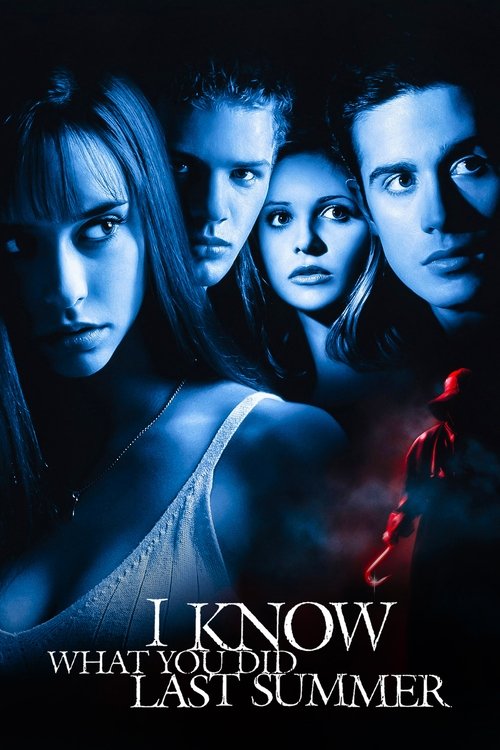
I Know What You Did Last Summer
After an accident on a winding road, four teens make the fatal mistake of dumping their victim's body into the sea. Exactly one year later, the deadly secret resurfaces as they're stalked by a hook-handed figure.
Despite a mid-range budget of $17.0M, I Know What You Did Last Summer became a box office phenomenon, earning $125.6M worldwide—a remarkable 639% return.
4 wins & 10 nominations


Plot Structure
Story beats plotted across runtime


Narrative Arc
Emotional journey through the story's key moments
Story Circle
Blueprint 15-beat structure
Arcplot Score Breakdown
Weighted: Precision (70%) + Arc (15%) + Theme (15%)
I Know What You Did Last Summer (1997) demonstrates carefully calibrated plot construction, characteristic of Jim Gillespie's storytelling approach. This structural analysis examines how the film's 15-point plot structure maps to proven narrative frameworks across 1 hour and 42 minutes. With an Arcplot score of 7.4, the film balances conventional beats with creative variation.
Structural Analysis
The Status Quo at 1 minutes (1% through the runtime) establishes July 4th celebration. Julie, Helen, Barry, and Ray are carefree teenagers celebrating after graduation, winning the beauty pageant. They're young, invincible, and their futures are bright.. Of particular interest, this early placement immediately immerses viewers in the story world.
The inciting incident occurs at 12 minutes when The group hits a man on the dark coastal road. They stop and discover he's either dead or dying. Panic sets in. This accident shatters their carefree world and forces them into a moral crisis.. At 11% through the film, this Disruption aligns precisely with traditional story structure. This beat shifts the emotional landscape, launching the protagonist into the central conflict.
The First Threshold at 26 minutes marks the transition into Act II, occurring at 25% of the runtime. This illustrates the protagonist's commitment to The four friends make a blood pact to never speak of this again. They dump the body into the ocean and drive away. This active choice to cover up the crime rather than confess binds them together in guilt and launches the story's central conflict., moving from reaction to action.
At 51 minutes, the Midpoint arrives at 50% of the runtime—precisely centered, creating perfect narrative symmetry. Structural examination shows that this crucial beat Barry is killed by the fisherman in a brutal attack. The stakes explode from psychological threat to mortal danger. What seemed like harassment is now murder. The friends realize someone is killing them for what they did., fundamentally raising what's at risk. The emotional intensity shifts, dividing the narrative into clear before-and-after phases.
The Collapse moment at 76 minutes (74% through) represents the emotional nadir. Here, Helen is killed by the fisherman in a brutal alley attack during the parade. Julie witnesses her friend's death but is unable to save her. The group is now down to two survivors, isolated and hunted., demonstrates the protagonist at their lowest point. This beat's placement in the final quarter sets up the climactic reversal.
The Second Threshold at 81 minutes initiates the final act resolution at 79% of the runtime. Julie and Ray discover Ben Willis is the killer - the fisherman whose son they killed. They piece together that he survived being dumped in the ocean and has been hunting them for revenge. Armed with this knowledge, they prepare for the final confrontation., demonstrating the transformation achieved throughout the journey.
Emotional Journey
I Know What You Did Last Summer's emotional architecture traces a deliberate progression across 15 carefully calibrated beats.
Narrative Framework
This structural analysis employs systematic plot point analysis that identifies crucial turning points. By mapping I Know What You Did Last Summer against these established plot points, we can identify how Jim Gillespie utilizes or subverts traditional narrative conventions. The plot point approach reveals not only adherence to structural principles but also creative choices that distinguish I Know What You Did Last Summer within the horror genre.
Jim Gillespie's Structural Approach
Among the 2 Jim Gillespie films analyzed on Arcplot, the average structural score is 7.5, reflecting strong command of classical structure. I Know What You Did Last Summer takes a more unconventional approach compared to the director's typical style. For comparative analysis, explore the complete Jim Gillespie filmography.
Comparative Analysis
Additional horror films include Thinner, A Nightmare on Elm Street and Mary Reilly. For more Jim Gillespie analyses, see D-Tox.
Plot Points by Act
Act I
SetupStatus Quo
July 4th celebration. Julie, Helen, Barry, and Ray are carefree teenagers celebrating after graduation, winning the beauty pageant. They're young, invincible, and their futures are bright.
Theme
Max warns the teens about their reckless behavior and drinking: "You think you're going to live forever, but you're not." The theme of consequences and responsibility for one's actions is established.
Worldbuilding
The four friends party on the beach after the pageant. We see their relationships: Julie and Ray are in love, Helen is the beauty queen, Barry is the aggressive jock. They drink, celebrate, and drive recklessly through the coastal roads.
Disruption
The group hits a man on the dark coastal road. They stop and discover he's either dead or dying. Panic sets in. This accident shatters their carefree world and forces them into a moral crisis.
Resistance
The teens debate what to do. Julie wants to call the police. Barry insists they'll all go to jail and their futures will be ruined. They argue about responsibility versus self-preservation. Finally, Barry convinces them to dump the body in the ocean.
Act II
ConfrontationFirst Threshold
The four friends make a blood pact to never speak of this again. They dump the body into the ocean and drive away. This active choice to cover up the crime rather than confess binds them together in guilt and launches the story's central conflict.
Mirror World
One year later. Julie returns home from college, isolated and guilt-ridden. The secret has destroyed her relationship with Ray and her future plans. The coverup has cost her everything she valued.
Premise
Julie receives the note: "I Know What You Did Last Summer." She reunites with the others to warn them. They investigate who might know their secret. Strange incidents occur. The fisherman killer begins stalking them, creating paranoia and fear.
Midpoint
Barry is killed by the fisherman in a brutal attack. The stakes explode from psychological threat to mortal danger. What seemed like harassment is now murder. The friends realize someone is killing them for what they did.
Opposition
The killer escalates attacks. Helen is terrorized in her beauty salon and pursued through the streets. Julie and Ray investigate and discover the man they hit was David Egan. They learn about Ben Willis, the fisherman. The killer seems to be everywhere, always one step ahead.
Collapse
Helen is killed by the fisherman in a brutal alley attack during the parade. Julie witnesses her friend's death but is unable to save her. The group is now down to two survivors, isolated and hunted.
Crisis
Julie and Ray are devastated by Helen's death. They realize they must confront the truth of what they did. Julie processes the guilt and terror, understanding that running from their crime has only made everything worse.
Act III
ResolutionSecond Threshold
Julie and Ray discover Ben Willis is the killer - the fisherman whose son they killed. They piece together that he survived being dumped in the ocean and has been hunting them for revenge. Armed with this knowledge, they prepare for the final confrontation.
Synthesis
Julie is attacked on Ben Willis's fishing boat. Ray comes to rescue her. They fight the killer together, using their knowledge of his identity and motivation. The final battle rages across the boat until they seemingly kill Ben Willis by overpowering him.
Transformation
Julie is in the shower, seemingly safe. But Ben Willis appears one final time, lunging through the shower door. The film ends on her scream. The cycle of violence continues - they can never escape what they did. Unlike the opening carefree celebration, Julie lives in permanent terror.