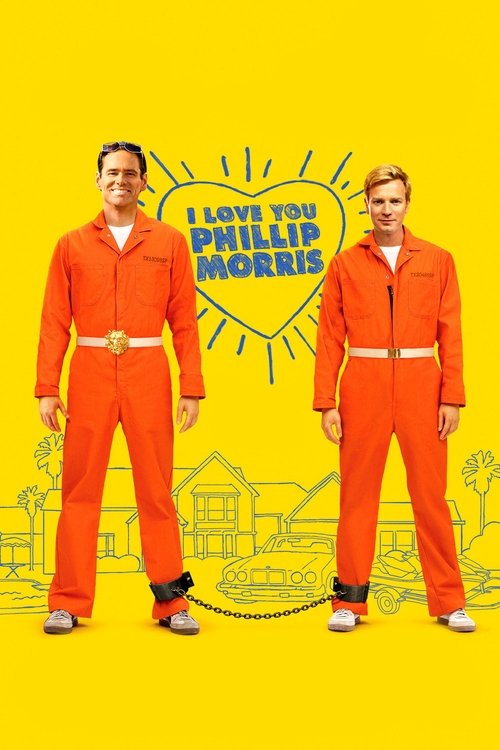
I Love You Phillip Morris
Steven Russell leads a seemingly average life – an organ player in the local church, happily married to Debbie, and a member of the local police force. That is until he has a severe car accident that leads him to the ultimate epiphany: he’s gay and he’s going to live life to the fullest – even if he has to break the law to do it. Taking on an extravagant lifestyle, Steven turns to cons and fraud to make ends meet and is eventually sent to the State Penitentiary where he meets the love of his life, a sensitive, soft-spoken man named Phillip Morris. His devotion to freeing Phillip from jail and building the perfect life together prompts him to attempt (and often succeed at) one impossible con after another.
Working with a limited budget of $13.0M, the film achieved a modest success with $20.8M in global revenue (+60% profit margin).
6 wins & 12 nominations


Plot Structure
Story beats plotted across runtime


Narrative Arc
Emotional journey through the story's key moments
Story Circle
Blueprint 15-beat structure
Arcplot Score Breakdown
Weighted: Precision (70%) + Arc (15%) + Theme (15%)
I Love You Phillip Morris (2010) showcases meticulously timed narrative architecture, characteristic of Glenn Ficarra's storytelling approach. This structural analysis examines how the film's 15-point plot structure maps to proven narrative frameworks across 1 hour and 38 minutes. With an Arcplot score of 7.1, the film balances conventional beats with creative variation.
Characters
Cast & narrative archetypes

Steven Russell
Phillip Morris
Debbie
Jimmy
Main Cast & Characters
Steven Russell
Played by Jim Carrey
A charismatic con artist who falls deeply in love with Phillip Morris while in prison. His elaborate schemes are driven by his desire to provide for and be with Phillip.
Phillip Morris
Played by Ewan McGregor
A gentle, honest prisoner who becomes the object of Steven's obsessive love. He struggles with Steven's criminal behavior while being unable to resist his charm.
Debbie
Played by Leslie Mann
Steven's former wife who represents his pre-coming-out life. She is blindsided by his revelation and subsequent abandonment of their conventional existence.
Jimmy
Played by Rodrigo Santoro
Steven's flamboyant boyfriend after coming out, who introduces him to the gay lifestyle in Florida before Steven's arrest.
Structural Analysis
The Status Quo at 1 minutes (1% through the runtime) establishes Steven Russell as a seemingly perfect family man, cop, and church organist in suburban Texas, living a carefully constructed lie about his sexuality.. Significantly, this early placement immediately immerses viewers in the story world.
The inciting incident occurs at 11 minutes when Steven's car accident - near-death experience makes him realize "I'm gay, I'm not going to live a lie anymore." Shatters his constructed heterosexual life.. At 12% through the film, this Disruption aligns precisely with traditional story structure. This beat shifts the emotional landscape, launching the protagonist into the central conflict.
The First Threshold at 22 minutes marks the transition into Act II, occurring at 22% of the runtime. This demonstrates the protagonist's commitment to Steven is caught for fraud and sent to prison - active consequence of his choices. Enters the world where he will meet Phillip and find true love., moving from reaction to action.
At 47 minutes, the Midpoint arrives at 48% of the runtime—precisely centered, creating perfect narrative symmetry. Of particular interest, this crucial beat Steven's fraud at the company is discovered - false victory collapses. Arrested again, faces serious prison time, loses everything including Phillip's trust., fundamentally raising what's at risk. The emotional intensity shifts, dividing the narrative into clear before-and-after phases.
The Collapse moment at 71 minutes (73% through) represents the emotional nadir. Here, Phillip, heartbroken by Steven's endless lies and manipulations, finally rejects him completely: "I can't do this anymore." Steven loses the only real love he's ever had., demonstrates the protagonist at their lowest point. This beat's placement in the final quarter sets up the climactic reversal.
The Second Threshold at 77 minutes initiates the final act resolution at 79% of the runtime. Steven decides on his most audacious con yet: he will fake his own death from AIDS to win back Phillip's sympathy and escape prison one final time., demonstrating the transformation achieved throughout the journey.
Emotional Journey
I Love You Phillip Morris's emotional architecture traces a deliberate progression across 15 carefully calibrated beats.
Narrative Framework
This structural analysis employs a 15-point narrative structure framework that maps key story moments. By mapping I Love You Phillip Morris against these established plot points, we can identify how Glenn Ficarra utilizes or subverts traditional narrative conventions. The plot point approach reveals not only adherence to structural principles but also creative choices that distinguish I Love You Phillip Morris within the comedy genre.
Glenn Ficarra's Structural Approach
Among the 4 Glenn Ficarra films analyzed on Arcplot, the average structural score is 7.1, reflecting strong command of classical structure. I Love You Phillip Morris takes a more unconventional approach compared to the director's typical style. For comparative analysis, explore the complete Glenn Ficarra filmography.
Comparative Analysis
Additional comedy films include The Bad Guys, Ella Enchanted and The Evening Star. For more Glenn Ficarra analyses, see Crazy, Stupid, Love., Focus and Whiskey Tango Foxtrot.
Plot Points by Act
Act I
SetupStatus Quo
Steven Russell as a seemingly perfect family man, cop, and church organist in suburban Texas, living a carefully constructed lie about his sexuality.
Theme
Steven's voiceover: "I'm going to tell you the truth" - establishing the central irony that this compulsive liar will narrate his own story about love and deception.
Worldbuilding
Steven's double life revealed: devoted husband and father by day, secretly gay. Searches for his birth mother, discovers she gave him up, triggering existential crisis about authenticity.
Disruption
Steven's car accident - near-death experience makes him realize "I'm gay, I'm not going to live a lie anymore." Shatters his constructed heterosexual life.
Resistance
Steven comes out, leaves his family, moves to Miami, lives lavishly as an openly gay man. Discovers his authentic life is expensive, begins white-collar fraud to maintain lifestyle.
Act II
ConfrontationFirst Threshold
Steven is caught for fraud and sent to prison - active consequence of his choices. Enters the world where he will meet Phillip and find true love.
Mirror World
Steven meets Phillip Morris in prison - an innocent, gentle, genuine man who represents everything Steven is not. Immediate romantic connection, the love story begins.
Premise
Steven and Phillip fall deeply in love. Steven cons his way out of prison, gets a high-powered CFO job through fraud, creates a luxurious life for them both. Living the dream through deception.
Midpoint
Steven's fraud at the company is discovered - false victory collapses. Arrested again, faces serious prison time, loses everything including Phillip's trust.
Opposition
Back in prison (maximum security), Steven executes increasingly desperate cons to be with Phillip: fakes medical degree to become prison doctor, impersonates lawyer, escapes repeatedly. Each escape and recapture drives them further apart.
Collapse
Phillip, heartbroken by Steven's endless lies and manipulations, finally rejects him completely: "I can't do this anymore." Steven loses the only real love he's ever had.
Crisis
Steven, devastated by losing Phillip, faces the reality that his compulsion to lie has destroyed the one genuine thing in his life. Spirals into despair in solitary confinement.
Act III
ResolutionSecond Threshold
Steven decides on his most audacious con yet: he will fake his own death from AIDS to win back Phillip's sympathy and escape prison one final time.
Synthesis
Steven successfully fakes AIDS symptoms and death, escapes from hospital during funeral transport, reunites with Phillip. Brief happiness before inevitable recapture. Final confrontation with consequences.
Transformation
Steven back in maximum security, 144 years added to sentence. Voiceover reveals this entire story was another con - he's actually dying of AIDS for real now. Final irony: the truth and lies have become indistinguishable.