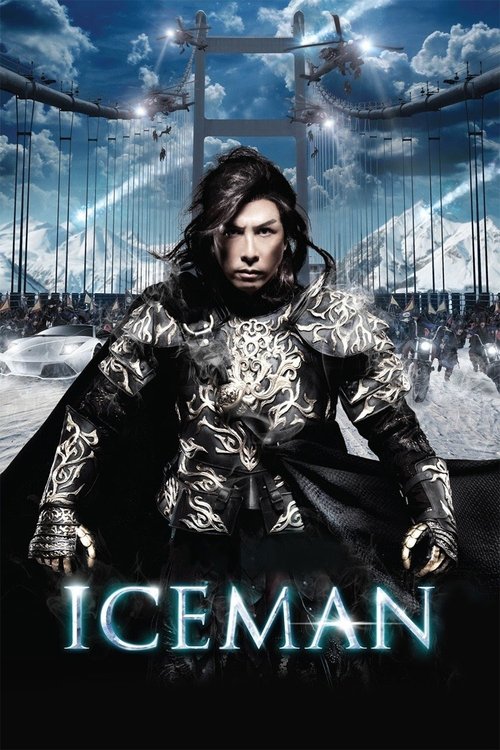
Iceman
An imperial guard and his three traitorous childhood friends ordered to hunt him down get accidentally buried and kept frozen in time. 400 years later, they are defrosted continuing the battle they left behind.
Working with a respectable budget of $25.5M, the film achieved a modest success with $26.0M in global revenue (+2% profit margin).


Plot Structure
Story beats plotted across runtime


Narrative Arc
Emotional journey through the story's key moments
Story Circle
Blueprint 15-beat structure
Arcplot Score Breakdown
Weighted: Precision (70%) + Arc (15%) + Theme (15%)
Iceman (2014) demonstrates precise plot construction, characteristic of Law Wing-Cheong's storytelling approach. This structural analysis examines how the film's 15-point plot structure maps to proven narrative frameworks across 1 hour and 44 minutes. With an Arcplot score of 6.8, the film balances conventional beats with creative variation.
Characters
Cast & narrative archetypes

He Ying
Sao
Yuet Ngo
To King-po
May
Nim Sau-ching
Main Cast & Characters
He Ying
Played by Donnie Yen
A Ming Dynasty imperial guard frozen for 400 years who awakens in modern Hong Kong seeking to complete his mission.
Sao
Played by Eva Huang
A kind-hearted bar hostess who befriends He Ying and helps him navigate the modern world.
Yuet Ngo
Played by Wang Baoqiang
An evil eunuch frozen alongside He Ying, who continues his villainous pursuits in the modern era.
To King-po
Played by Simon Yam
A Hong Kong police officer investigating strange occurrences related to the frozen warriors.
May
Played by Kang Yu
To King-po's colleague and partner in the police investigation.
Nim Sau-ching
Played by Yase Liu
A villainous woman from the Ming Dynasty, frozen and awakened in the present.
Structural Analysis
The Status Quo at 1 minutes (1% through the runtime) establishes Ming Dynasty, 1621: Imperial Guard He Ying is a loyal warrior protecting a golden wheel, living a life of duty and honor in ancient China before his world is shattered.. Structural examination shows that this early placement immediately immerses viewers in the story world.
The inciting incident occurs at 13 minutes when He Ying is betrayed by his sworn brothers who frame him for treason and murder. In the ensuing battle, all four warriors fall into icy water and are frozen for 400 years.. At 12% through the film, this Disruption aligns precisely with traditional story structure. This beat shifts the emotional landscape, launching the protagonist into the central conflict.
The First Threshold at 26 minutes marks the transition into Act II, occurring at 25% of the runtime. This shows the protagonist's commitment to He Ying makes the conscious choice to adapt to this new world and actively pursue his betrayers to clear his name and recover the golden wheel, rather than remain paralyzed by confusion., moving from reaction to action.
At 53 minutes, the Midpoint arrives at 51% of the runtime—precisely centered, creating perfect narrative symmetry. Significantly, this crucial beat He Ying discovers the golden wheel and confronts his betrayers, but realizes they have powerful allies in the present day and the conspiracy runs deeper than he imagined - he cannot win through force alone., fundamentally raising what's at risk. The emotional intensity shifts, dividing the narrative into clear before-and-after phases.
The Collapse moment at 78 minutes (75% through) represents the emotional nadir. Here, May is captured and threatened with death. He Ying faces the possibility that his quest for vengeance has brought harm to an innocent person, and his old-world honor code may be meaningless in this new era., reveals the protagonist at their lowest point. This beat's placement in the final quarter sets up the climactic reversal.
The Second Threshold at 84 minutes initiates the final act resolution at 81% of the runtime. He Ying synthesizes his ancient warrior skills with modern understanding. He realizes true honor means protecting the innocent, not just clearing his name - he chooses to save May over pursuing vengeance., demonstrating the transformation achieved throughout the journey.
Emotional Journey
Iceman's emotional architecture traces a deliberate progression across 15 carefully calibrated beats.
Narrative Framework
This structural analysis employs a 15-point narrative structure framework that maps key story moments. By mapping Iceman against these established plot points, we can identify how Law Wing-Cheong utilizes or subverts traditional narrative conventions. The plot point approach reveals not only adherence to structural principles but also creative choices that distinguish Iceman within the action genre.
Comparative Analysis
Additional action films include The Bad Guys, Puss in Boots and Venom: The Last Dance.
Plot Points by Act
Act I
SetupStatus Quo
Ming Dynasty, 1621: Imperial Guard He Ying is a loyal warrior protecting a golden wheel, living a life of duty and honor in ancient China before his world is shattered.
Theme
A character speaks about loyalty and betrayal, questioning whether the past can truly be changed or if one is defined by their actions - the central question of identity and redemption.
Worldbuilding
Establishment of the Ming Dynasty setting, He Ying's role as Imperial Guard, introduction of his three sworn brothers, the golden wheel artifact, and the political intrigue surrounding the palace.
Disruption
He Ying is betrayed by his sworn brothers who frame him for treason and murder. In the ensuing battle, all four warriors fall into icy water and are frozen for 400 years.
Resistance
He Ying awakens in modern Hong Kong, completely disoriented by the future. He struggles to comprehend technology, modern society, and his situation while being pursued by authorities and his ancient enemies who also survived.
Act II
ConfrontationFirst Threshold
He Ying makes the conscious choice to adapt to this new world and actively pursue his betrayers to clear his name and recover the golden wheel, rather than remain paralyzed by confusion.
Mirror World
He Ying encounters May, a kind woman who becomes his guide to the modern world and represents the possibility of trust and connection despite his traumatic betrayal.
Premise
The fun of watching a Ming Dynasty warrior navigate modern Hong Kong: using ancient fighting skills against contemporary weapons, cultural misunderstandings, and the cat-and-mouse game with his three ancient enemies.
Midpoint
He Ying discovers the golden wheel and confronts his betrayers, but realizes they have powerful allies in the present day and the conspiracy runs deeper than he imagined - he cannot win through force alone.
Opposition
The three brothers intensify their attacks. He Ying's inability to adapt fully to modern tactics puts him at a disadvantage. His connection to May is exploited, and the authorities close in on all parties involved.
Collapse
May is captured and threatened with death. He Ying faces the possibility that his quest for vengeance has brought harm to an innocent person, and his old-world honor code may be meaningless in this new era.
Crisis
He Ying grapples with his identity crisis: is he still the honorable guard from the past, or must he become something new? He contemplates whether revenge or redemption should drive him forward.
Act III
ResolutionSecond Threshold
He Ying synthesizes his ancient warrior skills with modern understanding. He realizes true honor means protecting the innocent, not just clearing his name - he chooses to save May over pursuing vengeance.
Synthesis
The climactic battle where He Ying confronts all three betrayers. He combines his martial mastery with tactical adaptation to the modern environment, rescues May, and resolves the 400-year-old conspiracy.
Transformation
He Ying stands in modern Hong Kong, no longer a displaced warrior from the past but someone who has found new purpose. He has transformed from a man seeking vengeance to one who has learned to trust and protect again.