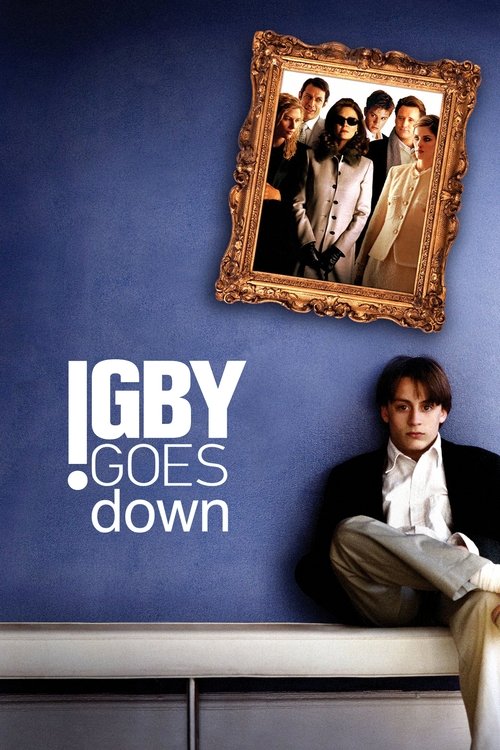
Igby Goes Down
Igby Slocumb, a rebellious and sarcastic 17-year-old boy, is at war with the stifling world of old money privilege he was born into. With a schizophrenic father, a self-absorbed, distant mother, and a shark-like young Republican big brother, Igby figures there must be a better life out there -- and sets about finding it.
The film underperformed commercially against its tight budget of $9.0M, earning $4.8M globally (-47% loss). While initial box office returns were modest, the film has gained appreciation for its unconventional structure within the comedy genre.
7 wins & 17 nominations


Plot Structure
Story beats plotted across runtime


Narrative Arc
Emotional journey through the story's key moments
Story Circle
Blueprint 15-beat structure
Arcplot Score Breakdown
Weighted: Precision (70%) + Arc (15%) + Theme (15%)
Igby Goes Down (2002) showcases deliberately positioned narrative design, characteristic of Burr Steers's storytelling approach. This structural analysis examines how the film's 15-point plot structure maps to proven narrative frameworks across 1 hour and 37 minutes. With an Arcplot score of 6.9, the film balances conventional beats with creative variation.
Characters
Cast & narrative archetypes

Igby Slocumb
Sookie Sapperstein
Rachel
Oliver Slocumb
Mimi Slocumb
D.H. Banes
Jason Slocumb
Main Cast & Characters
Igby Slocumb
Played by Kieran Culkin
A cynical, rebellious 17-year-old from a wealthy but dysfunctional family who rejects prep school conformity and seeks authenticity in New York City.
Sookie Sapperstein
Played by Claire Danes
A free-spirited, bohemian artist and dancer who becomes Igby's love interest and represents the creative freedom he craves.
Rachel
Played by Amanda Peet
An older, sophisticated performance artist involved with D.H. who has a complex affair with Igby.
Oliver Slocumb
Played by Ryan Phillippe
Igby's conformist, materialistic older brother who has embraced the upper-class values Igby rejects.
Mimi Slocumb
Played by Susan Sarandon
Igby and Oliver's cold, domineering mother who prioritizes social status and control over maternal warmth.
D.H. Banes
Played by Jeff Goldblum
Mimi's wealthy, arrogant godfather and lover who embodies the corrupt elite establishment Igby despises.
Jason Slocumb
Played by Bill Pullman
Igby's father who suffered a mental breakdown and is institutionalized, representing the tragic cost of conformity.
Structural Analysis
The Status Quo at 1 minutes (1% through the runtime) establishes Igby and Oliver suffocate their dying mother Mimi with a plastic bag, establishing a family defined by dysfunction, death, and dark humor. The opening frames Igby's world as one of morbid obligation.. Significantly, this early placement immediately immerses viewers in the story world.
The inciting incident occurs at 12 minutes when Igby escapes from military school and flees to New York City. This act of defiance disrupts his prescribed path and sets the story in motion—he refuses to remain trapped in the family's chosen institution.. At 12% through the film, this Disruption aligns precisely with traditional story structure. This beat shifts the emotional landscape, launching the protagonist into the central conflict.
The First Threshold at 24 minutes marks the transition into Act II, occurring at 25% of the runtime. This indicates the protagonist's commitment to Igby actively chooses to stay in the city, taking up residence in D.H.'s SoHo loft and beginning work as a runner. He commits to building a life outside his family's control, crossing into genuine independence., moving from reaction to action.
At 49 minutes, the Midpoint arrives at 50% of the runtime—precisely centered, creating perfect narrative symmetry. The analysis reveals that this crucial beat Igby discovers that Sookie has been sleeping with his brother Oliver. This false defeat reveals that escape from family dysfunction is impossible—Oliver corrupts everything Igby touches, and the family's poison follows him., fundamentally raising what's at risk. The emotional intensity shifts, dividing the narrative into clear before-and-after phases.
The Collapse moment at 73 minutes (75% through) represents the emotional nadir. Here, D.H. Dies and Mimi demands Igby return home. The whiff of death is literal—D.H.'s death removes Igby's only adult ally, and Mimi's imminent death pulls him back into the family's gravitational field. His escape has failed., indicates the protagonist at their lowest point. This beat's placement in the final quarter sets up the climactic reversal.
The Second Threshold at 78 minutes initiates the final act resolution at 80% of the runtime. Igby returns to his dying mother's bedside. He realizes that freedom isn't about geographic escape but about confronting family damage directly. He chooses to participate in Mimi's mercy killing—facing death rather than fleeing it., demonstrating the transformation achieved throughout the journey.
Emotional Journey
Igby Goes Down's emotional architecture traces a deliberate progression across 15 carefully calibrated beats.
Narrative Framework
This structural analysis employs proven narrative structure principles that track dramatic progression. By mapping Igby Goes Down against these established plot points, we can identify how Burr Steers utilizes or subverts traditional narrative conventions. The plot point approach reveals not only adherence to structural principles but also creative choices that distinguish Igby Goes Down within the comedy genre.
Burr Steers's Structural Approach
Among the 3 Burr Steers films analyzed on Arcplot, the average structural score is 7.2, reflecting strong command of classical structure. Igby Goes Down takes a more unconventional approach compared to the director's typical style. For comparative analysis, explore the complete Burr Steers filmography.
Comparative Analysis
Additional comedy films include The Bad Guys, Ella Enchanted and The Evening Star. For more Burr Steers analyses, see Charlie St. Cloud, 17 Again.
Plot Points by Act
Act I
SetupStatus Quo
Igby and Oliver suffocate their dying mother Mimi with a plastic bag, establishing a family defined by dysfunction, death, and dark humor. The opening frames Igby's world as one of morbid obligation.
Theme
D.H., Igby's godfather, tells him that the Slocumbs are a family of "emotional cripples." This articulates the film's central theme: inherited dysfunction and the question of whether one can escape family damage.
Worldbuilding
Through flashbacks, we learn Igby's history: his father Jason's schizophrenic breakdown, mother Mimi's alcoholism and cancer, brother Oliver's cold ambition, and Igby's pattern of expulsion from prep schools. The family's wealth masks profound emotional poverty.
Disruption
Igby escapes from military school and flees to New York City. This act of defiance disrupts his prescribed path and sets the story in motion—he refuses to remain trapped in the family's chosen institution.
Resistance
Igby navigates Manhattan, reconnecting with D.H. and meeting Rachel, D.H.'s young mistress. He debates his options—return to the system or forge his own path. D.H. serves as a flawed guide, offering temporary refuge but no real solutions.
Act II
ConfrontationFirst Threshold
Igby actively chooses to stay in the city, taking up residence in D.H.'s SoHo loft and beginning work as a runner. He commits to building a life outside his family's control, crossing into genuine independence.
Mirror World
Igby meets Sookie Sapperstein at a party—a free-spirited young woman who becomes his romantic interest and thematic mirror. She represents the possibility of authentic connection outside family dysfunction, though she carries her own damage.
Premise
Igby explores bohemian Manhattan: dealing drugs for D.H., pursuing Sookie, sparring with Oliver, and navigating the adult world on his own terms. The promise of the premise—a sardonic teenager loose in the city—delivers dark comedic sequences.
Midpoint
Igby discovers that Sookie has been sleeping with his brother Oliver. This false defeat reveals that escape from family dysfunction is impossible—Oliver corrupts everything Igby touches, and the family's poison follows him.
Opposition
Igby's world unravels. His relationship with Sookie deteriorates. D.H. dies suddenly of a heart attack. Oliver tightens his grip. Mimi's illness worsens, demanding Igby's return to the family orbit. Every avenue of escape closes.
Collapse
D.H. dies and Mimi demands Igby return home. The whiff of death is literal—D.H.'s death removes Igby's only adult ally, and Mimi's imminent death pulls him back into the family's gravitational field. His escape has failed.
Crisis
Igby confronts the impossibility of his situation. He cannot save himself from his family, cannot maintain relationships outside it, and must face his mother's dying wish. The dark night strips away his defenses and sarcasm.
Act III
ResolutionSecond Threshold
Igby returns to his dying mother's bedside. He realizes that freedom isn't about geographic escape but about confronting family damage directly. He chooses to participate in Mimi's mercy killing—facing death rather than fleeing it.
Synthesis
Igby and Oliver euthanize their mother in a darkly comic sequence. The act is both murder and mercy, destruction and release. Igby confronts Oliver about their father's institutionalization. The family secrets surface and are acknowledged.
Transformation
Igby leaves for California, genuinely free for the first time. Unlike the opening—trapped in an act of familial obligation—he now departs on his own terms, having faced the family's darkness rather than fled it. The transformation is quiet but real.