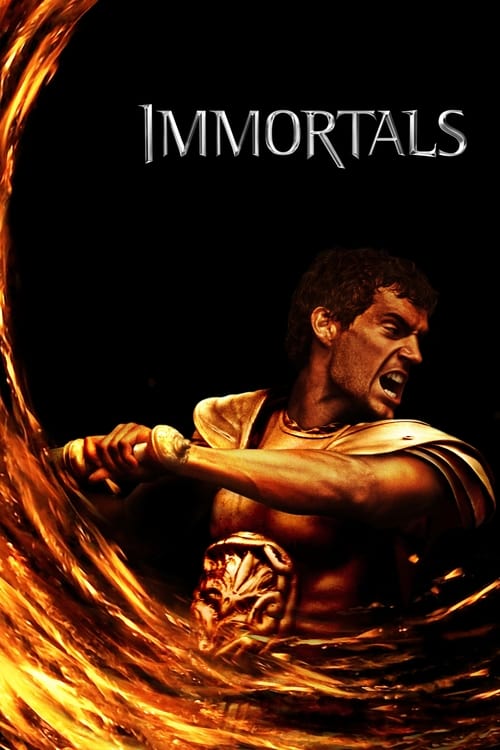
Immortals
Theseus is a mortal man chosen by Zeus to lead the fight against the ruthless King Hyperion, who is on a rampage across Greece to obtain a weapon that can destroy humanity.
Despite a substantial budget of $75.0M, Immortals became a solid performer, earning $226.9M worldwide—a 203% return.
1 win & 6 nominations


Plot Structure
Story beats plotted across runtime


Narrative Arc
Emotional journey through the story's key moments
Story Circle
Blueprint 15-beat structure
Arcplot Score Breakdown
Weighted: Precision (70%) + Arc (15%) + Theme (15%)
Immortals (2011) exhibits strategically placed narrative design, characteristic of Tarsem Singh's storytelling approach. This structural analysis examines how the film's 15-point plot structure maps to proven narrative frameworks across 1 hour and 50 minutes. With an Arcplot score of 6.7, the film balances conventional beats with creative variation.
Characters
Cast & narrative archetypes

Theseus
Phaedra
King Hyperion
Zeus
Stavros
Athena
Old Man
Main Cast & Characters
Theseus
Played by Henry Cavill
A mortal stonemason chosen by Zeus to lead humanity against King Hyperion and save the gods.
Phaedra
Played by Freida Pinto
An oracle with visions of the future who joins Theseus on his quest.
King Hyperion
Played by Mickey Rourke
A ruthless warlord seeking the Epirus Bow to free the Titans and destroy the gods.
Zeus
Played by Luke Evans
King of the Olympian gods who manipulates events to guide Theseus while bound by divine law.
Stavros
Played by Stephen Dorff
A master thief and slave who becomes Theseus's loyal companion in battle.
Athena
Played by Isabel Lucas
Goddess of wisdom and war who defies Zeus to directly aid Theseus.
Old Man
Played by John Hurt
A mysterious mentor who trains young Theseus, later revealed to be Zeus in disguise.
Structural Analysis
The Status Quo at 1 minutes (1% through the runtime) establishes Theseus trains as a peasant under the Old Man's tutelage, living a humble life in a Greek village, unaware of his divine destiny.. Structural examination shows that this early placement immediately immerses viewers in the story world.
The inciting incident occurs at 14 minutes when Hyperion's army attacks Theseus's village. His mother is brutally murdered before his eyes, and he is enslaved along with the Oracle Phaedra and other survivors.. At 13% through the film, this Disruption is delayed, allowing extended setup of the story world. This beat shifts the emotional landscape, launching the protagonist into the central conflict.
The First Threshold at 28 minutes marks the transition into Act II, occurring at 25% of the runtime. This reveals the protagonist's commitment to Theseus chooses to escape slavery and actively decides to stop Hyperion, not just for revenge but to prevent him from obtaining the Epirus Bow. He leads the escape and commits to the hero's path., moving from reaction to action.
At 55 minutes, the Midpoint arrives at 50% of the runtime—precisely centered, creating perfect narrative symmetry. The analysis reveals that this crucial beat Theseus finds the Epirus Bow in Mount Tartarus and claims it—a false victory. He has the weapon but Hyperion is closing in, and the gods remain divided on whether to intervene. Stakes raise dramatically., fundamentally raising what's at risk. The emotional intensity shifts, dividing the narrative into clear before-and-after phases.
The Collapse moment at 83 minutes (75% through) represents the emotional nadir. Here, Hyperion uses the Epirus Bow to break open Tartarus, releasing the Titans. Zeus kills Ares for interfering. The whiff of death: a god dies, the Titans are free, and all seems lost for mortals and gods alike., demonstrates the protagonist at their lowest point. This beat's placement in the final quarter sets up the climactic reversal.
The Second Threshold at 89 minutes initiates the final act resolution at 81% of the runtime. Theseus realizes he doesn't need divine weapons or bloodlines—his mortality is his strength. He rallies the Greek forces with a speech about fighting for each other. He synthesizes the Old Man's wisdom with his warrior skill., demonstrating the transformation achieved throughout the journey.
Emotional Journey
Immortals's emotional architecture traces a deliberate progression across 15 carefully calibrated beats.
Narrative Framework
This structural analysis employs systematic plot point analysis that identifies crucial turning points. By mapping Immortals against these established plot points, we can identify how Tarsem Singh utilizes or subverts traditional narrative conventions. The plot point approach reveals not only adherence to structural principles but also creative choices that distinguish Immortals within the fantasy genre.
Tarsem Singh's Structural Approach
Among the 4 Tarsem Singh films analyzed on Arcplot, the average structural score is 7.1, reflecting strong command of classical structure. Immortals takes a more unconventional approach compared to the director's typical style. For comparative analysis, explore the complete Tarsem Singh filmography.
Comparative Analysis
Additional fantasy films include Thinner, Ella Enchanted and Conan the Barbarian. For more Tarsem Singh analyses, see Self/less, The Cell and The Fall.
Plot Points by Act
Act I
SetupStatus Quo
Theseus trains as a peasant under the Old Man's tutelage, living a humble life in a Greek village, unaware of his divine destiny.
Theme
The Old Man (Zeus in disguise) tells Theseus: "A King doesn't just lead—he inspires. True leadership comes from within, not from bloodline." The theme of proving oneself worthy through character, not birth.
Worldbuilding
Establishes the world where gods and mortals coexist, the imprisoned Titans beneath Mount Tartarus, the tyrannical King Hyperion seeking the Epirus Bow to free the Titans, and Theseus's outsider status as a bastard.
Disruption
Hyperion's army attacks Theseus's village. His mother is brutally murdered before his eyes, and he is enslaved along with the Oracle Phaedra and other survivors.
Resistance
Theseus struggles in captivity, debates whether to accept his fate or fight back. Phaedra has visions of him as a hero. He resists the call to heroism, wanting only revenge, not to save Greece.
Act II
ConfrontationFirst Threshold
Theseus chooses to escape slavery and actively decides to stop Hyperion, not just for revenge but to prevent him from obtaining the Epirus Bow. He leads the escape and commits to the hero's path.
Mirror World
Theseus and Phaedra share an intimate connection. She represents faith and vision while he represents action and will. Their relationship embodies the theme: divinity works through mortal choice.
Premise
Theseus races to find the Epirus Bow before Hyperion. Epic battles, the promise of gods-and-mortals action unfolds. He gathers allies, discovers his leadership ability, and pursues the mythical weapon.
Midpoint
Theseus finds the Epirus Bow in Mount Tartarus and claims it—a false victory. He has the weapon but Hyperion is closing in, and the gods remain divided on whether to intervene. Stakes raise dramatically.
Opposition
Hyperion's forces intensify their assault. Theseus's allies are hunted. The Bow is stolen by Hyperion despite Theseus's efforts. The gods debate intervention while Ares breaks the rules, bringing consequences. Everything tightens.
Collapse
Hyperion uses the Epirus Bow to break open Tartarus, releasing the Titans. Zeus kills Ares for interfering. The whiff of death: a god dies, the Titans are free, and all seems lost for mortals and gods alike.
Crisis
Theseus faces despair as the Titans rampage and slaughter gods. He processes the catastrophic failure and loss. The darkness before he finds new resolve rooted in the Old Man's teachings about true leadership.
Act III
ResolutionSecond Threshold
Theseus realizes he doesn't need divine weapons or bloodlines—his mortality is his strength. He rallies the Greek forces with a speech about fighting for each other. He synthesizes the Old Man's wisdom with his warrior skill.
Synthesis
The final battle at Tartarus. Theseus leads mortals against Hyperion's army while gods battle Titans. Theseus kills Hyperion in single combat. Zeus and the gods destroy the Titans but at great cost. Sacrifice and heroism triumph.
Transformation
Theseus is immortalized among the gods for his heroism. The closing image shows him ascending to Olympus, transformed from bastard peasant to legendary hero—proving worth through character, not birth. His son carries his legacy.