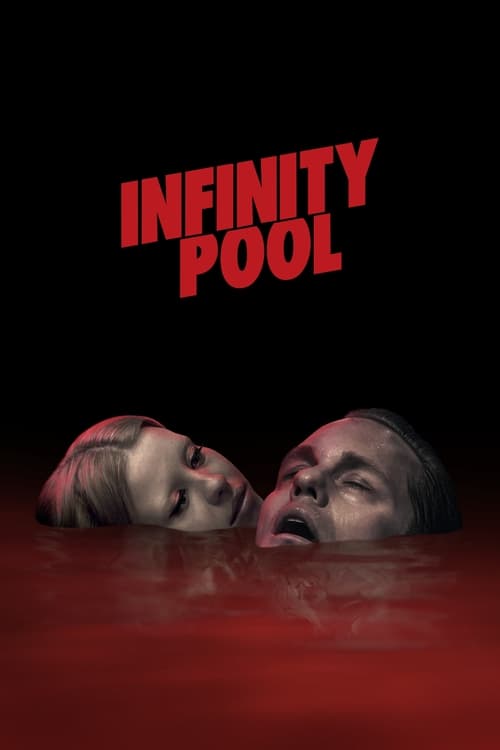
Infinity Pool
While staying at an isolated island resort, James and Em are enjoying a perfect vacation of pristine beaches, exceptional staff, and soaking up the sun. But guided by the seductive and mysterious Gabi, they venture outside the resort grounds and find themselves in a culture filled with violence, hedonism, and untold horror. A tragic accident leaves them facing a zero tolerance policy for crime: either you'll be executed, or, if you’re rich enough to afford it, you can watch yourself die instead.
Working with a small-scale budget of $4.5M, the film achieved a modest success with $5.1M in global revenue (+13% profit margin).
3 wins & 31 nominations


Plot Structure
Story beats plotted across runtime


Narrative Arc
Emotional journey through the story's key moments
Story Circle
Blueprint 15-beat structure
Arcplot Score Breakdown
Weighted: Precision (70%) + Arc (15%) + Theme (15%)
Infinity Pool (2023) showcases deliberately positioned story structure, characteristic of Brandon Cronenberg's storytelling approach. This structural analysis examines how the film's 15-point plot structure maps to proven narrative frameworks across 1 hour and 58 minutes. With an Arcplot score of 7.2, the film balances conventional beats with creative variation.
Characters
Cast & narrative archetypes

James Foster
Gabi Bauer
Em Foster
Alban Bauer
Main Cast & Characters
James Foster
Played by Alexander Skarsgård
A struggling writer on vacation who becomes trapped in a cycle of violence and identity dissolution after a fatal accident.
Gabi Bauer
Played by Mia Goth
A seductive and manipulative woman who introduces James to the resort's dark rituals and leads him into moral degradation.
Em Foster
Played by Cleopatra Coleman
James's wealthy wife who becomes increasingly disturbed by her husband's transformation and descent into hedonism.
Alban Bauer
Played by Jalil Lespert
Gabi's husband and wealthy enabler who participates in the group's twisted rituals with casual detachment.
Structural Analysis
The Status Quo at 2 minutes (1% through the runtime) establishes James Foster, a failed novelist, lounges at an isolated luxury resort with his wealthy wife Em, struggling with writer's block and feeling emasculated by her family's money.. Notably, this early placement immediately immerses viewers in the story world.
The inciting incident occurs at 15 minutes when Gabi convinces James and Em to break the resort rules and venture outside the compound to a secluded beach, initiating the transgression that will unravel everything.. At 12% through the film, this Disruption aligns precisely with traditional story structure. This beat shifts the emotional landscape, launching the protagonist into the central conflict.
The First Threshold at 29 minutes marks the transition into Act II, occurring at 25% of the runtime. This shows the protagonist's commitment to James chooses to pay for the double procedure, crossing into a world where death has no meaning for the wealthy and he must watch his clone be executed by the victim's son., moving from reaction to action.
At 60 minutes, the Midpoint arrives at 50% of the runtime—precisely centered, creating perfect narrative symmetry. Significantly, this crucial beat Em abandons James and leaves the resort. James is now fully isolated and dependent on Gabi's group, his identity dissolving as he commits to this new existence of ritual violence., fundamentally raising what's at risk. The emotional intensity shifts, dividing the narrative into clear before-and-after phases.
The Collapse moment at 89 minutes (75% through) represents the emotional nadir. Here, In a brutal ritualistic scene, James is forced to watch multiple versions of himself and is degraded by the group, stripped of all dignity and identity. He is made to literally consume his own violence and failures., illustrates the protagonist at their lowest point. This beat's placement in the final quarter sets up the climactic reversal.
The Second Threshold at 95 minutes initiates the final act resolution at 81% of the runtime. James attempts to escape and return home, seemingly making the choice to reject Gabi's world and reclaim his humanity, but the film reveals this may itself be an illusion., demonstrating the transformation achieved throughout the journey.
Emotional Journey
Infinity Pool's emotional architecture traces a deliberate progression across 15 carefully calibrated beats.
Narrative Framework
This structural analysis employs proven narrative structure principles that track dramatic progression. By mapping Infinity Pool against these established plot points, we can identify how Brandon Cronenberg utilizes or subverts traditional narrative conventions. The plot point approach reveals not only adherence to structural principles but also creative choices that distinguish Infinity Pool within the horror genre.
Brandon Cronenberg's Structural Approach
Among the 2 Brandon Cronenberg films analyzed on Arcplot, the average structural score is 7.2, reflecting strong command of classical structure. Infinity Pool represents one of the director's most structurally precise works. For comparative analysis, explore the complete Brandon Cronenberg filmography.
Comparative Analysis
Additional horror films include Thinner, A Nightmare on Elm Street and Mary Reilly. For more Brandon Cronenberg analyses, see Possessor.
Plot Points by Act
Act I
SetupStatus Quo
James Foster, a failed novelist, lounges at an isolated luxury resort with his wealthy wife Em, struggling with writer's block and feeling emasculated by her family's money.
Theme
Gabi tells James that people like them deserve to do whatever they want, planting the seed of consequence-free existence and moral relativism that will drive the story.
Worldbuilding
The resort's strict rules are established: guests cannot leave the compound due to danger from locals. James meets the seductive Gabi and her husband Alban, who recognize him from his one published novel.
Disruption
Gabi convinces James and Em to break the resort rules and venture outside the compound to a secluded beach, initiating the transgression that will unravel everything.
Resistance
James becomes intoxicated and drives on the way back, hitting and killing a local farmer. The police arrive, and James learns the penalty is execution unless he can pay for a "double" to die in his place.
Act II
ConfrontationFirst Threshold
James chooses to pay for the double procedure, crossing into a world where death has no meaning for the wealthy and he must watch his clone be executed by the victim's son.
Mirror World
Gabi reveals she and her friends are repeat offenders who regularly commit crimes and use doubles, introducing James to a subculture that mirrors his darkest impulses and complete moral abandon.
Premise
James descends into debauchery with Gabi's group, participating in increasingly transgressive acts. Em wants to leave, but James chooses to stay, seduced by the consequence-free violence and sexual excess.
Midpoint
Em abandons James and leaves the resort. James is now fully isolated and dependent on Gabi's group, his identity dissolving as he commits to this new existence of ritual violence.
Opposition
The group's rituals become increasingly sadistic and surreal. James creates more doubles and witnesses their deaths, each one eroding his sense of self. Gabi psychologically dominates him, forcing him to confront his own worthlessness.
Collapse
In a brutal ritualistic scene, James is forced to watch multiple versions of himself and is degraded by the group, stripped of all dignity and identity. He is made to literally consume his own violence and failures.
Crisis
James lies broken and traumatized, processing the complete dissolution of his identity. He recognizes he has become addicted to the cycle of death and rebirth that the doubles provide.
Act III
ResolutionSecond Threshold
James attempts to escape and return home, seemingly making the choice to reject Gabi's world and reclaim his humanity, but the film reveals this may itself be an illusion.
Synthesis
James flees the resort and boards a plane, appearing to escape. However, he cannot fully leave—he returns to the resort, unable to exist outside the cycle of violence and doubling.
Transformation
James crawls back to Gabi on the beach, completely broken and submissive, having chosen the comfort of moral emptiness over the difficulty of authentic existence. His transformation is complete corruption.