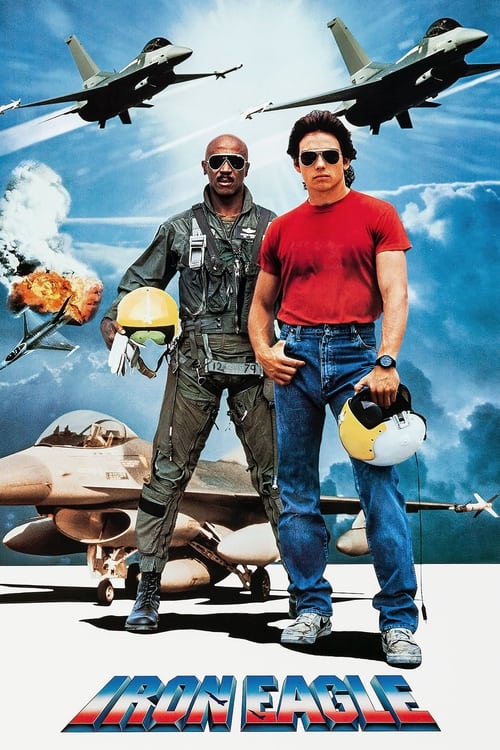
Iron Eagle
When Doug's father, an Air Force Pilot, is shot down by MiGs belonging to a radical Middle Eastern state, no one seems able to get him out. Doug finds Chappy, an Air Force Colonel who is intrigued by the idea of sending in two fighters piloted by himself and Doug to rescue Doug's father after bombing the MiG base.
Working with a mid-range budget of $18.0M, the film achieved a steady performer with $24.2M in global revenue (+34% profit margin).


Plot Structure
Story beats plotted across runtime


Narrative Arc
Emotional journey through the story's key moments
Story Circle
Blueprint 15-beat structure
Arcplot Score Breakdown
Weighted: Precision (70%) + Arc (15%) + Theme (15%)
Iron Eagle (1986) showcases precise narrative design, characteristic of Sidney J. Furie's storytelling approach. This structural analysis examines how the film's 15-point plot structure maps to proven narrative frameworks across 1 hour and 57 minutes. With an Arcplot score of 7.0, the film balances conventional beats with creative variation.
Characters
Cast & narrative archetypes

Doug Masters
Colonel Charles 'Chappy' Sinclair
Colonel Ted Masters
Colonel Akir Nakesh
Main Cast & Characters
Doug Masters
Played by Jason Gedrick
A talented teenage pilot who launches a rogue mission to rescue his father from a hostile Middle Eastern nation.
Colonel Charles 'Chappy' Sinclair
Played by Louis Gossett Jr.
A retired Air Force pilot who becomes Doug's mentor and reluctant partner in the rescue mission.
Colonel Ted Masters
Played by Tim Thomerson
Doug's father, a skilled Air Force pilot shot down and captured during a mission over enemy territory.
Colonel Akir Nakesh
Played by David Suchet
The ruthless enemy commander who holds Colonel Masters prisoner and plans his execution.
Structural Analysis
The Status Quo at 1 minutes (1% through the runtime) establishes Doug Masters flies with his father Colonel Ted Masters, dreaming of becoming an Air Force pilot. We see Doug's world: high school, his passion for flight, and his close relationship with his fighter pilot father.. Structural examination shows that this early placement immediately immerses viewers in the story world.
The inciting incident occurs at 14 minutes when Doug's father Colonel Ted Masters is shot down over a fictional Middle Eastern country and captured. The news devastates Doug and changes everything - his father faces a show trial and execution.. At 12% through the film, this Disruption aligns precisely with traditional story structure. This beat shifts the emotional landscape, launching the protagonist into the central conflict.
The First Threshold at 28 minutes marks the transition into Act II, occurring at 24% of the runtime. This illustrates the protagonist's commitment to Doug makes the active choice to steal F-16 fighters and launch his own rescue mission. He commits to the plan with Chappy's help, crossing from civilian teenager to unauthorized military operative., moving from reaction to action.
At 57 minutes, the Midpoint arrives at 49% of the runtime—precisely centered, creating perfect narrative symmetry. Structural examination shows that this crucial beat Doug and Chappy successfully steal the F-16s and launch their mission. They're airborne and committed - a false victory as they believe they can pull this off, but the real danger still lies ahead., fundamentally raising what's at risk. The emotional intensity shifts, dividing the narrative into clear before-and-after phases.
The Collapse moment at 86 minutes (73% through) represents the emotional nadir. Here, During the rescue attempt and aerial combat, either Chappy is hit/endangered or Doug faces seemingly insurmountable odds with enemy MiGs. The mission appears to fail and Doug faces the possibility of losing both father and mentor., reveals the protagonist at their lowest point. This beat's placement in the final quarter sets up the climactic reversal.
The Second Threshold at 93 minutes initiates the final act resolution at 79% of the runtime. Doug synthesizes his father's training, Chappy's wisdom, and his own instincts. He fully becomes the pilot he was meant to be, finding the solution to defeat the enemy fighters and complete the rescue., demonstrating the transformation achieved throughout the journey.
Emotional Journey
Iron Eagle's emotional architecture traces a deliberate progression across 15 carefully calibrated beats.
Narrative Framework
This structural analysis employs systematic plot point analysis that identifies crucial turning points. By mapping Iron Eagle against these established plot points, we can identify how Sidney J. Furie utilizes or subverts traditional narrative conventions. The plot point approach reveals not only adherence to structural principles but also creative choices that distinguish Iron Eagle within the action genre.
Sidney J. Furie's Structural Approach
Among the 4 Sidney J. Furie films analyzed on Arcplot, the average structural score is 7.1, reflecting strong command of classical structure. Iron Eagle takes a more unconventional approach compared to the director's typical style. For comparative analysis, explore the complete Sidney J. Furie filmography.
Comparative Analysis
Additional action films include The Bad Guys, Puss in Boots and Venom: The Last Dance. For more Sidney J. Furie analyses, see Ladybugs, Superman IV: The Quest for Peace and The Entity.
Plot Points by Act
Act I
SetupStatus Quo
Doug Masters flies with his father Colonel Ted Masters, dreaming of becoming an Air Force pilot. We see Doug's world: high school, his passion for flight, and his close relationship with his fighter pilot father.
Theme
Chappy or another character mentions that sometimes you have to break the rules to do what's right, or that the system doesn't always protect those who deserve it - foreshadowing Doug's journey of taking matters into his own hands.
Worldbuilding
Establishment of Doug's life as a teenager and aspiring pilot, his father's Air Force career, the military base environment, Doug's friends and his mentor relationships with pilots like Chappy Sinclair.
Disruption
Doug's father Colonel Ted Masters is shot down over a fictional Middle Eastern country and captured. The news devastates Doug and changes everything - his father faces a show trial and execution.
Resistance
Doug struggles with the military's refusal to mount a rescue mission due to political constraints. He debates what to do, receives guidance from Chappy Sinclair, and begins formulating the impossible idea of rescuing his father himself.
Act II
ConfrontationFirst Threshold
Doug makes the active choice to steal F-16 fighters and launch his own rescue mission. He commits to the plan with Chappy's help, crossing from civilian teenager to unauthorized military operative.
Mirror World
Doug's relationship with Chappy deepens as the older pilot becomes his true mentor and father figure. Chappy represents the theme - a man who knows when to follow orders and when to follow his heart.
Premise
The fun and games: Doug and friends plan the heist, recruit help, acquire weapons and fuel, practice flight maneuvers, and prepare the F-16s. Training montages, teenage ingenuity, and the excitement of the impossible mission coming together.
Midpoint
Doug and Chappy successfully steal the F-16s and launch their mission. They're airborne and committed - a false victory as they believe they can pull this off, but the real danger still lies ahead.
Opposition
The flight to the Middle East brings complications: fuel concerns, detection risks, navigation challenges. Meanwhile, enemy forces prepare defenses. Doug's inexperience shows. The military discovers the theft and scrambles to stop them.
Collapse
During the rescue attempt and aerial combat, either Chappy is hit/endangered or Doug faces seemingly insurmountable odds with enemy MiGs. The mission appears to fail and Doug faces the possibility of losing both father and mentor.
Crisis
Doug must dig deep and find the courage and skill to continue. Dark moment of doubt where he questions if he can actually do this, if he's good enough, if his father will die because of his failure.
Act III
ResolutionSecond Threshold
Doug synthesizes his father's training, Chappy's wisdom, and his own instincts. He fully becomes the pilot he was meant to be, finding the solution to defeat the enemy fighters and complete the rescue.
Synthesis
Final aerial combat sequence where Doug defeats enemy MiGs, rescues his father from the prison compound, and they escape together. The finale executes the mission to completion against all odds.
Transformation
Doug returns, no longer just a teenager dreaming of being a pilot - he's proven himself as a true aviator and hero. Father and son reunited, with Doug having earned respect and come of age through his courage and skill.