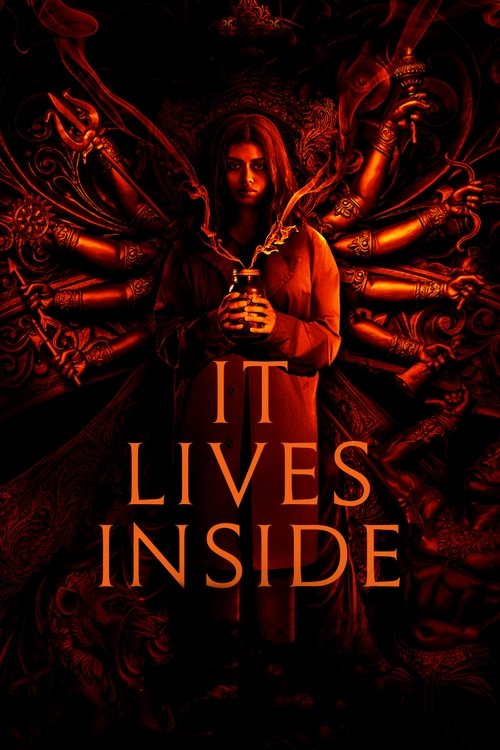
It Lives Inside
Desperate to fit in at school, Sam rejects her Indian culture and family to be like everyone else. However, when a mythological demonic spirit latches onto her former best friend, she must come to terms with her heritage to defeat it.
The film earned $4.8M at the global box office.
2 wins & 6 nominations


Plot Structure
Story beats plotted across runtime


Narrative Arc
Emotional journey through the story's key moments
Story Circle
Blueprint 15-beat structure
Arcplot Score Breakdown
Weighted: Precision (70%) + Arc (15%) + Theme (15%)
It Lives Inside (2023) demonstrates precise narrative design, characteristic of Bishal Dutta's storytelling approach. This structural analysis examines how the film's 15-point plot structure maps to proven narrative frameworks across 1 hour and 39 minutes. With an Arcplot score of 7.6, the film showcases strong structural fundamentals.
Characters
Cast & narrative archetypes

Samidha (Sam)
Tamira
Joyce
Russ
Poorna
Inesh
Main Cast & Characters
Samidha (Sam)
Played by Megan Suri
An Indian-American teenager who struggles with cultural identity and must confront a demon from Hindu mythology that threatens her former best friend.
Tamira
Played by Mohana Krishnan
Sam's former best friend who becomes possessed by a malevolent entity after opening a mysterious jar, desperately trying to warn Sam.
Joyce
Played by Betty Gabriel
Sam's current friend who represents her assimilated American social circle and normalized high school life.
Russ
Played by Gage Marsh
Sam's boyfriend who supports her but doesn't understand the cultural and supernatural forces at play.
Poorna
Played by Neeru Bajwa
Sam's traditional Indian mother who maintains cultural practices Sam has been rejecting.
Inesh
Played by Sandeep Parikh
Sam's father who balances traditional values with supporting his daughter's American integration.
Structural Analysis
The Status Quo at 1 minutes (1% through the runtime) establishes Sam walks through her high school, distancing herself from her Indian heritage, avoiding her former best friend Tamira who carries a mysterious jar and exhibits strange behavior.. Significantly, this early placement immediately immerses viewers in the story world.
The inciting incident occurs at 12 minutes when During a confrontation in the school hallway, Sam angrily smashes the jar Tamira has been protecting, releasing the Pishach. Tamira screams in terror and runs away. Sam has unknowingly unleashed an ancient demon.. At 13% through the film, this Disruption is delayed, allowing extended setup of the story world. This beat shifts the emotional landscape, launching the protagonist into the central conflict.
The First Threshold at 25 minutes marks the transition into Act II, occurring at 25% of the runtime. This indicates the protagonist's commitment to Sam makes the choice to visit an Indian community center and speak with Poorna, who explains the mythology of the Pishach. Sam accepts that she must confront her heritage to understand what she's facing and save Tamira., moving from reaction to action.
At 50 minutes, the Midpoint arrives at 50% of the runtime—precisely centered, creating perfect narrative symmetry. Notably, this crucial beat Sam finds Tamira alive but possessed, held in the Pishach's lair. In a false victory, Sam thinks she can save her friend, but Tamira attacks her. Sam realizes the demon is far more powerful than she thought and now it's targeting her directly., fundamentally raising what's at risk. The emotional intensity shifts, dividing the narrative into clear before-and-after phases.
The Collapse moment at 75 minutes (75% through) represents the emotional nadir. Here, Sam finds Tamira's corpse - her friend is dead, consumed by the Pishach. Sam has failed to save her. The demon now fully manifests, revealing its horrific true form, and begins hunting Sam in earnest. All hope seems lost., illustrates the protagonist at their lowest point. This beat's placement in the final quarter sets up the climactic reversal.
The Second Threshold at 80 minutes initiates the final act resolution at 80% of the runtime. Sam undergoes a ritual with Poorna, fully embracing her Indian heritage and spiritual traditions. She realizes the Pishach feeds on shame and isolation, and by accepting herself completely, she gains the power to fight it. She arms herself with sacred knowledge and light., demonstrating the transformation achieved throughout the journey.
Emotional Journey
It Lives Inside's emotional architecture traces a deliberate progression across 15 carefully calibrated beats.
Narrative Framework
This structural analysis employs structural analysis methodology used to understand storytelling architecture. By mapping It Lives Inside against these established plot points, we can identify how Bishal Dutta utilizes or subverts traditional narrative conventions. The plot point approach reveals not only adherence to structural principles but also creative choices that distinguish It Lives Inside within the horror genre.
Comparative Analysis
Additional horror films include Thinner, A Nightmare on Elm Street and Mary Reilly.
Plot Points by Act
Act I
SetupStatus Quo
Sam walks through her high school, distancing herself from her Indian heritage, avoiding her former best friend Tamira who carries a mysterious jar and exhibits strange behavior.
Theme
Sam's mother warns her about losing connection to her roots: "When you forget where you come from, you lose yourself." The theme of cultural identity and the danger of denying one's heritage.
Worldbuilding
Sam navigates her American high school life with boyfriend Russ, ashamed of her Indian heritage. Tamira grows increasingly desperate, warning Sam about something evil in the jar. We see Sam's family life, her relationship tensions, and Tamira's isolation.
Disruption
During a confrontation in the school hallway, Sam angrily smashes the jar Tamira has been protecting, releasing the Pishach. Tamira screams in terror and runs away. Sam has unknowingly unleashed an ancient demon.
Resistance
Tamira disappears after the jar breaks. Sam feels guilty and begins investigating. Her teacher Joyce suggests looking into Indian folklore. Sam resists, uncomfortable with diving into the culture she's been rejecting, but guilt compels her to search for answers.
Act II
ConfrontationFirst Threshold
Sam makes the choice to visit an Indian community center and speak with Poorna, who explains the mythology of the Pishach. Sam accepts that she must confront her heritage to understand what she's facing and save Tamira.
Mirror World
Poorna becomes Sam's guide into Indian mythology and culture. This relationship represents what Sam has been running from - her heritage - and will teach her that embracing her identity is her strength, not her weakness.
Premise
Sam investigates the Pishach, experiencing supernatural encounters and visions. She researches Indian folklore, explores Tamira's house, and discovers the demon feeds on isolation and fear. The horror escalates as Sam becomes the Pishach's new target.
Midpoint
Sam finds Tamira alive but possessed, held in the Pishach's lair. In a false victory, Sam thinks she can save her friend, but Tamira attacks her. Sam realizes the demon is far more powerful than she thought and now it's targeting her directly.
Opposition
The Pishach intensifies its attacks on Sam, isolating her from friends and family. Russ breaks up with her, thinking she's losing her mind. The demon manipulates her relationships and preys on her shame about her culture. Sam's grip on reality weakens.
Collapse
Sam finds Tamira's corpse - her friend is dead, consumed by the Pishach. Sam has failed to save her. The demon now fully manifests, revealing its horrific true form, and begins hunting Sam in earnest. All hope seems lost.
Crisis
Sam grieves Tamira and confronts her deepest fear: that her rejection of her heritage has led to this tragedy. She sits in darkness, isolated and terrified, believing she cannot defeat the demon because she has denied who she is.
Act III
ResolutionSecond Threshold
Sam undergoes a ritual with Poorna, fully embracing her Indian heritage and spiritual traditions. She realizes the Pishach feeds on shame and isolation, and by accepting herself completely, she gains the power to fight it. She arms herself with sacred knowledge and light.
Synthesis
Sam confronts the Pishach in a final battle, using Hindu prayers, sacred light, and the strength of her cultural identity. She faces the demon without shame or fear, combining her American confidence with her Indian heritage to trap and banish the entity.
Transformation
Sam walks through school wearing traditional Indian clothing, no longer hiding her heritage. She honors Tamira's memory and has reconciled both sides of her identity. She is whole, no longer ashamed, transformed from a girl running from herself to one who embraces all of who she is.