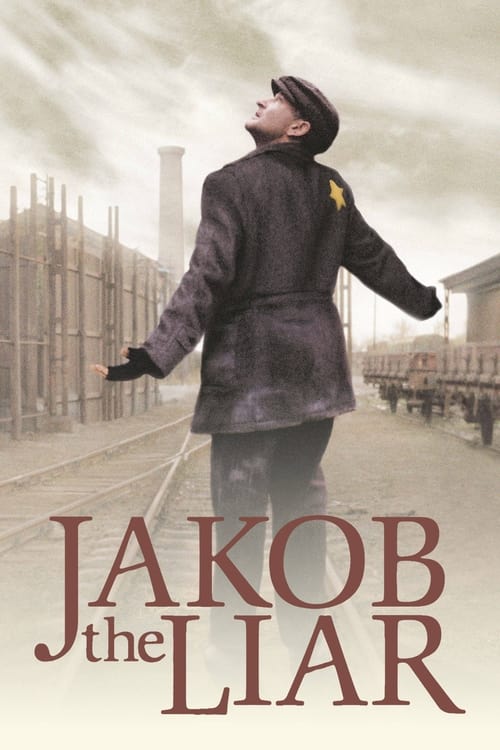
Jakob the Liar
In 1944 Poland, a Jewish shop keeper named Jakob is summoned to ghetto headquarters after being caught out after curfew. While waiting for the German Kommondant, Jakob overhears a German radio broadcast about Russian troop movements. Returned to the ghetto, the shopkeeper shares his information with a friend and then rumors fly that there is a secret radio within the ghetto.
The film financial setback against its mid-range budget of $45.0M, earning $5.0M globally (-89% loss). While initial box office returns were modest, the film has gained appreciation for its unique voice within the comedy genre.
2 wins & 3 nominations


Plot Structure
Story beats plotted across runtime


Narrative Arc
Emotional journey through the story's key moments
Story Circle
Blueprint 15-beat structure
Arcplot Score Breakdown
Weighted: Precision (70%) + Arc (15%) + Theme (15%)
Jakob the Liar (1999) exemplifies meticulously timed plot construction, characteristic of Peter Kassovitz's storytelling approach. This structural analysis examines how the film's 15-point plot structure maps to proven narrative frameworks across 2 hours. With an Arcplot score of 6.8, the film balances conventional beats with creative variation.
Characters
Cast & narrative archetypes

Jakob Heym
Lina Kronstein
Mischa
Rosa
Kowalsky
Professor Kirschbaum
Herschel
Avron
Frankfurter
Main Cast & Characters
Jakob Heym
Played by Robin Williams
A Jewish cafe owner in the Warsaw ghetto who accidentally becomes a source of hope by fabricating radio news about Russian advances.
Lina Kronstein
Played by Hannah Taylor-Gordon
A young orphaned girl hidden by Jakob who represents innocence and hope in the ghetto.
Mischa
Played by Liev Schreiber
A young boxer and resistance member who is engaged to Rosa and desperately wants to believe Jakob's radio reports.
Rosa
Played by Nina Siemaszko
Mischa's fiancée who works in the ghetto and holds onto hope for a future together.
Kowalsky
Played by Bob Balaban
A former actor and friend of Jakob who becomes obsessed with hearing news from the fabricated radio.
Professor Kirschbaum
Played by Armin Mueller-Stahl
An intellectual doctor in the ghetto who represents the educated class and serves as a voice of reason.
Herschel
Played by Michael Jeter
Jakob's friend and barber in the ghetto who shares the burden of Jakob's secret.
Avron
Played by Mark Margolis
A news peddler and gossip in the ghetto who helps spread Jakob's fabricated news.
Frankfurter
Played by Alan Arkin
A depressed ghetto resident contemplating suicide who is given hope by Jakob's radio news.
Structural Analysis
The Status Quo at 2 minutes (1% through the runtime) establishes Jakob navigates the bleak, oppressive reality of the Jewish ghetto in Nazi-occupied Poland. Life is defined by deprivation, fear, and the daily struggle for survival under brutal occupation.. The analysis reveals that this early placement immediately immerses viewers in the story world.
The inciting incident occurs at 15 minutes when Jakob is summoned to Nazi headquarters for breaking curfew. While waiting, he accidentally overhears a German radio broadcast reporting that Soviet forces are advancing and are only a few hundred kilometers away.. At 13% through the film, this Disruption is delayed, allowing extended setup of the story world. This beat shifts the emotional landscape, launching the protagonist into the central conflict.
The First Threshold at 30 minutes marks the transition into Act II, occurring at 25% of the runtime. This indicates the protagonist's commitment to Jakob makes the active choice to fabricate ongoing radio reports, committing to the lie. He decides to become the source of hope for the ghetto, even though possessing a radio means death if discovered., moving from reaction to action.
At 60 minutes, the Midpoint arrives at 50% of the runtime—precisely centered, creating perfect narrative symmetry. Notably, this crucial beat Nazi authorities become suspicious about the change in ghetto morale and begin investigating the source of hope. Jakob realizes the danger has intensified—his lie now puts everyone at risk, not just himself., fundamentally raising what's at risk. The emotional intensity shifts, dividing the narrative into clear before-and-after phases.
The Collapse moment at 90 minutes (75% through) represents the emotional nadir. Here, The Nazis announce the ghetto will be liquidated and all residents deported to camps. Jakob's friend is killed. The hope Jakob created seems to have been for nothing—the death they feared is coming regardless., illustrates the protagonist at their lowest point. This beat's placement in the final quarter sets up the climactic reversal.
The Second Threshold at 96 minutes initiates the final act resolution at 80% of the runtime. Jakob realizes that even if the hope was false, it gave people dignity and humanity in their final days. He chooses to maintain the lie to the end, understanding that hope itself—not its accuracy—was the gift., demonstrating the transformation achieved throughout the journey.
Emotional Journey
Jakob the Liar's emotional architecture traces a deliberate progression across 15 carefully calibrated beats.
Narrative Framework
This structural analysis employs structural analysis methodology used to understand storytelling architecture. By mapping Jakob the Liar against these established plot points, we can identify how Peter Kassovitz utilizes or subverts traditional narrative conventions. The plot point approach reveals not only adherence to structural principles but also creative choices that distinguish Jakob the Liar within the comedy genre.
Comparative Analysis
Additional comedy films include The Bad Guys, Ella Enchanted and The Evening Star.
Plot Points by Act
Act I
SetupStatus Quo
Jakob navigates the bleak, oppressive reality of the Jewish ghetto in Nazi-occupied Poland. Life is defined by deprivation, fear, and the daily struggle for survival under brutal occupation.
Theme
A fellow ghetto resident remarks on the power of hope and stories to sustain people through impossible circumstances, foreshadowing Jakob's role as an inadvertent beacon of hope.
Worldbuilding
Establishment of ghetto life: the relationships between Jakob and other residents, the constant Nazi brutality, the deportations to camps, and the crushing despair that pervades every aspect of existence.
Disruption
Jakob is summoned to Nazi headquarters for breaking curfew. While waiting, he accidentally overhears a German radio broadcast reporting that Soviet forces are advancing and are only a few hundred kilometers away.
Resistance
Jakob shares the news about the Soviet advance with a suicidal friend, saving his life. Word spreads that Jakob has a radio, though he doesn't. Jakob debates whether to continue the lie or confess the truth.
Act II
ConfrontationFirst Threshold
Jakob makes the active choice to fabricate ongoing radio reports, committing to the lie. He decides to become the source of hope for the ghetto, even though possessing a radio means death if discovered.
Mirror World
Jakob's relationship with young orphan Lina deepens. She represents innocence and the future worth fighting for, embodying the thematic question of whether hope built on lies can be moral.
Premise
Jakob invents increasingly elaborate news bulletins. The ghetto transforms as hope spreads—people stop attempting suicide, make future plans, show resistance. Jakob navigates the comedy and tension of maintaining his deception.
Midpoint
Nazi authorities become suspicious about the change in ghetto morale and begin investigating the source of hope. Jakob realizes the danger has intensified—his lie now puts everyone at risk, not just himself.
Opposition
The Nazis tighten control and increase searches for the radio. Jakob struggles to maintain the lie as people demand more news. His deception becomes harder to sustain, and the moral weight of the lie grows heavier.
Collapse
The Nazis announce the ghetto will be liquidated and all residents deported to camps. Jakob's friend is killed. The hope Jakob created seems to have been for nothing—the death they feared is coming regardless.
Crisis
Jakob confronts the devastating reality that his lies, while well-intentioned, couldn't change their fate. He grapples with guilt and despair, questioning whether giving false hope was cruel rather than kind.
Act III
ResolutionSecond Threshold
Jakob realizes that even if the hope was false, it gave people dignity and humanity in their final days. He chooses to maintain the lie to the end, understanding that hope itself—not its accuracy—was the gift.
Synthesis
As deportations begin, Jakob continues offering hope and comfort. He protects Lina and tries to ensure the lie survives him. The ghetto residents face their fate with more courage because of Jakob's fabrications.
Transformation
In the film's closing, we see that Jakob's gift of hope—even hope built on lies—allowed people to face death with humanity intact. The transformation from despair to dignity, however brief, was real.