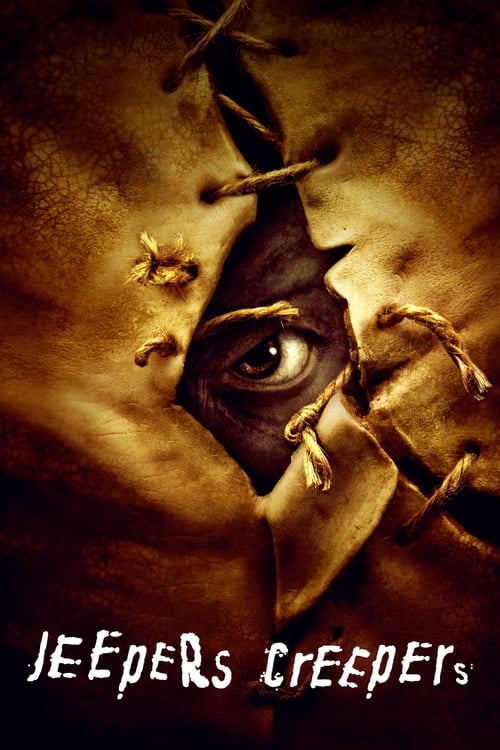
Jeepers Creepers
On a desolate country highway, two homeward-bound teens are nearly run off the road by a maniac in a beat-up truck, and later spot him shoving what appears to be a body down a sewer pipe.
Despite its limited budget of $10.0M, Jeepers Creepers became a commercial success, earning $59.2M worldwide—a 492% return. The film's innovative storytelling resonated with audiences, showing that strong storytelling can transcend budget limitations.
5 wins & 7 nominations


Plot Structure
Story beats plotted across runtime


Narrative Arc
Emotional journey through the story's key moments
Story Circle
Blueprint 15-beat structure
Characters
Cast & narrative archetypes

Trish Jenner
Darry Jenner
The Creeper
Jezelle Gay Hartman
Main Cast & Characters
Trish Jenner
Played by Gina Philips
College student driving home with her brother who becomes the primary target of the Creeper after discovering its lair.
Darry Jenner
Played by Justin Long
Trish's younger brother whose curiosity leads him to investigate the Creeper's hideout, making him the monster's chosen victim.
The Creeper
Played by Jonathan Breck
An ancient demonic creature that awakens every 23 years for 23 days to feed on human body parts, hunting the Jenner siblings relentlessly.
Jezelle Gay Hartman
Played by Patricia Belcher
A mysterious psychic woman who warns the Jenners about the Creeper and reveals its nature through her visions.
Structural Analysis
The Status Quo at 1 minutes (1% through the runtime) establishes Trish and Darry Jenner drive through rural Florida on spring break, playfully bickering as siblings do. Their carefree road trip establishes normalcy and their close but contentious relationship.. Structural examination shows that this early placement immediately immerses viewers in the story world.
The inciting incident occurs at 11 minutes when A rusted truck aggressively tailgates and nearly runs them off the road. Later, they witness a figure dumping what appears to be a body wrapped in a sheet down a pipe at an abandoned church.. At 12% through the film, this Disruption aligns precisely with traditional story structure. This beat shifts the emotional landscape, launching the protagonist into the central conflict.
The First Threshold at 23 minutes marks the transition into Act II, occurring at 25% of the runtime. This demonstrates the protagonist's commitment to Darry discovers the church basement is wallpapered with hundreds of preserved human bodies sewn together. He and Trish flee, now marked by the Creeper - they've seen too much and there's no going back., moving from reaction to action.
At 45 minutes, the Midpoint arrives at 50% of the runtime—precisely centered, creating perfect narrative symmetry. Significantly, this crucial beat At the police station, the Creeper massacres the officers and retrieves its confiscated items. The siblings realize no human authority can protect them - this is not a human threat but something ancient and unstoppable., fundamentally raising what's at risk. The emotional intensity shifts, dividing the narrative into clear before-and-after phases.
The Collapse moment at 68 minutes (75% through) represents the emotional nadir. Here, Jezelle reveals her vision: the Creeper will take one of them, and she hears "Jeepers Creepers" playing as it happens. The whiff of death becomes certainty - one sibling will die, and they cannot change fate., shows the protagonist at their lowest point. This beat's placement in the final quarter sets up the climactic reversal.
The Second Threshold at 72 minutes initiates the final act resolution at 80% of the runtime. The Creeper attacks their refuge. Armed with knowledge of what they face but no way to stop it, they must fight anyway. Trish rams the creature repeatedly with her car, seemingly destroying it., demonstrating the transformation achieved throughout the journey.
Emotional Journey
Jeepers Creepers's emotional architecture traces a deliberate progression across 15 carefully calibrated beats.
Narrative Framework
This structural analysis employs structural analysis methodology used to understand storytelling architecture. By mapping Jeepers Creepers against these established plot points, we can identify how Victor Salva utilizes or subverts traditional narrative conventions. The plot point approach reveals not only adherence to structural principles but also creative choices that distinguish Jeepers Creepers within the horror genre.
Victor Salva's Structural Approach
Among the 3 Victor Salva films analyzed on Arcplot, the average structural score is 6.7, demonstrating varied approaches to story architecture. Jeepers Creepers exemplifies the director's characteristic narrative technique. For comparative analysis, explore the complete Victor Salva filmography.
Comparative Analysis
Additional horror films include Thinner, A Nightmare on Elm Street and Mary Reilly. For more Victor Salva analyses, see Powder, Jeepers Creepers 2.
Plot Points by Act
Act I
SetupStatus Quo
Trish and Darry Jenner drive through rural Florida on spring break, playfully bickering as siblings do. Their carefree road trip establishes normalcy and their close but contentious relationship.
Theme
The siblings discuss the old urban legend game "Jeepers Creepers" about seeing something you shouldn't. Trish warns that curiosity can be dangerous - foreshadowing the theme that some things are better left unseen.
Worldbuilding
The isolated rural setting is established as the siblings drive endless empty roads. Their playful dynamic, the desolate countryside, and the mounting sense of isolation set up the horror to come.
Disruption
A rusted truck aggressively tailgates and nearly runs them off the road. Later, they witness a figure dumping what appears to be a body wrapped in a sheet down a pipe at an abandoned church.
Resistance
Darry convinces a reluctant Trish to return to investigate the church. Despite her protests, his curiosity overrides caution. He falls into the pipe and discovers a horrifying basement filled with preserved bodies.
Act II
ConfrontationFirst Threshold
Darry discovers the church basement is wallpapered with hundreds of preserved human bodies sewn together. He and Trish flee, now marked by the Creeper - they've seen too much and there's no going back.
Mirror World
Jezelle Gay Hartman, a psychic woman, calls the diner trying to warn them. She represents supernatural knowledge and embodies the theme - she has "seen" things and carries the burden of terrible visions.
Premise
The siblings try to outrun and escape the Creeper. They stop at a gas station, call police, and encounter the creature up close. The horror premise delivers as the monster stalks, sniffs, and terrorizes them.
Midpoint
At the police station, the Creeper massacres the officers and retrieves its confiscated items. The siblings realize no human authority can protect them - this is not a human threat but something ancient and unstoppable.
Opposition
Jezelle finds the siblings and reveals the Creeper's nature: an ancient demon that wakes every 23 years to feed for 23 days, selecting victims by scent for the body parts it needs. It wants something from one of them.
Collapse
Jezelle reveals her vision: the Creeper will take one of them, and she hears "Jeepers Creepers" playing as it happens. The whiff of death becomes certainty - one sibling will die, and they cannot change fate.
Crisis
The siblings process the horrifying inevitability. Trish offers herself to save Darry, but Jezelle confirms it wants Darry specifically - it has already chosen him for something it "needs."
Act III
ResolutionSecond Threshold
The Creeper attacks their refuge. Armed with knowledge of what they face but no way to stop it, they must fight anyway. Trish rams the creature repeatedly with her car, seemingly destroying it.
Synthesis
The final confrontation unfolds. Despite Trish's desperate attempts to kill it, the Creeper regenerates. It takes Darry, flying away with him. Trish survives but loses her brother to the ancient evil.
Transformation
In the Creeper's lair, Darry's body is displayed - the back of his skull removed, his eyes taken. The monster got what it wanted. The final image inverts the opening: where once siblings drove free, now death has won.