John Carter
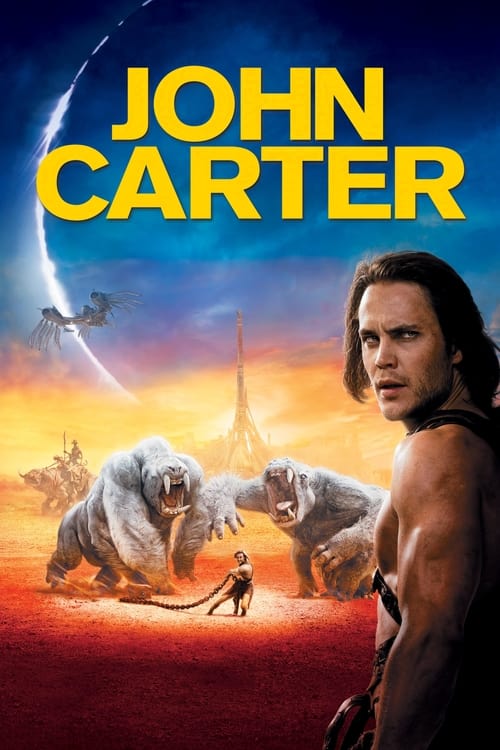
John Carter is a war-weary, former military captain who's inexplicably transported to the mysterious and exotic planet of Barsoom (Mars) and reluctantly becomes embroiled in an epic conflict. It's a world on the brink of collapse, and Carter rediscovers his humanity when he realizes the survival of Barsoom and its people rests in his hands.
Working with a major studio investment of $250.0M, the film achieved a steady performer with $284.1M in global revenue (+14% profit margin).
2 wins & 8 nominations


Plot Structure
Story beats plotted across runtime


Narrative Arc
Emotional journey through the story's key moments
Story Circle
Blueprint 15-beat structure
Arcplot Score Breakdown
Weighted: Precision (70%) + Arc (15%) + Theme (15%)
John Carter (2012) exhibits carefully calibrated narrative architecture, characteristic of Andrew Stanton's storytelling approach. This structural analysis examines how the film's 15-point plot structure maps to proven narrative frameworks across 2 hours and 12 minutes. With an Arcplot score of 6.1, the film takes an unconventional approach to traditional narrative frameworks.
Structural Analysis
The Status Quo at 2 minutes (2% through the runtime) establishes Edgar Rice Burroughs receives telegram about John Carter's death, finds his uncle's journal. Frame narrative establishes mystery and loss.. The analysis reveals that this early placement immediately immerses viewers in the story world.
The inciting incident occurs at 16 minutes when While escaping cavalry and Apaches, Carter discovers a cave with mysterious markings and encounters a Thern, who transports him to Mars (Barsoom) with a medallion.. At 12% through the film, this Disruption aligns precisely with traditional story structure. This beat shifts the emotional landscape, launching the protagonist into the central conflict.
The First Threshold at 33 minutes marks the transition into Act II, occurring at 25% of the runtime. This shows the protagonist's commitment to Carter chooses to save a Thark hatchling from a white ape, earning respect and the name "Dotar Sojat." He commits to engaging with this new world rather than seeking escape., moving from reaction to action.
At 67 minutes, the Midpoint arrives at 50% of the runtime—precisely centered, creating perfect narrative symmetry. Significantly, this crucial beat Carter and Dejah discover the ninth ray facility and share their feelings. False victory - they believe they can defeat the Therns and save Helium, and Carter is falling in love again., fundamentally raising what's at risk. The emotional intensity shifts, dividing the narrative into clear before-and-after phases.
The Collapse moment at 99 minutes (75% through) represents the emotional nadir. Here, Carter is betrayed and left to die in the desert. Alone and defeated, he hallucinates about his dead wife and child, confronting the trauma he's been running from. He has failed to save Dejah, just as he failed to save his family., shows the protagonist at their lowest point. This beat's placement in the final quarter sets up the climactic reversal.
The Second Threshold at 105 minutes initiates the final act resolution at 80% of the runtime. Carter chooses to fight for Barsoom and Dejah. He rallies the Tharks, uniting them under Tars Tarkas. He fully commits to a cause again, accepting that love and loss are better than emotional death., demonstrating the transformation achieved throughout the journey.
Emotional Journey
John Carter's emotional architecture traces a deliberate progression across 15 carefully calibrated beats.
Narrative Framework
This structural analysis employs proven narrative structure principles that track dramatic progression. By mapping John Carter against these established plot points, we can identify how Andrew Stanton utilizes or subverts traditional narrative conventions. The plot point approach reveals not only adherence to structural principles but also creative choices that distinguish John Carter within the action genre.
Andrew Stanton's Structural Approach
Among the 4 Andrew Stanton films analyzed on Arcplot, the average structural score is 6.7, demonstrating varied approaches to story architecture. John Carter takes a more unconventional approach compared to the director's typical style. For comparative analysis, explore the complete Andrew Stanton filmography.
Comparative Analysis
Additional action films include The Bad Guys, Puss in Boots and Venom: The Last Dance. For more Andrew Stanton analyses, see Finding Nemo, Finding Dory and WALL·E.
Plot Points by Act
Act I
SetupStatus Quo
Edgar Rice Burroughs receives telegram about John Carter's death, finds his uncle's journal. Frame narrative establishes mystery and loss.
Theme
Carter states "I'm done with causes" - establishing theme of a broken man who must find something worth fighting for again.
Worldbuilding
Post-Civil War Arizona. Carter is a cynical, traumatized former Confederate captain who refuses to join the cavalry. Establishes his brokenness after losing his wife and child, his distrust of authority, and his desire to find gold and disappear.
Disruption
While escaping cavalry and Apaches, Carter discovers a cave with mysterious markings and encounters a Thern, who transports him to Mars (Barsoom) with a medallion.
Resistance
Carter struggles with Mars's lower gravity, giving him superhuman strength and jumping ability. Captured by Tharks (green Martians), he must navigate alien culture and politics. Meets Sola, who becomes his guide and protector.
Act II
ConfrontationFirst Threshold
Carter chooses to save a Thark hatchling from a white ape, earning respect and the name "Dotar Sojat." He commits to engaging with this new world rather than seeking escape.
Mirror World
Carter meets Dejah Thoris, Princess of Helium, a warrior-scientist fighting to save her people. She represents everything he abandoned - courage, purpose, and the willingness to fight for a cause.
Premise
Carter and Dejah team up to stop Sab Than and the Therns. Adventure across Barsoom, uncovering ancient technology and the true threat. Carter uses his abilities to perform heroic feats, rediscovering his warrior spirit while helping Dejah pursue scientific truth.
Midpoint
Carter and Dejah discover the ninth ray facility and share their feelings. False victory - they believe they can defeat the Therns and save Helium, and Carter is falling in love again.
Opposition
Dejah is forced to agree to marry Sab Than to save Helium. Thark politics turn against Carter. Matai Shang and the Therns manipulate events. Carter's past trauma resurfaces as he faces losing another woman he loves. The Tharks face civil war.
Collapse
Carter is betrayed and left to die in the desert. Alone and defeated, he hallucinates about his dead wife and child, confronting the trauma he's been running from. He has failed to save Dejah, just as he failed to save his family.
Crisis
Carter wanders the desert, processing his grief and failure. Sola finds him and reveals the truth about Dejah's sacrifice. Carter must choose whether to embrace his pain and fight, or remain broken.
Act III
ResolutionSecond Threshold
Carter chooses to fight for Barsoom and Dejah. He rallies the Tharks, uniting them under Tars Tarkas. He fully commits to a cause again, accepting that love and loss are better than emotional death.
Synthesis
Carter leads the Thark army to Helium, disrupts the wedding, and defeats Sab Than. He exposes and fights the Therns. Marries Dejah and becomes Prince of Helium. Returns to Earth to protect Barsoom from Therns, setting up his "death" and the journal.
Transformation
Edgar Rice Burroughs deciphers Carter's clues and activates the medallion. Carter returns to Barsoom and Dejah. The broken man who wanted nothing but solitude is now a hero willing to fight for love and purpose.