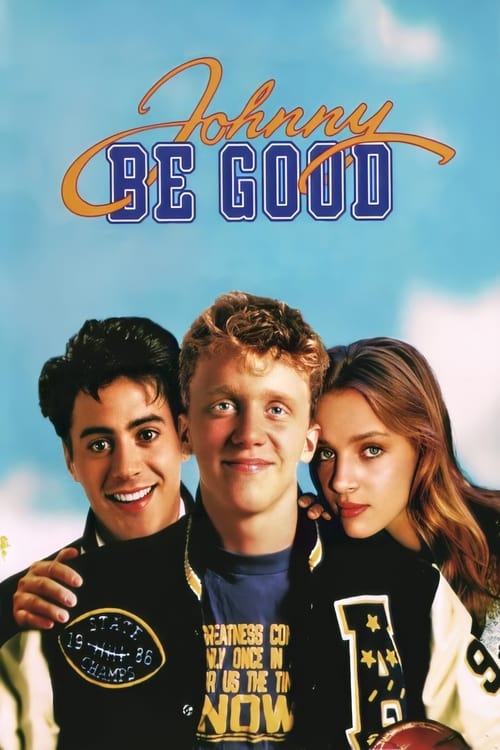
Johnny Be Good
It's recruiting time and despite being short and scrawny, Johnny Walker is America's hottest young football prospect. His dilemma: should he take one of the many offers from college talent scouts or should he attend the local state college with his girlfriend and give up his football career?
The film disappointed at the box office against its mid-range budget of $22.0M, earning $17.6M globally (-20% loss).


Plot Structure
Story beats plotted across runtime


Narrative Arc
Emotional journey through the story's key moments
Story Circle
Blueprint 15-beat structure
Arcplot Score Breakdown
Weighted: Precision (70%) + Arc (15%) + Theme (15%)
Johnny Be Good (1988) showcases strategically placed dramatic framework, characteristic of Bud S. Smith's storytelling approach. This structural analysis examines how the film's 15-point plot structure maps to proven narrative frameworks across 1 hour and 31 minutes. With an Arcplot score of 7.4, the film balances conventional beats with creative variation.
Characters
Cast & narrative archetypes

Johnny Walker
Leo Wiggins
Georgia Elkans
Coach Wayne Hisler
Coach Red Kerrigan
Main Cast & Characters
Johnny Walker
Played by Anthony Michael Hall
Star high school quarterback being heavily recruited by colleges, struggling with pressures of fame and maintaining his integrity.
Leo Wiggins
Played by Robert Downey Jr.
Johnny's best friend and manager who pushes him toward lucrative college offers, often encouraging questionable decisions.
Georgia Elkans
Played by Uma Thurman
Johnny's girlfriend who represents stability and genuine values, concerned about his changing priorities.
Coach Wayne Hisler
Played by Paul Gleason
Johnny's high school football coach who tries to guide him through the recruiting process with integrity.
Coach Red Kerrigan
Played by Robert Downey Sr.
Aggressive Texas college recruiter who uses bribes, parties, and manipulation to secure Johnny's commitment.
Structural Analysis
The Status Quo at 1 minutes (1% through the runtime) establishes Johnny Walker is the star quarterback of his high school team, celebrated and adored, living the dream with his girlfriend Georgia and best friend Leo. Everything seems perfect in his simple high school world.. Significantly, this early placement immediately immerses viewers in the story world.
The inciting incident occurs at 11 minutes when College recruiters descend on Johnny en masse, offering increasingly extravagant bribes and gifts. The simplicity of his high school life is shattered by the overwhelming attention and corruption of big-time college football.. At 12% through the film, this Disruption aligns precisely with traditional story structure. This beat shifts the emotional landscape, launching the protagonist into the central conflict.
The First Threshold at 24 minutes marks the transition into Act II, occurring at 26% of the runtime. This reveals the protagonist's commitment to Johnny and Leo accept an invitation to visit a major university, choosing to enter the world of corruption and excess rather than resist it. This decision marks their active entry into the recruiting game., moving from reaction to action.
At 46 minutes, the Midpoint arrives at 51% of the runtime—precisely centered, creating perfect narrative symmetry. Of particular interest, this crucial beat Johnny realizes the extent of the corruption and that he's being treated as property, not a person. What seemed like a false victory (all the perks) reveals itself as a trap. The stakes are raised as he sees what selling out really means., fundamentally raising what's at risk. The emotional intensity shifts, dividing the narrative into clear before-and-after phases.
The Collapse moment at 67 minutes (74% through) represents the emotional nadir. Here, Johnny's relationship with Georgia falls apart, representing the death of his authentic self and innocent love. He's lost what mattered most in pursuit of fame and material gain., demonstrates the protagonist at their lowest point. This beat's placement in the final quarter sets up the climactic reversal.
The Second Threshold at 73 minutes initiates the final act resolution at 80% of the runtime. Johnny realizes he must reject the corrupt system and choose integrity over money. He understands that being true to himself and those he loves is more important than any college offer., demonstrating the transformation achieved throughout the journey.
Emotional Journey
Johnny Be Good's emotional architecture traces a deliberate progression across 15 carefully calibrated beats.
Narrative Framework
This structural analysis employs a 15-point narrative structure framework that maps key story moments. By mapping Johnny Be Good against these established plot points, we can identify how Bud S. Smith utilizes or subverts traditional narrative conventions. The plot point approach reveals not only adherence to structural principles but also creative choices that distinguish Johnny Be Good within the comedy genre.
Comparative Analysis
Additional comedy films include The Bad Guys, Ella Enchanted and The Evening Star.
Plot Points by Act
Act I
SetupStatus Quo
Johnny Walker is the star quarterback of his high school team, celebrated and adored, living the dream with his girlfriend Georgia and best friend Leo. Everything seems perfect in his simple high school world.
Theme
A character warns Johnny about the corrupting influence of fame and money, suggesting that staying true to yourself is harder than it looks when everyone wants a piece of you.
Worldbuilding
Introduction to Johnny's world: his relationship with Georgia, his friendship with Leo, his loving mother, and the intense pressure from college recruiters. Establishes the recruiting circus and temptations that surround elite high school athletes.
Disruption
College recruiters descend on Johnny en masse, offering increasingly extravagant bribes and gifts. The simplicity of his high school life is shattered by the overwhelming attention and corruption of big-time college football.
Resistance
Johnny debates which college to attend while being seduced by various offers. Leo encourages him to exploit the system for all it's worth. Georgia wants him to stay true to himself. Johnny is torn between integrity and temptation.
Act II
ConfrontationFirst Threshold
Johnny and Leo accept an invitation to visit a major university, choosing to enter the world of corruption and excess rather than resist it. This decision marks their active entry into the recruiting game.
Mirror World
Georgia represents the moral center and authentic love that Johnny risks losing. Their relationship serves as the thematic counterpoint to the shallow materialism of the recruiting world.
Premise
The fun and games of the recruiting trip: parties, girls, money, gifts, and VIP treatment. Johnny and Leo indulge in the excess while Johnny becomes increasingly conflicted about what he's losing back home.
Midpoint
Johnny realizes the extent of the corruption and that he's being treated as property, not a person. What seemed like a false victory (all the perks) reveals itself as a trap. The stakes are raised as he sees what selling out really means.
Opposition
Pressure intensifies from all sides: recruiters become more aggressive, Leo pushes him to cash in, his relationship with Georgia deteriorates, and Johnny feels increasingly lost. The fun is over and consequences mount.
Collapse
Johnny's relationship with Georgia falls apart, representing the death of his authentic self and innocent love. He's lost what mattered most in pursuit of fame and material gain.
Crisis
Johnny hits rock bottom emotionally, processing the loss of Georgia and recognizing how far he's strayed from his values. He contemplates who he's become and what truly matters.
Act III
ResolutionSecond Threshold
Johnny realizes he must reject the corrupt system and choose integrity over money. He understands that being true to himself and those he loves is more important than any college offer.
Synthesis
Johnny publicly rejects the corrupt recruiting offers and chooses a school based on authentic reasons. He confronts the system, makes amends with Georgia, and reclaims his integrity in the final game.
Transformation
Johnny, now grounded and authentic, celebrates with Georgia and those who truly care about him. Unlike the opening where he was celebrated for shallow reasons, he's now valued for his character and integrity.