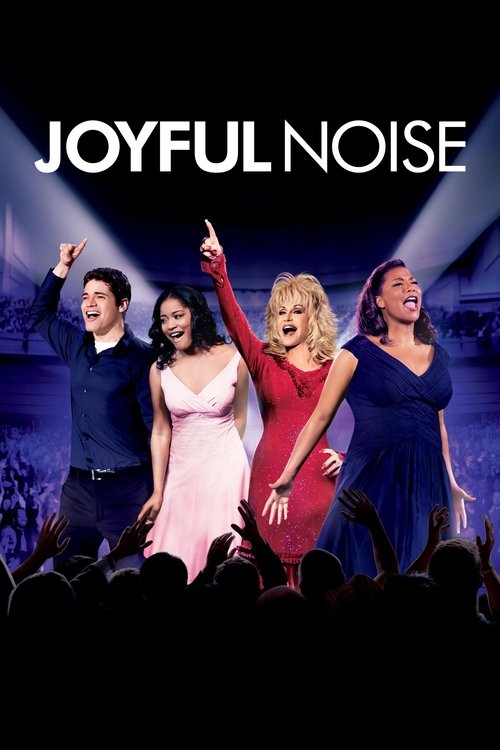
Joyful Noise
G.G. Sparrow faces off with her choir's newly appointed director, Vi Rose Hill, over the group's direction as they head into a national competition.
Working with a moderate budget of $25.0M, the film achieved a respectable showing with $31.2M in global revenue (+25% profit margin).


Plot Structure
Story beats plotted across runtime


Narrative Arc
Emotional journey through the story's key moments
Story Circle
Blueprint 15-beat structure
Arcplot Score Breakdown
Weighted: Precision (70%) + Arc (15%) + Theme (15%)
Joyful Noise (2012) exemplifies strategically placed dramatic framework, characteristic of Todd Graff's storytelling approach. This structural analysis examines how the film's 15-point plot structure maps to proven narrative frameworks across 1 hour and 57 minutes. With an Arcplot score of 7.4, the film balances conventional beats with creative variation.
Characters
Cast & narrative archetypes

Vi Rose Hill
G.G. Sparrow
Olivia Hill
Randy Garrity
Marcus Hill
Pastor Dale
Walter Hill
Main Cast & Characters
Vi Rose Hill
Played by Queen Latifah
Traditional choir director balancing single motherhood and church responsibilities, striving to keep the choir competitive while maintaining control.
G.G. Sparrow
Played by Dolly Parton
Wealthy, flamboyant widow who becomes assistant choir director, bringing contemporary ideas that clash with Vi Rose's traditional approach.
Olivia Hill
Played by Keke Palmer
Vi Rose's musically gifted teenage daughter struggling with Asperger's syndrome and desire for independence.
Randy Garrity
Played by Jeremy Jordan
G.G.'s rebellious grandson who returns to town and pursues a romantic relationship with Olivia despite family tensions.
Marcus Hill
Played by Dexter Darden
Vi Rose's son serving in the military, dealing with the challenges of deployment and family separation.
Pastor Dale
Played by Courtney B. Vance
The church pastor who mediates conflicts and supports the choir's journey to nationals.
Walter Hill
Played by Jesse L. Martin
Vi Rose's supportive husband who works long hours to provide for the family.
Structural Analysis
The Status Quo at 1 minutes (1% through the runtime) establishes The Pacashau church choir performs traditional gospel music under the direction of G.G. Sparrow's husband. The town's small community gathers for Sunday service, establishing the choir as the heart of this Georgia town.. Notably, this early placement immediately immerses viewers in the story world.
The inciting incident occurs at 13 minutes when Pastor Dale announces Vi Rose as the new choir director instead of G.G., creating immediate conflict. G.G. Is devastated and furious, having expected to take over her late husband's position. The power dynamic shifts and rivalry ignites.. At 11% through the film, this Disruption aligns precisely with traditional story structure. This beat shifts the emotional landscape, launching the protagonist into the central conflict.
The First Threshold at 27 minutes marks the transition into Act II, occurring at 23% of the runtime. This demonstrates the protagonist's commitment to Vi Rose commits fully to leading the choir to nationals and decides they will compete, despite limited resources and G.G.'s interference. She chooses to step into her role as leader rather than retreat. The choir officially begins preparing for the competition journey., moving from reaction to action.
At 59 minutes, the Midpoint arrives at 50% of the runtime—precisely centered, creating perfect narrative symmetry. Of particular interest, this crucial beat The choir wins their regional competition with a contemporary gospel arrangement, validating Vi Rose's bold approach. This false victory raises stakes—they're going to nationals, but now face tougher competition. G.G. Begins to soften, seeing the choir's potential., fundamentally raising what's at risk. The emotional intensity shifts, dividing the narrative into clear before-and-after phases.
The Collapse moment at 84 minutes (72% through) represents the emotional nadir. Here, A major blowup occurs: Vi Rose and G.G. Have their worst fight, threatening to destroy the choir. Olivia rebels against her mother. The choir fractures with members taking sides. It appears the dream of nationals is dead. Vi Rose feels she's failed as both director and mother., illustrates the protagonist at their lowest point. This beat's placement in the final quarter sets up the climactic reversal.
The Second Threshold at 91 minutes initiates the final act resolution at 78% of the runtime. Vi Rose and G.G. Reconcile, realizing they need each other and that their shared love for the choir and community is more important than their pride. They combine G.G.'s traditional gospel roots with Vi Rose's practical innovation and Randy's contemporary energy. The choir reunites with renewed purpose., demonstrating the transformation achieved throughout the journey.
Emotional Journey
Joyful Noise's emotional architecture traces a deliberate progression across 15 carefully calibrated beats.
Narrative Framework
This structural analysis employs structural analysis methodology used to understand storytelling architecture. By mapping Joyful Noise against these established plot points, we can identify how Todd Graff utilizes or subverts traditional narrative conventions. The plot point approach reveals not only adherence to structural principles but also creative choices that distinguish Joyful Noise within the comedy genre.
Todd Graff's Structural Approach
Among the 2 Todd Graff films analyzed on Arcplot, the average structural score is 7.3, reflecting strong command of classical structure. Joyful Noise represents one of the director's most structurally precise works. For comparative analysis, explore the complete Todd Graff filmography.
Comparative Analysis
Additional comedy films include The Bad Guys, Ella Enchanted and The Evening Star. For more Todd Graff analyses, see Bandslam.
Plot Points by Act
Act I
SetupStatus Quo
The Pacashau church choir performs traditional gospel music under the direction of G.G. Sparrow's husband. The town's small community gathers for Sunday service, establishing the choir as the heart of this Georgia town.
Theme
G.G.'s grandson Randy tells Olivia, "Sometimes you gotta break the rules to do something great." This line foreshadows the central conflict between tradition and innovation that will drive the story.
Worldbuilding
Introduction of Vi Rose Hill as the choir's practical director, her troubled son Walter, and her daughter Olivia. G.G. Sparrow is established as the wealthy benefactor. The choir loses the national competition. Bernard Sparrow, the choir director and G.G.'s husband, dies of a heart attack.
Disruption
Pastor Dale announces Vi Rose as the new choir director instead of G.G., creating immediate conflict. G.G. is devastated and furious, having expected to take over her late husband's position. The power dynamic shifts and rivalry ignites.
Resistance
Vi Rose struggles with whether she can lead the choir while managing her family struggles. G.G. debates undermining Vi Rose versus supporting the choir. Randy (G.G.'s rebellious grandson) arrives in town and begins attending rehearsals, pursuing Olivia despite Vi Rose's concerns.
Act II
ConfrontationFirst Threshold
Vi Rose commits fully to leading the choir to nationals and decides they will compete, despite limited resources and G.G.'s interference. She chooses to step into her role as leader rather than retreat. The choir officially begins preparing for the competition journey.
Mirror World
Randy and Olivia's relationship deepens as he introduces her to contemporary music and encourages her dreams. This B-story romance carries the theme of breaking free from restrictions and finding joy through authentic expression rather than rigid tradition.
Premise
The choir rehearses with increasingly creative arrangements that blend traditional gospel with contemporary sounds. Randy's musical influence grows. Comic rehearsal montages show the choir's evolution. Vi Rose and G.G. clash repeatedly over musical direction. Walter's storyline develops as he navigates his challenges.
Midpoint
The choir wins their regional competition with a contemporary gospel arrangement, validating Vi Rose's bold approach. This false victory raises stakes—they're going to nationals, but now face tougher competition. G.G. begins to soften, seeing the choir's potential.
Opposition
Pressure mounts as nationals approach. Vi Rose discovers Olivia and Randy's relationship and forbids it, driving a wedge between mother and daughter. G.G. and Vi Rose's conflict escalates over Randy's influence. Financial struggles threaten the trip to nationals. The town's conservative faction opposes the modern musical direction.
Collapse
A major blowup occurs: Vi Rose and G.G. have their worst fight, threatening to destroy the choir. Olivia rebels against her mother. The choir fractures with members taking sides. It appears the dream of nationals is dead. Vi Rose feels she's failed as both director and mother.
Crisis
Vi Rose and G.G. separately reflect on their pain, pride, and what they're truly fighting for. Both women face their fears—Vi Rose about losing control, G.G. about losing relevance. Quiet moments show the emotional toll on the entire community.
Act III
ResolutionSecond Threshold
Vi Rose and G.G. reconcile, realizing they need each other and that their shared love for the choir and community is more important than their pride. They combine G.G.'s traditional gospel roots with Vi Rose's practical innovation and Randy's contemporary energy. The choir reunites with renewed purpose.
Synthesis
The choir travels to nationals in Los Angeles. They perform a spectacular finale number that blends traditional gospel with contemporary pop, honoring both Vi Rose and G.G.'s visions. The performance showcases every choir member and celebrates their unity. While they don't win first place, they achieve something greater.
Transformation
The choir returns home as heroes. Vi Rose and G.G. stand together as co-leaders, transformed from rivals to partners. Olivia and Randy's relationship is blessed. The church is renewed with energy and unity. The final image mirrors the opening service, but now the music blends tradition with innovation, and joy has replaced rigidity.