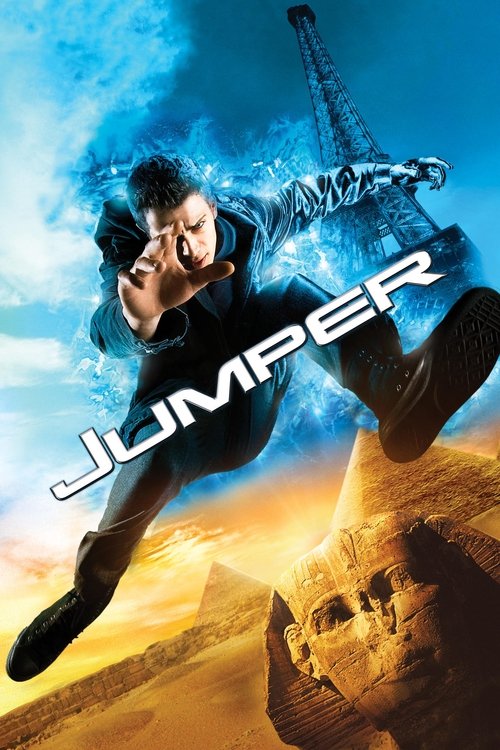
Jumper
David Rice is a man who knows no boundaries, a Jumper, born with the uncanny ability to teleport instantly to anywhere on Earth. When he discovers others like himself, David is thrust into a dangerous and bloodthirsty war while being hunted by a sinister and determined group of zealots who have sworn to destroy all Jumpers. Now, David’s extraordinary gift may be his only hope for survival!
Despite a significant budget of $85.0M, Jumper became a commercial success, earning $222.2M worldwide—a 161% return.
2 wins & 5 nominations


Plot Structure
Story beats plotted across runtime


Narrative Arc
Emotional journey through the story's key moments
Story Circle
Blueprint 15-beat structure
Arcplot Score Breakdown
Weighted: Precision (70%) + Arc (15%) + Theme (15%)
Jumper (2008) exhibits deliberately positioned dramatic framework, characteristic of Doug Liman's storytelling approach. This structural analysis examines how the film's 15-point plot structure maps to proven narrative frameworks across 1 hour and 28 minutes. With an Arcplot score of 7.4, the film balances conventional beats with creative variation.
Characters
Cast & narrative archetypes

David Rice
Roland Cox
Millie Harris
Griffin O'Connor
William Rice
Mary Rice
Main Cast & Characters
David Rice
Played by Hayden Christensen
A young man who discovers his ability to teleport and uses it to escape his troubled life, eventually learning he's hunted by an ancient organization.
Roland Cox
Played by Samuel L. Jackson
A relentless Paladin leader who hunts Jumpers, believing they are abominations that must be destroyed. Driven by religious zealotry and absolute conviction.
Millie Harris
Played by Rachel Bilson
David's childhood friend and love interest who gets pulled into his dangerous world of teleportation and hunters.
Griffin O'Connor
Played by Jamie Bell
An experienced Jumper who has been fighting the Paladins for years, paranoid and battle-hardened but willing to team up against their common enemy.
William Rice
Played by Michael Rooker
David's estranged father who abandoned him as a child, later revealed to be working with the Paladins.
Mary Rice
Played by Diane Lane
David's mother who left when he was young, revealed to be a Paladin herself.
Structural Analysis
The Status Quo at 1 minutes (1% through the runtime) establishes 15-year-old David Rice is bullied at school, living a powerless life in Ann Arbor, Michigan. He's an outcast with an absent mother and distant father, crushing on Millie but unable to connect.. The analysis reveals that this early placement immediately immerses viewers in the story world.
The inciting incident occurs at 10 minutes when David falls through the ice and drowns. In a moment of mortal terror, he teleports for the first time, appearing in the public library. His entire reality shatters as he discovers he's a "Jumper" - someone who can teleport anywhere.. At 12% through the film, this Disruption aligns precisely with traditional story structure. This beat shifts the emotional landscape, launching the protagonist into the central conflict.
The First Threshold at 22 minutes marks the transition into Act II, occurring at 25% of the runtime. This demonstrates the protagonist's commitment to David makes the active choice to return to Ann Arbor to reconnect with Millie after years away. This isn't about running anymore - it's about choosing connection over isolation, even though he could literally be anywhere in the world., moving from reaction to action.
At 43 minutes, the Midpoint arrives at 49% of the runtime—precisely centered, creating perfect narrative symmetry. Of particular interest, this crucial beat False defeat: Roland attacks David's apartment with electric weaponry. David barely escapes. The stakes raise dramatically - this isn't just fun anymore. Roland now knows about Millie. The Paladins have been hunting Jumpers for centuries, and David realizes he's in a war he didn't know existed., fundamentally raising what's at risk. The emotional intensity shifts, dividing the narrative into clear before-and-after phases.
The Collapse moment at 65 minutes (74% through) represents the emotional nadir. Here, Roland captures Millie and uses her as bait. David realizes his selfishness has endangered everyone he cares about. His mother reveals herself as a Paladin who has been hunting Jumpers - the ultimate betrayal. Everything David thought about his identity and family is shattered., shows the protagonist at their lowest point. This beat's placement in the final quarter sets up the climactic reversal.
The Second Threshold at 69 minutes initiates the final act resolution at 79% of the runtime. David chooses responsibility over revenge. He rejects Griffin's plan to kill everyone and instead decides to use his powers creatively to save Millie and his father without becoming a killer. He synthesizes his jumping abilities with moral choice., demonstrating the transformation achieved throughout the journey.
Emotional Journey
Jumper's emotional architecture traces a deliberate progression across 15 carefully calibrated beats.
Narrative Framework
This structural analysis employs structural analysis methodology used to understand storytelling architecture. By mapping Jumper against these established plot points, we can identify how Doug Liman utilizes or subverts traditional narrative conventions. The plot point approach reveals not only adherence to structural principles but also creative choices that distinguish Jumper within the action genre.
Doug Liman's Structural Approach
Among the 11 Doug Liman films analyzed on Arcplot, the average structural score is 7.0, demonstrating varied approaches to story architecture. Jumper represents one of the director's most structurally precise works. For comparative analysis, explore the complete Doug Liman filmography.
Comparative Analysis
Additional action films include The Bad Guys, Puss in Boots and Venom: The Last Dance. For more Doug Liman analyses, see Swingers, The Bourne Identity and Chaos Walking.
Plot Points by Act
Act I
SetupStatus Quo
15-year-old David Rice is bullied at school, living a powerless life in Ann Arbor, Michigan. He's an outcast with an absent mother and distant father, crushing on Millie but unable to connect.
Theme
Mark (bully) mocks David about his missing mother, foreshadowing the film's exploration of abandonment and the question: what would you do with ultimate freedom? The snow globe gift for Millie represents David's desire to give her the world.
Worldbuilding
Establishing David's ordinary world: bullied teenager, alcoholic father, dead-end life in Michigan. His crush on Millie represents hope. Mark and his friends torment David, pushing him to the breaking point on the frozen river.
Disruption
David falls through the ice and drowns. In a moment of mortal terror, he teleports for the first time, appearing in the public library. His entire reality shatters as he discovers he's a "Jumper" - someone who can teleport anywhere.
Resistance
David experiments with his powers, initially planning to tell his father. But after being rejected again, he makes smaller jumps. He robs a bank, setting up his new life. Eight years pass - David lives in luxury, teleporting globally, but remains emotionally isolated and selfish.
Act II
ConfrontationFirst Threshold
David makes the active choice to return to Ann Arbor to reconnect with Millie after years away. This isn't about running anymore - it's about choosing connection over isolation, even though he could literally be anywhere in the world.
Mirror World
David reconnects with Millie at the bar. She represents the normal life and genuine connection he abandoned. Their relationship will force David to consider others and challenge his selfish use of power. She still dreams of traveling - he can offer her the world.
Premise
The "fun and games" of being a Jumper. David takes Millie to Rome, jumps to the Colosseum and Sphinx. They enjoy adventures across the globe. But Roland and the Paladins attack - introducing the conflict. David meets Griffin, another Jumper, who reveals the war with Paladins.
Midpoint
False defeat: Roland attacks David's apartment with electric weaponry. David barely escapes. The stakes raise dramatically - this isn't just fun anymore. Roland now knows about Millie. The Paladins have been hunting Jumpers for centuries, and David realizes he's in a war he didn't know existed.
Opposition
David teams with Griffin to fight the Paladins, but their approaches clash. Griffin wants to kill; David wants to protect Millie. Roland captures David's father as leverage. The Paladins close in from all sides. David's two worlds - his selfish freedom and his connection to others - collide violently.
Collapse
Roland captures Millie and uses her as bait. David realizes his selfishness has endangered everyone he cares about. His mother reveals herself as a Paladin who has been hunting Jumpers - the ultimate betrayal. Everything David thought about his identity and family is shattered.
Crisis
David must process his mother's betrayal and choose between Griffin's violent approach (blow up the Paladin lair with everyone inside) or finding another way. He faces his dark night: use power selfishly to save himself, or risk everything for others.
Act III
ResolutionSecond Threshold
David chooses responsibility over revenge. He rejects Griffin's plan to kill everyone and instead decides to use his powers creatively to save Millie and his father without becoming a killer. He synthesizes his jumping abilities with moral choice.
Synthesis
David infiltrates the Paladin compound, fights Roland, and uses creative jumping to trap Roland in a cave. He saves Millie and his father. He demonstrates that power used with responsibility and creativity is superior to violence. He defeats the antagonist without killing.
Transformation
David and Millie stand before the Sphinx at sunset - the same location from earlier, but transformed. David is no longer running or hiding. He's chosen connection and responsibility. The final image mirrors the opening isolation but shows growth: he can be anywhere, but chooses to be with someone.